“EVs Aren’t Automatically Green—It Depends On How Power Is Generated”
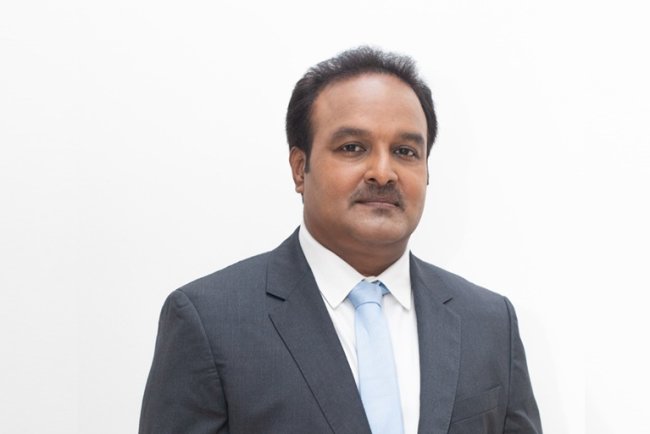
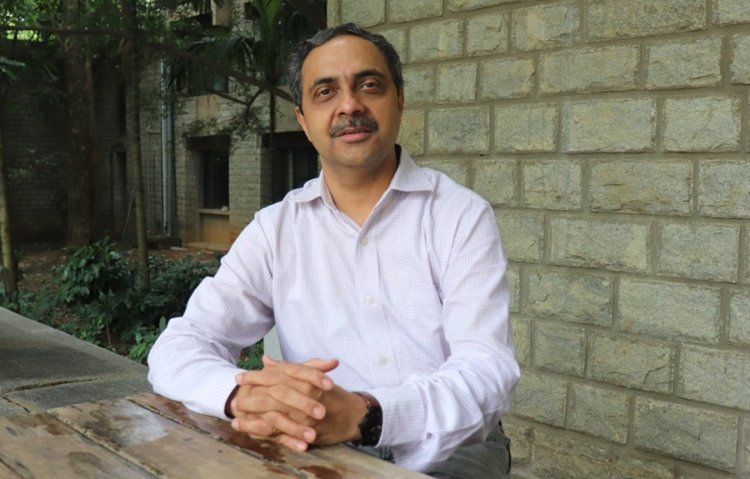
Anand Sri Ganesh (CEO, NSRCEL) and Sapna Bhawnani (VP – Communications & CSR, APAC, Alstom), share insights on the impact of industry–academia partnerships, real-world success stories and more

Together, NSRCEL and Alstom are reshaping India’s mobility landscape through the Sustainable Mobility Incubation Program, launched in July 2022. The program has already supported 42 high-potential startups across two cohorts, with over half operating in sustainable mobility and infrastructure. In an exclusive interview with ResponsibleUs, Anand Sri Ganesh (CEO, NSRCEL) and Sapna Bhawnani (VP – Communications & CSR, APAC, Alstom), share insights on the impact of industry–academia partnerships, real-world success stories, and Alstom’s vision for advancing India’s green mobility agenda.
Excerpts:
What are the biggest shifts you have observed in India's clean mobility startup ecosystem?
Ganesh: The policy environment is creating some very interesting tailwinds for innovation at corporate levels and the innovation ecosystem driven by startups. That is fuelling a couple of developments. One, it is clearly encouraging premier global leaders like Alstom to look at the innovation ecosystem as an open innovation, collaborative environment in which a large corporate can create a broader ecosystem that benefits the sector and the country. Of course, it also has residual value for the corporate itself. That is an excellent trend to observe.
In the startup and innovation space, we are seeing a lot of fundamental, deep-tech and deep-science-driven innovation. These are serving the broader climate tech space, specifically in sustainable mobility and mass transportation, which is very interesting.
There is also innovation emerging at the intersections of allied sectors. For instance, avionics, drone technology, different forms of transportation, biochemistry, and biotech—all are overlapping significantly and contributing to this space. That is a good sign in multiple domains. One, it helps us understand innovations that can truly scale. Some of these are of national strategic priority, some have significant global potential. Taken together, this has been quite encouraging over the past three years.
What made collaboration with NSRCEL a strategic fit for Alstom’s sustainability and innovation goals? Sapna: While we do look at a breadth of subjects, a developing country like India needs investment across multiple domains. When I started managing this portfolio, one area that stood out as very niche—at least from a societal or CSR contribution standpoint—was mobility. What perhaps is not widely known is that Sustainable Development Goal 13, which talks about building inclusive and accessible cities, places the development of public transport at its core. Development of transport opens opportunities and employment.
Not to forget, rail and public transport are the cleanest modes of transport, and transport itself is one of the largest emitters of CO2. So, from both a need and an imperative, mobility was clearly a theme that required investment and attention. And since we are a mobility company, our core purpose and vision as a company is to accelerate sustainable mobility.
There was a natural alignment between our corporate purpose and the need for investment in the mobility sector. Within the ecosystem, we identified critical areas such as first and last mile connectivity, inclusion of women in the transport workforce, and building safer, more inclusive infrastructure for people with disabilities and the elderly. Several of our projects address these challenges.
At the same time, we recognised that as a technology company specialising in rail solutions, we could not solve every challenge alone. That’s why we sought partners equally passionate about sustainable mobility, who could bring innovative solutions with applications in rail. This led us to NSRCEL at IIM Bangalore, which already had mobility experience through Maruti Suzuki and came with strong credibility.
From my first conversations with Anand and his team, it was clear that their incubation expertise combined with our vision could create real impact. The early cohorts showed us that startups often don’t focus directly on rail mobility, but their solutions—whether in EV batteries, water optimisation in railway toilets, or other areas—can still be applied effectively in rail.
This is why the partnership works: it bridges the gap between early-stage innovation and large-scale deployment.
How does NSRCEL support startups in their formative years, especially those that are pre-Series A and still shaping their business models and product–market fit?
Ganesh: One of our strongest areas as an open business incubator is supporting startups in their formative years—what you might call pre-Series A, post-MVP. This is when business models, product–market fit, technology architecture, and early capital needs are still taking shape. Our focus is to help ventures move from the 0–4 stage to the 10–100 scale stage.
We do this in three main ways. First, by staging capital inclusion—especially for hardware-heavy startups that need phased funding to scale. Second, by guiding business and technology roadmaps to identify early, financially viable market segments that can later expand to adjacencies. And third, by helping founders build organisational capability, including partner networks, policy navigation—both central and state—and corporate linkages.
Working with large companies like Alstom helps startups understand how global corporates adopt innovation, compressing what might otherwise take years into months. This accelerates their path to scale.
Sapna: To add, since this programme also runs under our CSR umbrella, our goal is two-fold: to fuel real innovation in critical but under-served areas, and to encourage early-stage startups even if they aren’t revenue-ready yet. Unlike a VC, we measure success less by short-term returns and more by the long-term innovation impact.
You come in with the mindset that this capital is to encourage innovation. How do you see the impact of this partnership?
Sapna: For me, success is about identifying startups with real-world benefits and exposing them to our ecosystem so they can scale. Indian Railways, for example, is a huge customer actively seeking innovation. If we can open doors and create use cases for startups in such spaces, that’s a win.
We run a structured open innovation process internally—collecting ideas from employees on sustainability, rail, and beyond—and we also tap into our global network in Paris that scouts startups worldwide. This programme becomes a funnel to connect promising ventures with real applications in rail, giving them opportunities to test and refine their solutions.
After three years and nearly 40 startups, how do you measure success in such a socially and technologically driven partnership?
Ganesh: My success metric is simple: with each cohort, I want to see more startups innovating in rail. Today, most traction in sustainable mobility is in EVs, especially two-wheelers—which is important. But if more of those ideas spill over into rail, that’s when I know this programme is working.
We look at success in three buckets—like a funnel. At the top, are we attracting enough innovation talent. In the last two and a half years we’ve worked with 40 ventures, and by year-end that number should reach 65.
The middle is about resilience. Can these startups survive beyond incubation? Our three-year survival rate is 79.25%—a figure we’re proud of, especially since deep tech mortality is usually 70%.
The third is long-term scale. Over three to five years, can at least 20–25% of our startups hit significant growth, say Rs 100 crore-plus in revenue, and expand into Indian and global markets.
How do you see your product portfolio evolving for greener mobility?
As a mobility company, we have one of the largest green rail portfolios, and we approach sustainability from multiple angles. Existing infrastructure like metros or rail systems are long-term investments—you can’t phase them out quickly—so we focus on making current rolling stock more energy efficient. At the same time, new trains are being designed for recyclability and recoverability across their entire lifecycle. That means sourcing greener materials like green steel and cleaner aluminium, and ensuring components can be repaired, overhauled, and reintroduced into the value chain instead of just replaced.
We are also exploring alternative fuels. Hydrogen is still early days in India, but we already have a hydrogen train running successfully in Germany, and we’ll adapt once a business case emerges here. Digitalisation is another big focus—advanced signalling systems, better scheduling, and passenger information tools all help improve efficiency and make public transport more attractive. Ultimately, our goal is simple: to make rail the preferred mode of travel by ensuring the product is sustainable, efficient, and delivers a great passenger experience.
India is pushing for green transport, but with most of our electricity still coal-based, how do you see this transition?
Ganesh: The technology is available, and India has the appetite for innovation. But green mobility must go hand in hand with cleaner energy. If trains are to be electric, the power behind them also has to be green—more solar, more wind, and eventually hydrogen. Indian Railways already has a published plan to move in that direction, and metro authorities too are incorporating solar in stations and adopting energy-saving technologies in trains.
Of course, the shift from coal will take time. The maturity curve is different for each operator, but the intent is clear. Alongside, there’s a big opportunity for startups—whether in storage, batteries, or hybrid models—to bridge the gaps. We see this in two buckets: adaptation and mitigation tech, which improves efficiency and reduces emissions today, and migration tech, which helps us move to entirely new energy systems tomorrow. Both are essential for the transition.
How can power generation and transmission become more efficient even if we don’t fully move away from thermal plants yet?
Ganesh: There’s a lot of innovation happening upstream—smart grids, smart batteries, and smart metering are helping optimise power generation and transmission. Even without phasing out thermal immediately, efficiency gains can reduce emissions. Parallelly, migration tech is taking shape—renewables, hydrogen, and even early work in nuclear fission. Interestingly, energy innovations for data centres, like micro-reactors, can also power mass transportation in the future.
And batteries? EVs still depend on lithium, often imported from China.
Ganesh: That’s where startups come in. Companies like Minimines are extracting rare earths from used lithium-ion batteries and feeding them back into manufacturing. Others are exploring alternatives like aluminium-air batteries. These innovations don’t just recycle materials, they also diversify the technology base for cleaner mobility.
Startups are experimenting with exciting alternatives. For example, Chakr Innovation is working on aluminium-air batteries, which can be three to four times more efficient than lithium-ion at the same power-to-weight ratio. Then you have players like Urja, which uses digital twinning to map the entire battery lifecycle—from design to manufacturing to recycling—before production even begins. That way, circularity can be embedded at the design stage itself.
Within lithium-ion, innovators are trying to make the supply chain more sustainable. From recycling rare earths to cleaner sourcing, the effort is to reduce its overall footprint.
Then where does innovation fit in?
Ganesh: Innovation is the sweet spot. Since there’s no perfect solution, the challenge is to find “better” rather than “perfect.” Whether through greener materials, recycling, or new battery chemistries, startups are pushing those boundaries. That’s why I believe innovation will be central to tackling climate change and sustainability—it keeps us moving toward less harmful choices.
How does the programme ensure diversity and inclusion? How much weightage do you give to inclusion and diversity?
Sapna: For us, inclusion—both gender and disability—in mobility is a core pillar of our CSR programming. While we haven’t built specific D&I KPIs into the sustainable mobility incubation programme, we do integrate it into other initiatives. For example, with WRI in Bangalore, we run a last-mile connectivity project where women auto-rickshaw drivers bridge transport gaps.
There were two main reasons for this. First, data shows women tend to adopt eco-conscious solutions faster than men. Second, electric autos are lighter and easier to drive, which makes training new women drivers more effective.
Another crucial insight was that women feel safer when the driver is also a woman. So, if we want more women to use public transport, creating last-mile solutions with women drivers directly supports that goal.
For us, these choices weren’t about ticking boxes or reporting KPIs. They were strategic, backed by insights and social impact data. Women, for instance, are often more affected by climate change, which reinforces why programming must intentionally include them.
Ganesh: At NSRCEL , we run about 11 incubation programmes, of which two are dedicated to women entrepreneurs. Each year, we work with nearly 400 women-led ventures, across both early and growth stages.
In our impact track, we also focus on assistive technology for disability, supporting innovations that enhance dignity and quality of life for all 14 categories of differently abled individuals—from neurological to physical. Interestingly, we have also incubated two trans-led ventures : one working on primary healthcare for transgenders, and another on skilling for white-collar jobs. Both are extremely challenging but critical.
Despite these efforts, only about 18% of startups across India are women-led, a figure mirrored at NSRCEL. Ideally, innovation should be gender-neutral—there shouldn’t be a distinction between a male and female scientist. But reality is different. While 49% of startups have a woman director on paper, often a family member, genuine women-founded ventures remain at 18%. Clearly, there’s still a long way to go.
You often say sustainability doesn’t have a perfect answer. Can you explain?
Ganesh: Sustainability is always about trade-offs. Take EVs—many consumers believe buying one is automatically “green.” But the reality is more nuanced. An EV becomes cleaner than an internal combustion engine only after it’s used for a certain number of years, and even then, it depends on how the power is generated and what minerals go into the battery. Essentially, we’re moving from a fossil-fuel economy to a mineral-intensive one. This will soon bring its own challenges, like critical mineral shortages. So, really, we’re shifting problems rather than solving them outright.
What's Your Reaction?