


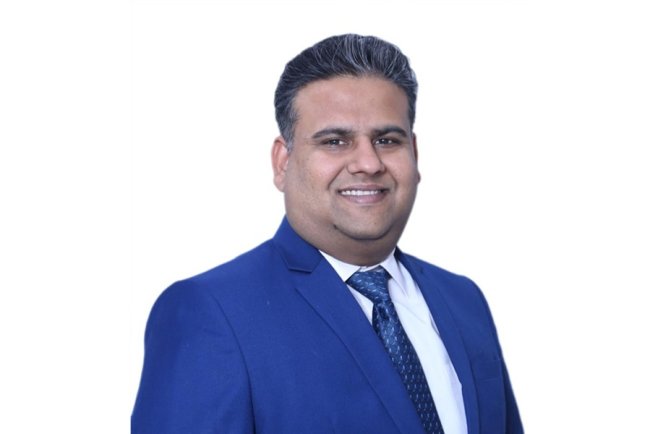
Nambiar, Managing Director, Nambiar Group, shares how the programme intends to nurture youth-driven innovation, address systemic challenges, and contribute to the vision of a Viksit Bharat

In a significant move to transform young Indians from idea-generators into change-makers, Union Minister of Labour & Employment and Youth Affairs and Sports, Mansukh Mandaviya, recently unveiled i2B (Idea to Bharat) — an initiative by CCS Bharat, the think tank of the Nambiar Group, under the leadership of Ayush Nambiar. Positioned as both “Idea to Bharat” and “I want to be,” i2B aims to bridge the gap between awareness and action, ensuring that innovative ideas evolve into research-backed, execution-ready solutions. Speaking to ResponsibleUs, Ayush Nambiar, Managing Director, Nambiar Group, shared how the programme intends to nurture youth-driven innovation, address systemic challenges, and contribute to the vision of a Viksit Bharat.
What kind of research and innovation or startups have you planned in your mind or have already been started?
Twelve days ago, I was in Agra at a research conclave where some of the finest academic minds came together. There were sociological ideas, political thoughts, entrepreneurial solutions—over 700 research papers in total, amounting to nearly 14,000 printed pages. The energy was inspiring, but I found myself asking a simple question: what next? Judges were critiquing formats, but I wasn’t worried about formatting. I wanted to know how all that brainpower and innovation could move from paper to practice. That is what led me to create i2B—Idea to Bharat. It’s not just a name; it means both “Idea to Bharat” and “I want to be.” It’s a bridge that takes ideas, however raw, and helps turn them into real-world impact.
What common themes did you observe in the ideas presented, and how do they connect with today’s younger generation?
The majority of papers were focused on sustainability, which shows how deeply this generation is thinking about the future of our planet. What fascinated me most was the mindset of Gen Z, those between 17 and 21 years old. They constantly ask “why?” Why must I follow this rule? Why can’t I do things differently? That culture of questioning drives innovation. Two young women recently challenged are developing a new programme that can change cash transfers is in progress; those funds could train girls with skills and pay them during training. Their argument was simple: a skilled woman is more empowered than a dependent woman. We are now preparing to propose this idea to Maharashtra’s leadership, with the intention to pilot it in one district. That’s exactly what i2B is about—taking thoughtful questions and turning them into actionable change.
The majority of papers were focused on sustainability, which shows how deeply this generation is thinking about the future of our planet. What fascinated me most was the mindset of Gen Z, those between 17 and 21 years old. They constantly ask “why?” Why must I follow this rule? Why can’t I do things differently? That culture of questioning drives innovation. Two young women recently challenged are developing a new programme that can change cash transfers is in progress; those funds could train girls with skills and pay them during training. Their argument was simple: a skilled woman is more empowered than a dependent woman. We are now preparing to propose this idea to Maharashtra’s leadership, with the intention to pilot it in one district. That’s exactly what i2B is about—taking thoughtful questions and turning them into actionable change.
Funding is often the biggest challenge for startups and social ideas. How does i2B approach this critical issue?
People often believe funding is the greatest obstacle, but I have never seen money as a problem. The real challenge is creating an actionable strategy. Of course, money is necessary, but when you know who to sell to, the money follows. Through the Nambiar Group and our global network, we already have commitments. For example, a Karnataka-based infrastructure company with revenues of ₹25,000 crores has pledged upto Rs 100 crores annually to support i2B ideas. The important point is that i2B takes no stakeholding, neither personally from me, nor from the group, nor from the foundation. The ownership of every idea remains 100% with the innovator. Our role is to provide incubation, mentorship, funding access, and a pathway to reality.
People often believe funding is the greatest obstacle, but I have never seen money as a problem. The real challenge is creating an actionable strategy. Of course, money is necessary, but when you know who to sell to, the money follows. Through the Nambiar Group and our global network, we already have commitments. For example, a Karnataka-based infrastructure company with revenues of ₹25,000 crores has pledged upto Rs 100 crores annually to support i2B ideas. The important point is that i2B takes no stakeholding, neither personally from me, nor from the group, nor from the foundation. The ownership of every idea remains 100% with the innovator. Our role is to provide incubation, mentorship, funding access, and a pathway to reality.
Many startups fail in their early stages due to a lack of money, mentorship, or strategy. How will i2B ensure that ideas survive beyond the initial enthusiasm?
My late father, P.K.D. Nambiar had a principle: either work with him for life or leave and create opportunities for others. His philosophy was always about empowerment—making entrepreneurs, not dependents. That’s exactly what guides i2B. We don’t just put money on the table; we help design the action plan, the market strategy, and the execution path. Without that, ideas remain just talk. i2B’s investment is not financial alone—it is in mentorship, incubation, networks, and credibility. And that credibility matters. Every strategy I’ve put forward in my career has succeeded in some capacity, and that track record helps innovators trust that their ideas won’t be left unsupported.
My late father, P.K.D. Nambiar had a principle: either work with him for life or leave and create opportunities for others. His philosophy was always about empowerment—making entrepreneurs, not dependents. That’s exactly what guides i2B. We don’t just put money on the table; we help design the action plan, the market strategy, and the execution path. Without that, ideas remain just talk. i2B’s investment is not financial alone—it is in mentorship, incubation, networks, and credibility. And that credibility matters. Every strategy I’ve put forward in my career has succeeded in some capacity, and that track record helps innovators trust that their ideas won’t be left unsupported.
How do you decide which ideas to support, given the overwhelming interest you’ve already received?
Within one week of launching i2B, I have received over 650 emails with ideas, and I’ve personally read and replied to each one, even if briefly. I’ve held over 30 meetings to discuss concepts, and more are scheduled. Interestingly, women are outnumbering men in bringing forward ideas, and they are often more creative in identifying problems and solutions. We don’t have filters by age, background, or sector. A five-year-old child can ask questions that stump adults, and i2B is here to honour that curiosity. My first announcement was in my own office, where I told my team to bring me any idea, and I would mentor and guide them. Whether you’re a student, professional, or entrepreneur, the door is open.
Within one week of launching i2B, I have received over 650 emails with ideas, and I’ve personally read and replied to each one, even if briefly. I’ve held over 30 meetings to discuss concepts, and more are scheduled. Interestingly, women are outnumbering men in bringing forward ideas, and they are often more creative in identifying problems and solutions. We don’t have filters by age, background, or sector. A five-year-old child can ask questions that stump adults, and i2B is here to honour that curiosity. My first announcement was in my own office, where I told my team to bring me any idea, and I would mentor and guide them. Whether you’re a student, professional, or entrepreneur, the door is open.
India faces deeply interconnected challenges in waste, water, and energy. How does i2B encourage solutions across sectors rather than in silos?
i2B doesn’t restrict itself to predefined sectors. Real life doesn’t work in silos—problems overlap, and solutions must as well. There are “created” problems, like depending on delivery apps instead of walking downstairs, and there are “real” problems like air pollution, water scarcity, and energy shortages. i2B focuses on the latter. People who face genuine problems ask genuine questions, and they are the ones who seek answers. Today’s educational environment encourages even young children to think about saving water, using paper wisely, and protecting the environment. That awareness is growing across India. Our job at i2B is to channel that awareness into actionable solutions that can scale.
i2B doesn’t restrict itself to predefined sectors. Real life doesn’t work in silos—problems overlap, and solutions must as well. There are “created” problems, like depending on delivery apps instead of walking downstairs, and there are “real” problems like air pollution, water scarcity, and energy shortages. i2B focuses on the latter. People who face genuine problems ask genuine questions, and they are the ones who seek answers. Today’s educational environment encourages even young children to think about saving water, using paper wisely, and protecting the environment. That awareness is growing across India. Our job at i2B is to channel that awareness into actionable solutions that can scale.
Finally, what is the long-term vision of i2B? How does it connect to your idea of a Viksit Bharat?
My father spoke about a developed Bharat long before it became a national slogan. For me, Viksit Bharat isn’t about billionaires—it’s about all 100% of Indians. A nation is truly great when even its richest citizen happily uses public transport. i2B is my way of building that vision. It is about empowering youth, nurturing ideas, and creating a culture where people don’t say, “I can’t do it.” Every idea deserves a chance to grow. We are not building for Adanis or Ambanis; we are building for every young thinker, every entrepreneur, every citizen who wants to make a difference. That is what will make Bharat Viksit.
What's Your Reaction?









Leave a Comment







