A long-term study by the University of Göttingen finds that forest soils in south-western Germany are increasingly absorbing methane as rising temperatures and declining rainfall alter soil conditions.
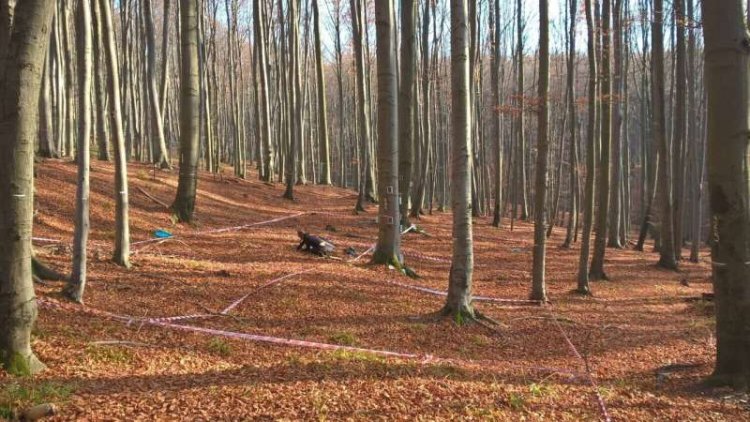
Soil within woodlands helps slow global warming through its ability to take up methane from the air. Rising warmth combined with reduced rainfall appears to boost this process over time, evidence now indicates. Work led by scholars at Göttingen shows German woodland soil pulling in more of the gas in recent years. Under specific shifting climate patterns, such forest soils may increase their methane uptake capacity. This effect emerges where heat rises while moisture declines across seasons.
Methane is a powerful greenhouse gas with a much higher short-term warming potential than carbon dioxide. Over short periods, it exceeds carbon dioxide in impact by a wide margin. Because of this difference, attention turns to Earth’s natural processes that remove methane from the air. Without understanding these removal mechanisms, forecasts about climate outcomes remain uncertain. In such cases, insight into environmental absorption becomes essential.
Over time, observations show an increase in methane absorption
Based on a highly detailed dataset on methane absorption in forest soils, the study draws from long-term observations. Spanning as many as twenty-four years, data collection occurred consistently across thirteen locations in south-western Germany. These areas included both beech- and spruce-dominated woodlands. Measurements were recorded at regular intervals throughout the monitoring period.
On average, forest soils showed an annual increase of about 3% in methane uptake during the observation period. Scientists said this rise was linked more closely to changes in climate patterns than to forest management or land use.
Why do drier and warmer soils absorb more methane
Soil conditions shift when rainfall becomes less frequent. With reduced moisture, spaces within the ground fill with more air. Where water once occupied gaps, airflow increases slightly. This change supports the movement of atmospheric methane downward. Breakdown processes then occur more readily below the surface. Drier conditions increase gas diffusion into the soil, allowing methane to reach microbes that consume it more efficiently.
Meanwhile, higher temperatures appear to stimulate microbes that break down methane. As a result, soil gains a greater ability to remove methane from the atmosphere.
Where rainfall increases, methane uptake declines — a pattern clearly seen in data from the United States. However, this trend does not apply everywhere. In Germany, different outcomes appear under similar conditions. Regional differences shape how ecosystems respond to changing climates. Not all locations follow the same environmental patterns.
How the methane measurements were conducted
Across multiple seasons, data collection relied on consistent soil-gas monitoring. From various underground depths, air samples were collected every two weeks through narrow tubes installed beneath the surface. Gas samples were analysed in laboratory settings to determine changes in methane concentrations over time.
A separate method confirmed the findings using sealed chambers placed on the soil surface. When methane levels within these chambers declined, absorption by the ground was confirmed.
Implications for climate research
The findings contrast with some global assessments that suggest declining methane uptake by soils in certain regions. Instead, this study points to stable or increasing absorption. Decades-long monitoring in specific regions reveals subtle changes that large-scale assessments may miss. Climate impacts on soil processes appear more complex than earlier summaries suggested.
These findings rely heavily on regional trends rather than uniform global behaviour. Natural systems respond unevenly, shaped by local climate and ecological conditions. Over extended periods, some forests maintain consistent methane consumption. Broad models may overlook this persistence. The observations here are based on repeated field measurements rather than aggregated estimates. A different picture emerges when close monitoring replaces large-scale averaging.
It appears climate change may strengthen certain natural mitigation processes, though this outcome is not universal. Such benefits depend strongly on regional climate conditions. Effects observed in one area do not necessarily occur elsewhere without similar environmental factors. Scientists note that exceptions exist but are constrained by local conditions. Ecosystems respond differently under changing patterns, and what benefits one region may harm another nearby. These shifts require long-term observation.
Ongoing monitoring provides critical insight when assessing how ecosystems respond to gradual climate change. Long-term tracking systems reveal trends that short-term studies may overlook. Without consistent data collection, changes could be misinterpreted or missed altogether. Effective environmental assessment depends on structured, long-term observation, allowing patterns to emerge through time and comparison.
What's Your Reaction?