Oarfish strandings in California raise alarms over ocean health. Climate change and pollution threaten marine ecosystems, echoing risks along India’s coasts.
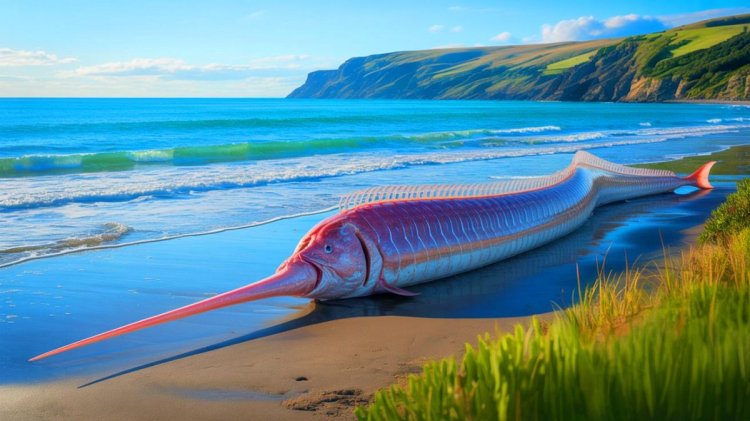
Three giant oarfish, dubbed “apocalypse fish,” washed ashore in California within a week in June 2025, alarming scientists due to their rarity and cultural links to disaster omens. These deep-sea creatures, up to 6 meters long, may signal environmental stress, potentially from climate change or seismic activity. India’s coastal ecosystems, facing similar pollution threats, highlight the need for marine monitoring. The incidents underscore global concerns about ocean health and the urgency of sustainable practices.
Oarfish, rarely seen due to their deep-sea habitat, surfaced near Los Angeles, prompting speculation about environmental triggers. A 2024 study links ocean warming, driven by 425 ppm CO2 levels, to disrupted marine ecosystems. In India, the 2017 MV Qing shipwreck polluted Chennai’s shores, affecting fish populations. The oarfish incidents may reflect similar stressors, like rising sea temperatures (0.7°C since 1901) or chemical leaks, though no seismic activity was confirmed.
Marine biodiversity faces growing threats. The oarfish, sensitive to environmental changes, may indicate shifts in ocean currents or pollution. India’s 7,500 km coastline, supporting 4 million fishers, faces risks from shipwrecks like the Morning Midas, leaking lithium-ion battery chemicals. California’s fisheries, worth $5 billion, are similarly vulnerable. Sustainable fishing and pollution controls, adopted in 20% of India’s coastal zones, could mitigate impacts, but enforcement is weak.
Economic impacts affect coastal communities. In California, tourism and fishing, employing 60,000, face disruptions from polluted waters. India’s coastal economy, contributing 1% to GDP, lost $100 million to pollution in 2024. The Paris Agreement’s 1.5°C target requires reduced marine emissions, but shipping, contributing 3% of global CO2, lags in adopting green fuels. India’s 2028 green logistics policy aims to address this, but global compliance is inconsistent.
Climate change amplifies ocean stress, with an 8-9 inch sea level rise since 1880 affecting marine habitats. In India, 310 million people in coastal zones face risks, mirroring California’s vulnerabilities. The WMO notes La Niña’s role in 2025’s altered currents, potentially driving oarfish ashore. India’s collaboration with the UAE on green hydrogen for shipping could reduce pollution, but only 5% of vessels adopt it due to high costs.
Socially, indigenous and fishing communities bear the brunt. In California, native groups reliant on fisheries face livelihood losses, similar to India’s marginalized fishers. Community advocacy, as seen in Kerala’s plastic ban, drives change, but only 10% of coastal communities receive environmental education. The oarfish incidents highlight the need for real-time marine monitoring, covering only 15% of global oceans, to protect ecosystems and livelihoods.
Regulatory responses are limited. California’s EPA monitors coastal waters, but data gaps hinder action. India’s Merchant Shipping Act mandates pollution control, but only 20% of violations are penalized. The UN Ocean Conference in 2025 called for marine protection, but funding shortages limit progress. India’s $1 billion biodiversity budget contrasts with richer nations’ unfulfilled $100 billion climate pledge, slowing technology transfers.
The oarfish strandings signal broader ocean health issues. India and global partners must strengthen marine monitoring, enforce pollution controls, and adopt sustainable shipping to protect ecosystems and coastal economies from climate-driven threats.
Source: Sustainability Times
What's Your Reaction?