Global Risks Report: Navigating a Dangerous Future
A Glimpse of the Future: Global Risks 2025 and 2035
As the world grapples with an ever-complex array of challenges, the new results of the Global Risks Report offer us a stark vision of what the future may hold. The report analyzes the dangers looming ahead, which underscores the problems that will define world politics, economies, and societies in the decade ahead and beyond.
The World in 2025: An Era of Growing Polarization
The Global Risks 2025 report highlights the fact that the world will be facing an era of high geopolitical and economic hurdles. Country-to-country relationships will become increasingly strained, with special emphasis on a term referred to as the "geopolitical recession." This is a definition of the downturn in international cooperation, fueled by increased nationalism, protectionism, and the reconfiguring of alliances. Policies that are inwardly oriented will be pursued by governments, diminishing the chances for effective multilateral action.
Economically, the world would be experiencing "supercharged" economic tensions. Trade wars, supply chain disruption, and unstable markets all are poised to add to uncertainty. These would result in a sustained economic slowdown, with the risk of stagnation acting as a drag on global growth. The squeeze on economies would also pull inequalities, both within and across countries.
Technology will also be the central issue in deciding the future. While innovation holds the power to create seminal progress, it is also engendering polarization. The speeding up of advancement in artificial intelligence, automation, and social media can only further exacerbate fissures, producing new problems for societies to address. It will all infuse the labor market right up to international communication, and governments need to deal with these shifting challenges both by regulating and producing.
Looking to 2035: The Point of No Return
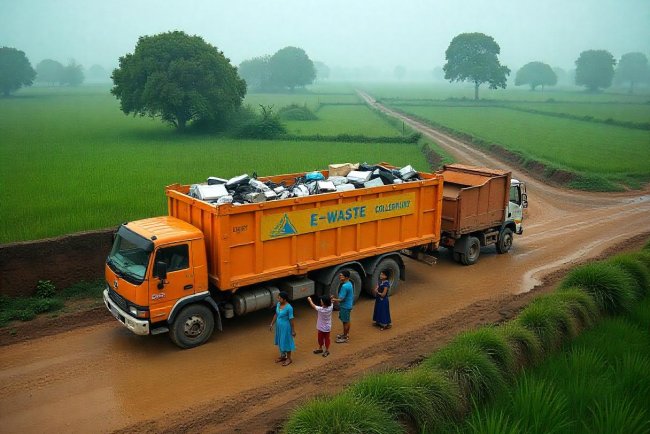
By 2035, the global challenges will have passed a tipping point. The most important risks identified in the Global Risks 2035 section of the report indicate irreparable changes that would fundamentally change the direction of human progress. Environmental degradation is among the most critical problems. The report states that pollution will be at a "crossroads," where the world makes a clear step towards reducing environmental damage or continues to degrade that will have serious impacts on ecosystems, public health, and economies.
Biotechnology is also a major field of concern. Breakthroughs there could be a game changer for medicine but also pose the enormous risk of destruction. It risks losing the ability to manage biotech evolution, especially when the technology involved in genetic and synthetic biology makes it simpler and cheaper. When left unaddressed, those technologies can easily become extremely risky and ethically questionable.
Apart from environmental and technological issues, the world will also be facing the effects of an aging population. By 2035, most countries will be "super-aged," with a greater proportion of older people than ever in human history. This population change will strain healthcare systems, economies, and social welfare systems. Countries that are unable to make such transitions might see rising instability as they try to sustain their elderly populations.
The Long-Term Consequences: A Perilous Future
In the future, the Global Risks Report highlights that these risks are not isolated but are interdependent. A worldwide collapse of cooperation, economic instability, environmental collapse, and technological developments will all fuel each other, forming a cycle of mutually reinforcing problems. The effect of these interlinked risks can be used to dismantle progress on world challenges like poverty, health, and inequality.
The report does also recognize the challenge of foresight in projecting the precise character these risks are likely to have, in terms of the pace of technological change and the open-ended course of global events. But it emphasizes that planning now for such a future, by improving risk and cooperation management, is the way to reduce their impact.
Conclusion: Shaping a Safer Future
Based on these revelations, the Global Risks Report calls upon governments, business, and individuals to move proactively to curb these emerging threats. The report calls for greater integrated risk management, one which acknowledges interdependencies of geopolitics, economy, environment, and technology risks. The 2025 and 2035 risks can be far-fetched, yet current choice will construct the future.
The future is not guaranteed, but the choices of today will continue to control the destiny. Cooperation, sustainability, and direction toward the future can be the strongest shield against an uncertain world.
Source: Global Risks Report 2025-2035
What's Your Reaction?