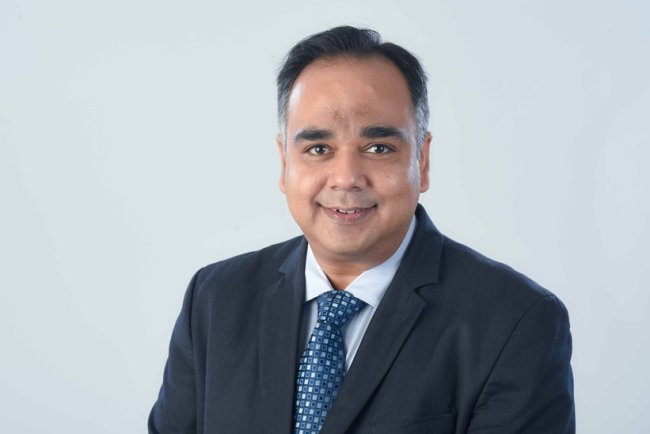
Dr Vijay Limaye, Director, Applied Research Initiatives at the Natural Resources Defence Council (NRDC), says the shift is visible on the ground
Heat is no longer an occasional crisis in India. It is becoming a constant strain on health, pushing up risks of heart disease, respiratory illness and even disrupting sleep and mental well-being. While cities have begun to respond, much of the action still remains uneven, with several plans struggling to move beyond paper.
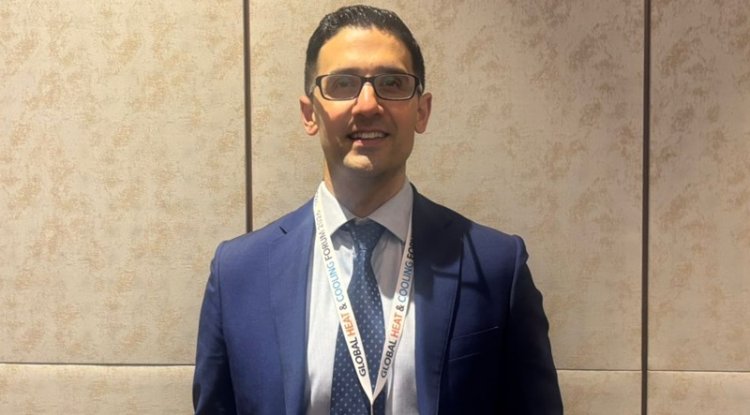
In conversation with ResponsibleUs, Dr Vijay Limaye, Director, Applied Research Initiatives at the Natural Resources Defence Council (NRDC), who was one of the speakers at Global Heat & Cooling Forum 2026, said the shift is visible on the ground. Cities are no longer waiting for national direction and are beginning to act as heat becomes harder to ignore. But he also pointed to a clear gap between intent and execution, especially in reaching the most vulnerable.
Less on big global promises, more on what is working on the ground. He pointed to cities like Ahmedabad, where early warning systems and basic coordination have already saved lives. But he was equally clear about the gap. Many plans exist, but not all are working. Execution is uneven, and the most vulnerable are still often left out.
What stood out was his framing. Climate change, he said, is still discussed as something distant. But in India, heat is already here. And the response now has to move beyond emergency action to something that works through the year.
Solutions from Asia or Southeast Asia do not always translate to Indian cities, given differences in density, governance and capacity. How do you decide what is transferable and what needs to be built locally? Is there a risk that global forums create frameworks while local governments struggle with execution?
That’s a fair concern. I come at this from a health lens, so I try to make climate less abstract and more about what people actually feel. And yes, a lot of global conversations stay at the level of big ideas. Plans, ambition, frameworks. But not always grounded. In India, things are a bit different right now. I’ve been working here for about 15 years, and what’s changed is that cities are no longer waiting. Heat is already affecting people. So local governments are stepping in. We do have some proof that this works. Ahmedabad’s heat action plan is one example. It’s been studied properly. Better early warnings, better coordination, and training doctors and health workers. All of that has shown results. The estimate is more than 1,100 lives saved each year, especially on the hottest days. But that’s one side of the story.
The other side is that many plans don’t go that deep. They exist, but implementation is uneven. A lot of them are still broad, not tailored to local needs. Very few focus on the most vulnerable. And yes, in some cases, they remain more on paper. So both things are true. There is movement, but the gap between plan and action is still there.
Does population act as a barrier or an advantage when it comes to health and climate response, especially compared to the US?
In both countries, climate is still seen as something distant. People don’t think of heat when they think of climate. They think of glaciers or polar bears. In India, there is awareness that something is changing, especially in terms of health. But the link is not always clearly made. What we’ve seen is that when you talk about health, people respond more. Doctors respond, communities respond. It becomes real.
Population does make things harder. The scale is huge. But it also pushes innovation. India is already dealing with levels of heat that the US is only starting to see. So in many ways, the learning is happening here first.
If large economies step back from climate commitments, what does that mean for countries like India?
It definitely slows things down. It affects trust and coordination. But it also creates space. India can step in. A lot of what is being tested here, especially at the city level, is relevant for other countries. There is already recognition globally that some of these approaches can be replicated elsewhere. The question is whether others are willing to follow.
India has many heat action plans, but most are active only during emergencies. Can forums like this help build year-round preparedness?
That’s the idea. Right now, heat is still treated as a seasonal issue. Something that peaks and then fades. But that’s changing. It’s becoming a constant stress. Efforts like the Centre of Excellence in Maharashtra are trying to keep this conversation going through the year. Not just summer months. India already has strong forecasting systems. The next step is to turn that into continuous action. These forums help because they keep the issue alive beyond emergency response.
There is a push for more data, but that also increases energy and water use. How do we balance this?
We shouldn’t wait for perfect data. We already know enough to act. The bigger problem is not lack of data. It’s lack of action. At the same time, yes, data systems need energy, cooling needs energy, and all of this is increasing. Not just because of data, but because of growth, technology, everything. So the pressure on the system is real. Which is why cleaning up the energy system becomes even more urgent.
What kind of health impacts are you seeing from rising heat?
Heat affects the body in many ways. Heart stress, stroke risk, breathing problems, pregnancy complications. But these don’t always show up as “heat” in data. So the impact is undercounted. Then there are indirect effects. Worse air pollution, less reliable water, spread of diseases. One thing that doesn’t get enough attention is sleep. Nights are getting warmer. People don’t recover. That leads to stress, mental health issues, even social issues. So it’s not one problem. It’s a chain of effects.
Many people can afford measures like oxygen support or cooling. Can similar protection reach workers and low-income groups?
Some things can be scaled. Awareness, planning, targeted support. But there are limits. The body can only handle so much heat. If temperatures keep rising, adaptation alone won’t be enough. That’s the risk. So we have to do both. Protect people now, and also reduce the long-term problem.
Are there plans for more targeted healthcare support, like mobile clinics or heat shelters with medical care?
Not enough yet. Most efforts are still basic. Cooling spaces, awareness campaigns. One important step has been training people to recognise heat stress. Because symptoms are often missed, but beyond that, there is a gap, especially for vulnerable groups. Mobile healthcare or more targeted support is something that needs to grow.
Final thoughts?
Heat is no longer occasional. It’s becoming normal. There is action, especially at the local level. But it needs to go deeper and last longer. Right now, we are still catching up.
What's Your Reaction?