The book reflects the contemporary religious, cultural and geopolitical context that shaped these coins
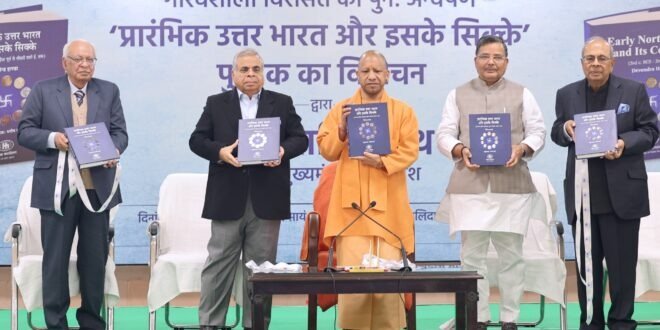
Ancient coins are an important part of history. They reveal stories of early economies that shaped modern currency and show how rulers exercised power in their time. They also reflect the nature of trade and commerce in those periods. Early North India and Its Coinage, unveiled by Uttar Pradesh Chief Minister Yogi Adityanath, reflects the religious, cultural, and geopolitical context that shaped these coins. Authored by historian and numismatist Dr. Devendra Handa and supported by the Hinduja Foundation, the philanthropic arm of the Hinduja Group, the book is the first comprehensive and illustrated study of early North Indian coinage. It traces how money reflected power, belief, and daily life nearly 2,000 years ago.
The publication documents coinage from the North Indian region dating from 300 BCE to 300 CE. This is India’s first comprehensive and illustrated study, featuring over 850 coins and representing the country’s largest documented assemblage of indigenous coinage from this period in North India. Authored by historian Devendra Handa, the book provides a detailed look at coins from different states, tribes, and kingdoms after the Mauryan period, covering regions such as Mathura, Kannauj, Panchal, Kaushambi of Ganga–Yamuna doab and other regions in the states of Uttarakhand, Punjab, Haryana, Himachal Pradesh and Rajasthan.
Yogi Adityanath, Chief Minister of Uttar Pradesh, said, “Understanding and preserving history is a national responsibility, and I commend the Hinduja Foundation for this remarkable initiative. The book sheds light on the economic, cultural and political fabric of early North India and highlights the importance of preserving the region’s historical heritage for future generations. This book not only chronicles India’s heritage but also underscores the enduring contributions of our civilisation to world history, making it an invaluable resource.”
Ashok P. Hinduja, Chairman, Hinduja Foundation, said, "I extend my sincere gratitude to the Hon’ble Chief Minister of Uttar Pradesh, Shri Yogi Adityanath ji, for unveiling this important volume, and supporting the plan for public display of these coins at the museum in Lucknow. The incursions of foreign influence throughout history across India had disrupted society and led to loss of precious artifacts and historical records and with that the loss of our heritage and cultural roots. With a 110- year legacy rooted in India, the Hinduja family has always seen itself as a custodian of the country’s cultural and civilisational heritage. Thus, through the Hinduja Foundation’s numismatic collection and the book, we are committed to preserving India’s legacy.”
Raman Kalyanakrishnan, CEO, Hinduja Foundation, said, “This publication marks an important step in introducing a significant part of North India’s glorious heritage to the public. By showcasing these coins, we enable scholars, students and the wider public to engage with India’s early civilisations first-hand, while ensuring that this heritage is carried forward for future generations. The Hinduja Foundation is committed to preserving, promoting, and fostering the artistic and cultural heritage of India.”
The book features an extraordinary variety of coin shapes, metals, and symbols, with images of gods, temples, and early depictions of deities such as Kārttikeya, Śiva, and Lakṣmī. Drawing on archaeological discoveries and relevant parts of the Hinduja Foundation’s collection, it explains how coins offer clues to trade, power, religion, and daily life, making the subject easy to understand and engaging for anyone interested in India’s early history.
What's Your Reaction?