India Eases FGD Norms for Coal Plants, Balancing Environment and Industry
India extends FGD compliance deadlines for coal plants to 2027, balancing environmental goals with industrial viability.Explore India’s relaxed FGD norms for coal plants, aiming to balance air quality improvements with economic pressures, and their implications for the energy transition.
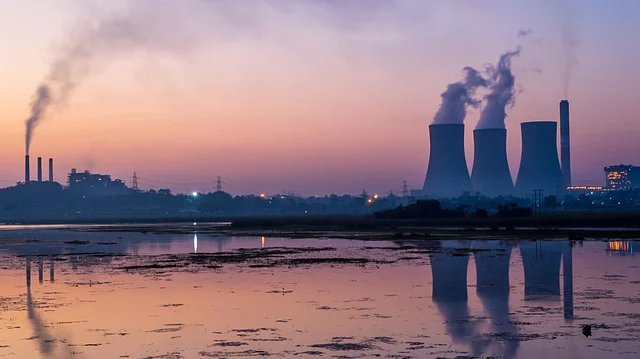
India has relaxed Flue Gas Desulfurization (FGD) norms for coal-fired power plants, extending compliance deadlines to 2027 to balance environmental goals with industrial viability. This article explores the policy’s implications, environmental trade-offs, and challenges in India’s energy transition.
The Ministry of Environment, Forest and Climate Change has extended FGD installation deadlines for coal plants, requiring only 50% of units to comply by 2027, down from 100% by 2022. FGD systems remove sulfur dioxide (SO2), a major pollutant causing acid rain and respiratory issues. The decision responds to industry concerns about high costs, estimated at Rs 10 lakh per MW, and supply chain constraints for FGD equipment.
Economically, the relaxation supports India’s coal sector, which employs 1.5 million workers and generates 70% of electricity. Delayed compliance saves $2 billion in immediate costs, preserving plant viability amid rising renewable competition. However, it risks delaying health benefits, as SO2 contributes to 1.2 million premature deaths annually in India, per WHO estimates.
Environmentally, the policy delays SO2 reductions, with coal plants emitting 10 million tonnes annually. This undermines India’s air quality goals, as cities like Delhi face severe pollution. The ministry argues that renewable growth, projected to reach 300 GW by 2030, will offset emissions. Critics, however, highlight that prolonged coal reliance contradicts net-zero targets, with coal plants emitting 1 billion tonnes of CO2 yearly.
Challenges include enforcement and technology access. Only 20% of plants have installed FGD systems due to limited domestic manufacturing. Imports from China, a major supplier, face geopolitical risks. The policy’s flexibility may weaken accountability, as past relaxations led to non-compliance. The government plans to monitor emissions via real-time sensors to address this.
Community engagement addresses public health concerns. Awareness campaigns educate urban residents about air pollution risks, while subsidies support cleaner coal technologies. Critics argue that prioritizing industry over health undermines environmental justice, particularly for low-income communities near plants.
Globally, India’s approach contrasts with stricter regulations in the EU, where coal plants face 2025 phase-out deadlines. International collaboration could enhance FGD technology transfer, but India’s reliance on coal, driven by energy security, limits alignment with global trends. Critics question whether renewables can scale fast enough to offset relaxed norms.
Long-term success requires balancing priorities. The government is investing $1 billion in renewable integration to reduce coal dependency. Monitoring systems and stricter penalties aim to ensure eventual compliance. Research into low-cost FGD systems could address cost barriers, supporting cleaner coal operations.
Conclusion
India’s relaxed FGD norms reflect a pragmatic balance between environmental and industrial needs but risk delaying health and climate benefits. Strengthening enforcement, investing in renewables, and fostering technology access are critical to align with global sustainability goals.
Source:Business Outlook
What's Your Reaction?