Researchers have developed lightweight solar panels using a honeycomb-inspired aluminium structure, reducing panel weight by 48% while maintaining durability and performance.
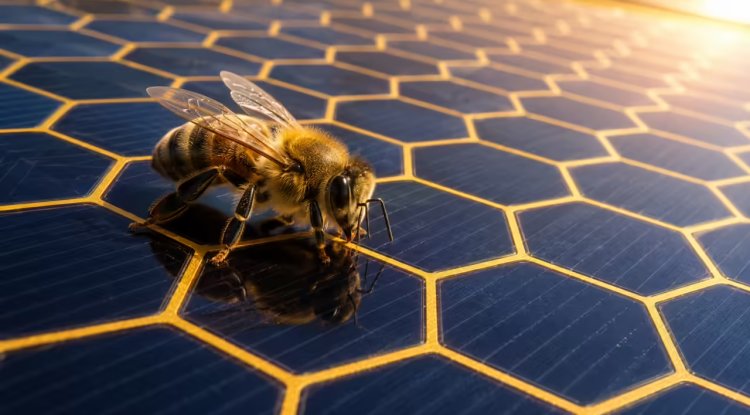
Scientists have created a new lighter solar panel design using a honeycomb-like pattern, which can reduce the weight of the panels by almost half without compromising their performance and durability. This research paper, published in the journal Solar Energy Materials and Solar Cells, might aid in solar installations on rooftops of buildings unable to bear the load of existing heavy solar panels.
Existing photovoltaic (PV) panels are made of glass and other heavy materials for protection against environmental elements and mechanical strains. Although efficient, they increase the weight of solar panels considerably.
In order to solve this problem, the scientists have used an aluminium honeycomb sandwich structure instead of the conventional structure. Honeycomb geometry used by honey bees is known for its efficiency in building structures that require high strength without using much material.
These modified solar modules weigh 6.2 kilograms per square meter, compared to 10.5 kilograms per square meter for traditional glass-based PV panels. The weight difference is approximately 48 percent.
The team also evaluated whether the lighter construction could withstand long-term environmental exposure. The modules underwent a series of industry-standard reliability tests, including damp heat exposure, humidity-freeze cycles, ultraviolet ageing, mechanical load testing and potential-induced degradation assessments. According to the study, the panels met all required performance and durability benchmarks without significant loss of structural integrity or power output.
Reducing panel weight could have practical benefits across the solar industry. Lighter modules are easier to transport and handle during installation, lowering labour demands and reducing shipping-related emissions. They may also allow solar systems to be installed on older buildings, commercial rooftops and warehouses where structural load limits have restricted the use of conventional panels.
The design could also reduce the amount of raw material required during manufacturing. By using a honeycomb core to achieve structural strength with less material, manufacturers may be able to lower production costs while reducing material waste.
This study is an example of the general tendency toward biomimicry, when engineering solutions borrowed from nature are applied to solve engineering problems. Honeycomb construction has been utilized for aerospace and automotive purposes due to its high strength-to-weight ratio. According to the newest study, such an approach can be useful for designing more efficient photovoltaic panels without reducing their reliability.
With the development of alternative energy sources, the possibility of developing lightweight photovoltaic modules can become very helpful.
What's Your Reaction?