As major technology investments reshape Visakhapatnam, a programme by Sambhav Foundation is helping fisherfolk in Andhra Pradesh build digital skills, improve market access and strengthen livelihoods, ensuring they are not left behind in the region's economic transition
When people talk about Google's big investment in the Visakhapatnam AI Hub, the conversation usually stays in familiar territory — data centres, infrastructure, jobs in tech, and the city's place on the global map. What rarely comes up is the small fishing village just outside the city, where families have been going out to sea for generations, often with little more than a boat, a net, and decades of inherited knowledge about the water.
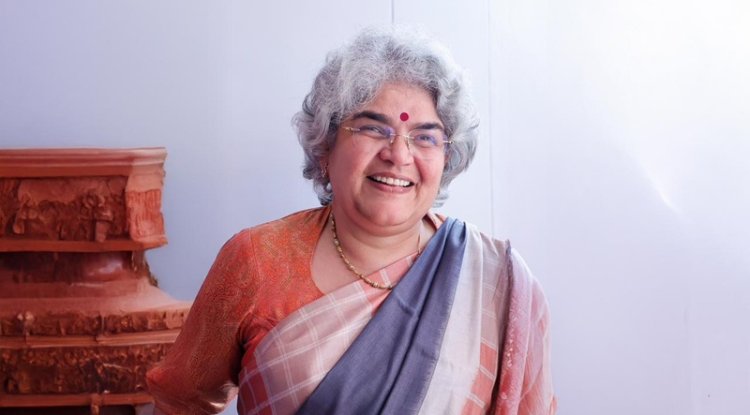
That's the gap a new programme between Sambhav Foundation is trying to close with technology. Dr Gayathri Vasudevan, Founder and Chairperson of Sambhav Foundation, spoke about why this work matters, what problems it's actually solving, and why she believes it could become a model for coastal communities well beyond Andhra Pradesh.
A Village Living Next Door To The Future
According to Dr Vasudevan, big technology investments tend to reshape a region long before the people living there are ready for it. New infrastructure arrives, supply chains shift, markets go digital — but communities that have relied on traditional occupations for generations rarely get to move at that same pace.
For the fisherfolk of Rambilli, she says, the real issue isn't just having access to a livelihood — it's whether that livelihood can hold up in an economy that's changing fast around them. "Fishing communities are already navigating climate uncertainty, fluctuating incomes, changing market structures, and increasing dependence on digital systems for information, payments, and access," she explained. Many households, she added, still don't have the tools or confidence to take part in those shifts.
That's where this partnership comes in. While the AI Hub is about building infrastructure for the future, Sambhav Foundation's role is to make sure the communities living right next to that growth aren't simply left out of it. As Dr Vasudevan put it, conversations about technological progress can't stay limited to data centres and industrial expansion — they have to include the people whose lives and livelihoods sit right alongside that expansion.
The Foundation's approach treats technology not as a magic fix dropped into a community, but as something that only becomes useful once it's grounded in how people actually live and work — whether that's a digital payment, a weather alert, or a GPS tool for navigating the sea. The goal, she says, isn't to replace what fishing communities already do, but to make those livelihoods more stable, more profitable, and more resilient as the economy around them shifts.
What Problem Is This Actually Solving?
Dr Vasudevan said the idea for the programme didn't come out of nowhere — it came from watching the same pressures show up again and again across coastal communities. Unpredictable weather is making life at sea harder to plan for. Markets are getting more fragmented and more digital. Middlemen continue to play an outsized role in what fishermen actually get paid. And on top of all that, access to basic things — financial systems, government welfare schemes, market information — often hasn't kept pace.
"Many households are working harder within systems that are becoming less stable around them," she said.
Her view is that none of these problems can be solved one at a time. They need to be tackled together — livelihood support, digital skills, financial literacy, and better access to markets, all rolled into one effort. And with large-scale investment now arriving in Visakhapatnam, she sees this as exactly the moment to act, before communities with deep traditional knowledge get pushed to the margins of an economy that's moving on without them.
Teaching Technology By Making It Useful, Not Abstract
One of the trickiest parts of any digital inclusion programme is getting people to actually use the tools they're given. Dr. Vasudevan says owning a smartphone doesn't automatically mean someone feels confident using it for things like banking or navigation — and handing someone an app without context often just creates dependence rather than real change.
What's worked in Sambhav Foundation's other skilling programmes, she says, is connecting technology directly to people's everyday lives. A weather app matters when a fishing family can see, in practical terms, how it helps them avoid a dangerous trip. A digital payment tool matters when it makes getting paid — or accessing a welfare scheme — simpler. GPS becomes worth learning when it's tied to safety and to getting more done at sea.
That's why the programme starts with a baseline assessment to understand how the community currently works and what they're comfortable with, before any training is designed. From there, the training is built around local language, literacy levels, and how people actually use tools day to day. And because real behaviour change takes time, the programme leans heavily on repetition, peer learning, and refresher sessions — Dr Vasudevan notes that people often trust a new tool more when they see someone from their own community using it successfully, rather than through a one-off demonstration.
Middlemen Aren't The Enemy — Dependence Is
A common worry with programmes that improve market access is that they'll upset the existing networks of traders and middlemen that communities currently rely on. Dr Vasudevan pushed back on the idea that this has to mean conflict.
Middlemen exist, she explained, because they fill real gaps — in transport, storage, credit, and getting goods to market. The issue isn't that they exist; it's how dependent communities become on them when they don't have other options, information, or bargaining power. For fishing communities specifically, that dependence often shows up directly in the price they get for their catch.
Her approach isn't to dismantle these relationships but to strengthen the position of the fishing communities within them — through better access to market information, financial literacy, and ways to add value to what they catch before it's sold. "The emphasis is therefore on expanding options rather than forcing replacement models," she said. Over time, as communities gain more knowledge and more choices, their bargaining position naturally improves — without the programme having to force anyone out of the picture.
Can This Work Anywhere Else?
Looking ahead, Dr Vasudevan was asked whether this model could be replicated in other coastal regions — and her answer came with a clear caveat. Coastal communities might look similar from the outside, but the details — local economies, environmental conditions, market relationships, even migration patterns — can vary a lot from one place to the next.
So rather than copying the programme exactly, she says what travels well are the underlying principles: building trust with the community, rolling things out in phases, keeping skilling tied to real livelihoods, and staying present on the ground over the long term. The specific work of fishing communities in Andhra Pradesh might look different from those in Odisha, Gujarat, or Tamil Nadu — but the broader challenges, from income instability to digital exclusion, show up across most coastal regions in similar ways.
"Scalability, therefore, depends less on expansion speed and more on whether implementation models remain locally embedded as they grow," she said — which is also why, from the start, this programme was designed to unfold in phases rather than as a single rollout. Trust, behaviour change, and community ownership, she says, simply take time to build.
For Sambhav Foundation, the bet is that progress and inclusion don't have to be separate stories — that a region can build something as ambitious as an AI hub while still making sure the fishing families a few kilometres away aren't left wondering where they fit into it.
What's Your Reaction?