In an interview with ResponsibleUs, he put it simply: until the transmission line is built, renewable energy provides no benefit
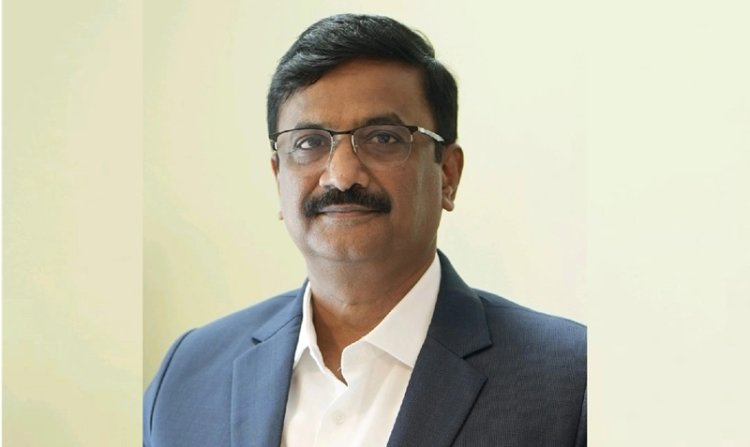
For years, India’s power story was about building plants. Coal, then solar and wind. Big numbers, big targets. But somewhere between generation and consumption sits a quieter, tougher piece of the puzzle. Transmission. Rajesh Kumar Singh, Chief Executive Officer, Jyoti Structures Limited, puts it simply. “Until the transmission line is built, there is no benefit from renewable energy.”
It sounds basic, but it is where the real pressure is building. Jyoti Structures' journey goes back to 1974. The company started with manufacturing, setting up its first plant in Nashik. Over time, it moved into EPC work in transmission and distribution. Today, it builds the towers and lines that carry electricity across long distances. Two plants in Nashik and one in Raipur handle tower manufacturing.
The company does not generate power. It moves it. And that role is getting harder.
Renewable energy has changed the timeline of the power sector. Solar and wind projects can be built fast, sometimes in just 12 to 15 months. Transmission lines take almost double that time. Around 24 months, sometimes more.
This gap creates a strange situation. Power is ready, but it cannot move. Plants wait. Investments get stuck. “That is why transmission is the most challenging part,” Singh says. The geography makes it even more complex. Renewable energy is not built where demand is. It is built where conditions are right. Rajasthan, Gujarat, parts of Karnataka. But the demand sits in cities like Mumbai and Delhi.
So power has to travel. And that means long transmission lines. These are not small projects. Costs add up quickly. On the EPC side, building a transmission line can cost around ₹4 to ₹5 crore per kilometre. For developers, the cost goes up to ₹10 to ₹11 crore per kilometre. A 100 to 150 km line can mean an investment of ₹2000 to ₹3000 crore.
Developers like Power Grid and private players take up these projects. Companies like Jyoti execute them. But money is not the biggest hurdle. Land is.
India still uses old rules for transmission corridors. Towers can be placed on private land under legacy laws. There is compensation, but no clear acquisition process. This leads to disputes with landowners. Projects slow down. “The biggest delay is because of right of way,” Singh says.
To make it more complicated, land is a state subject. Each state has its own way of handling compensation. Gujarat pays differently. Rajasthan follows another model. This lack of uniformity creates friction.
Over the past 50 years, Jyoti Structures has built about 37,000 circuit kilometres of lines and supplied more than 1.15 million towers. Its work has reached over 45 countries. But even with that experience, the present phase feels different. There are new pressures now.
Supply chains are getting tighter. Raw materials depend on gas. Any disruption affects production. Transport is also becoming uncertain. Singh says the impact is still small, around 4 to 5 per cent, but a prolonged disruption could become serious.
At the same time, demand is shifting. Traditional sectors like railways, ports and airports continue to grow. But new demand is coming from unexpected places. Data centres are one example.
These facilities need constant, reliable power. And increasingly, they want clean power. Renewable energy. But again, the same problem. Data centres are near cities. Renewable energy is far away. So more transmission lines are needed.
Green hydrogen is another area picking up. Some argue that decentralisation could reduce the need for long transmission lines. Build closer to demand. Reduce costs.
But Singh is clear. It cannot fully replace long-distance transmission. Energy sources are still location-based. Earlier, coal plants were built in eastern India where coal was available. Now solar follows sunlight. You cannot shift geography.
There are some solutions coming in. Battery storage is one of them. It can store solar power generated during the day and use it later. Like an inverter, but at a much larger scale. Right now, it is expensive. But policy support is coming in. Over time, it could become a key part of the system.
Still, for now, transmission remains the backbone. “Like water needs pipes, power needs transmission,” Singh says.
India’s energy transition is moving fast. Targets are ambitious. Projects are coming up across states. But the real test may not be how much power is produced. It may be how well it is moved.
What's Your Reaction?