Research shows wildfires in northern peatlands and permafrost soils can release carbon stored for hundreds to thousands of years, raising concerns that climate models may underestimate wildfire emissions.
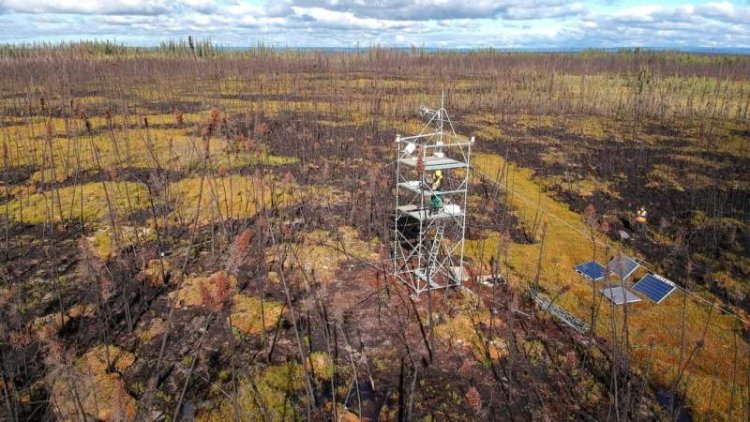
Wildfires occurring in northern peat areas and permafrost areas could be releasing significantly more carbon into the atmosphere than previously believed, according to new research that studied wildfires occurring in boreal forests. The research indicates that wildfires could be burning deep into the ground, causing more carbon to be released into the atmosphere than previously believed.
The research indicates that the effect of wildfires occurring in Arctic and sub-Arctic areas could be underestimated since most of the carbon being released into the atmosphere is coming from underground peat areas instead of vegetation.
Why peatlands and permafrost have so much carbon
Peatlands and permafrost soils are like carbon safes. When it is cold, it slows down the process that breaks down plant matter. This means that pieces of organic matter build up in the soil.
Scientists estimate that permafrost soils store more carbon than is currently present in the atmosphere. Fires and rising temperatures are major factors that disturb these soils.
How wildfires release ancient carbon
Wildfires are known to mainly burn the plants and trees that are visible in the forest. However, when it comes to a peatland, the fire burns deep down in the soil. These kinds of fires are said to smolder over a long period of time and release a lot of carbon dioxide gas into the atmosphere.
The fire may be small in size, but it burns deep down in the soil. The carbon released from the soil may be underestimated. In some cases, the carbon may be underestimated by a large margin.
What the research implies
The research emphasizes why soil carbon should always be factored in when determining wildfire emissions.
Currently, most of the monitoring facilities are focusing on vegetation that is prone to burning, but are perhaps not taking into account the peat soils as well.
With better data on wildfire emissions, scientists will be able to have a better understanding of how northern ecosystems are a part of the global carbon cycle.
The warming that is happening in the Arctic region is expected to increase, as is the effect of wildfires and the carbon found in permafrost soils.
What's Your Reaction?