India is exploring the use of polymer banknotes to create a more durable and sustainable currency system by reducing waste, improving security and lowering the long-term environmental impact of currency production.
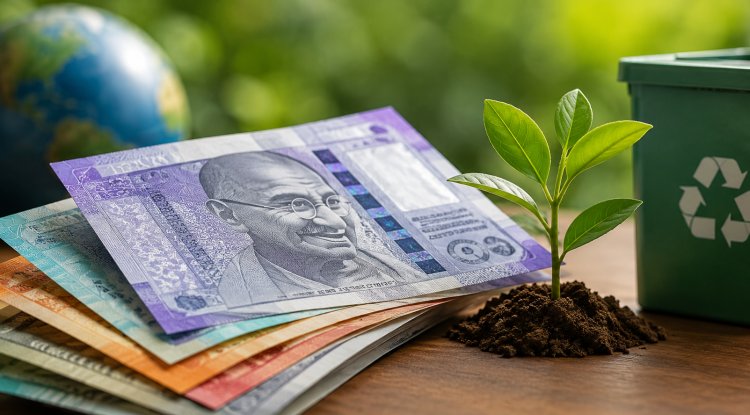
India may soon take a major step towards making its currency system more sustainable by exploring the use of polymer (plastic) banknotes instead of traditional paper notes. The move is aimed at reducing the environmental impact of frequently replacing damaged currency while improving the lifespan, security and efficiency of banknotes in circulation.
The Reserve Bank of India (RBI) is considering the introduction of polymer money that has already been adopted by some countries such as Australia, Canada, the UK, and Singapore. While today’s Indian currency is printed on cotton paper, polymer banknotes are printed on plastic material, which is more resistant to damage than the conventional cotton paper.
One of the main environmental advantages of polymer money is its longevity. The notes are able to last two to four times longer compared to normal paper-based money. Thus, it requires less replacement notes to be produced annually. It might also help to save on the resources required for production, such as water and energy, as well as decrease the number of notes that need to be discarded.
Every year, India destroys billions of old notes, which become torn, soiled, or worn out due to constant handling and variable climatic conditions in India. The use of plastic money would increase the lifespan of the currency and thus decrease the wastage that is created as a result of constant printing and destruction of paper currency.
Besides environmental benefits, polymer notes also offer stronger protection against counterfeiting. They can include advanced security features such as transparent windows, specialised holograms and other designs that are much harder to copy than those found on traditional paper notes. This could strengthen the security of India's currency and help reduce the circulation of fake banknotes.
Durability is another positive factor that makes these notes very convenient for usage. Being resistant to water and dirt as well as having great resistance to tears, polymer money can be used for many years without becoming unusable. Such qualities become especially useful in India where there are many people who prefer cash money.
However, the proposed shift also raises environmental questions. Since polymer notes are made from plastic, experts say they must be properly recycled at the end of their life to prevent additional plastic waste. While they generate less waste because they last much longer, an effective recycling system will be essential to ensure the environmental benefits are fully realised.
Environmental experts note that if India adopts polymer currency, establishing an efficient collection and recycling system will be essential. Without proper recycling infrastructure, discarded polymer notes could contribute to plastic waste, reducing the environmental benefits of the transition.
There are also practical challenges. Switching to polymer currency would require new printing technology, changes in production processes and investments in recycling infrastructure. The initial manufacturing cost of polymer notes is also higher than that of paper notes. However, experts believe these costs could be offset over time because the notes do not need to be replaced as frequently.
Decision for introduction of plastic money by the RBI has not been taken so far. However, as of now, the central bank is working on studying the viability of this proposal and assessing the technologies that can help in making it happen. This will definitely bring about a revolution in Indian currency system.
India's experimentation with polymer currency is indicative of the efforts being made in the country, and across the globe, to develop a system that maximises economic gains while minimising environmental impact. Despite some difficulties, this could be a significant move towards developing a better currency system.
Carbon Emissions and Impact on Environment
The Reserve Bank of India has not released any estimate of how much carbon emissions could be reduced by switching to polymer banknotes. However, research from around the world has shown that although polymer-based currencies emit more carbon dioxide during the manufacturing process, the fact that they last longer means that the overall environmental effect is less compared to the paper-based notes. The amount of emissions caused by the processes involved in currency handling is therefore expected to decrease with time, though how much it will be reduced in India is yet to be determined.
What's Your Reaction?