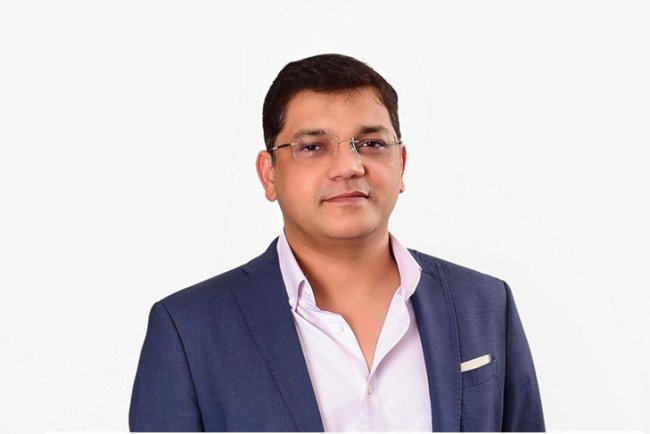
Dr Avishek Kumar, Founder and Director of Sunkonnect, speaks about what is really slowing India down, where the system is falling short, and what needs to change

India’s clean energy push is moving fast, but the gaps are showing just as clearly. Solar and wind capacity are rising, yet questions around grid readiness, execution quality, and long-term sustainability remain unresolved.
In an interview with Responsible Us, Dr Avishek Kumar, Founder and Director of Sunkonnect, spoke about what is really slowing India down, where the system is falling short, and what needs to change if the energy transition has to work beyond announcements and targets.
India is scaling up renewables fast, but land, grid and storage remain issues. Where do you see the biggest bottleneck today?
The grid. Land challenges are real, but policy is beginning to catch up. Storage is maturing faster than most expected. But our transmission and distribution infrastructure is being outpaced by the speed of renewable installations—and that gap is becoming critical. I have seen promising projects curtailed not because of poor engineering or lack of demand, but simply because the grid could not absorb the power. That is a structural issue, not a technology one. Across the solar and wind projects Sunkonnect has worked on, one of the most consistent constraints has been grid readiness. India needs to treat grid modernisation with the same urgency it once gave solar tariff reduction. Until we do, we are effectively building a renewable fleet without the roads to move the electricity.
Studies by the International Energy Agency show clean energy demand is rising sharply. Is India ready to meet this without risking grid stability?
Not yet — and we need to be honest about that. Variable generation from solar and wind demands a grid that can flex in real time. While forecasting tools, balancing mechanisms, and storage are improving, they are not scaling fast enough. From the storage projects Sunkonnect has contributed to — involving over 500 person-days of specialised engagement — we see firsthand that much of the grid’s resilience challenge comes down to insufficient storage depth and weak integration planning. The ambition is there. The execution timeline now needs to tighten significantly.
You have worked on large renewable projects. What usually goes wrong on the ground that people don’t talk about?
Projects get celebrated at inauguration, and then quietly underperform for the next two decades. I have seen solar installations lose significant output within five years simply because maintenance protocols were not embedded from day one. Nobody writes headlines about that. At Sunkonnect, we started from the premise that quality does not end at commissioning — it is an ongoing discipline. Whether it is a 100 MW plant in Andhra Pradesh, rooftop systems at educational institutions through our RISE programme, or the 32 substation projects we have supported, the pattern is consistent: the projects that perform are the ones where someone is accountable every single day, not just on launch day.
There is a lot of talk around quality in solar and wind projects. What does “quality” actually mean in real terms?
Quality is what a project does in year 15, not year one. It is whether your panels are still producing within spec after a decade of monsoons, dust cycles, and temperature extremes.
Sunkonnect’s collaboration with SERIS (Solar Energy Research Institute of Singapore) was built on exactly this principle — bringing rigorous, tropical-climate-specific module testing to Indian EPC players and manufacturers. We focused on aligning with IEC international standards because we knew that the hundreds of gigawatts India plans to deploy would face significant financial and operational risk if quality is not built in from the start.
At Sunkonnect, we treat quality as a lifecycle discipline — embedding best practices from the drawing board through installation and into daily operations.
In real terms, quality means resilience and accountability over time. High-quality projects don’t just perform better; they inspire investor confidence and set the benchmark for the industry. Everything else is just a glossy spec sheet.
A report by the Council on Energy, Environment and Water points to gaps in project execution. How can developers fix this?
Three things: transparency, accountability, and local ownership. Too many projects are still managed from urban offices by teams that visit sites only a few times a year. That disconnect is where execution gaps begin. Real-time digital monitoring can change that equation. We have been developing platforms that link materials directly to installed system performance — so a developer can know exactly how a module from a specific batch is performing on any given day.
But technology alone is not enough. You also need strong community engagement, trained local workforces, and clear escalation paths when something goes wrong. In my experience, execution gaps don’t come from bad intentions — they come from poor information flows and diffuse accountability.
Closing that gap requires investing in people as much as systems. That is precisely why we are building the Sunkonnect Green Academy with a target of training 20,000 clean energy professionals over the next five years.
AI and IoT are now being used in energy. Are these tools really helping, or are they still limited to pilot projects?
They are well past the pilot stage — at least for those willing to invest in integration. We built Datakrew specifically to bring AI and IoT into industrial energy systems, and the outcomes are measurable: predictive maintenance reducing unplanned downtime, smarter load forecasting lowering balancing costs, and real-time asset monitoring catching failures before they cascade.
Through SunSol, our distributed solar and C&I microgrid platform, currently scaling from S$1.2M toward S$24M in revenue by 2029, we are deploying cloud-based monitoring that creates recurring, high-margin income streams long after the EPC contract closes.
The tools work. The real bottleneck now is integration — talent, data discipline, and digital infrastructure, especially in Tier 2 and Tier 3 cities. That is the next frontier, and it is exactly where Sunkonnect’s expansion is focused.
Smart grids are often seen as the future. But India still struggles with basic power losses. Are we moving too fast on tech without fixing the basics?
It is a legitimate tension, and we should be honest about it. Transmission losses in parts of India are still unacceptably high. Layering smart grid software over that infrastructure does not solve the problem, it simply makes the inefficiency more visible. My view is that infrastructure rehabilitation and smart grid deployment must move in parallel, not sequentially. Digital tools can actually accelerate the process by identifying losses, improving visibility, and enabling faster intervention. Across the 200 kilometres of transmission line projects Sunkonnect has contributed to, and 32 substation engagements, the lesson is consistent: you cannot skip the engineering fundamentals. Ultimately, this comes down to prioritisation. It requires the willingness to invest in unglamorous grid strengthening alongside more headline-driven renewable capacity expansion. Technology helps, but only when the foundation is sound.
On green hydrogen, India has big plans under the National Green Hydrogen Mission. What are the early signs from projects on the ground?
Cautious optimism, with emphasis on cautious. Sunkonnect has contributed to early-stage green hydrogen projects, enough to understand the gap between announcements and execution. Alongside this, my experience at Hydgen, working on both AEM and PEM electrolyser technologies, has given me a close view of how the technology is evolving and where the real bottlenecks are.The technology demonstration phase is progressing and the collaboration across industry is real. But on the ground, the challenges are equally clear. Costs are still too high for most industrial applications, domestic electrolyser manufacturing is still nascent, and offtake certainty, which is what ultimately unlocks serious private capital, remains limited. In my view, the Mission’s credibility will not be determined by how many MOUs get signed, but by whether the first wave of projects can actually deliver at the promised cost curve and scale reliably.
Green hydrogen is still expensive. In your view, what needs to happen for it to become practical for industry? Cost is the headline issue, but the real challenge is the ecosystem around it. Green hydrogen will become practical for industry when three things come together. First, electrolyser costs need to come down through scale and manufacturing maturity. From my experience working on AEM and PEM technologies at Hydgen, we are moving in the right direction, but we are not yet at the point where costs can compete without support. We are starting to see positive signals on this front. Large industrial players like Reliance partnering with global technology providers such as Samsung indicate that serious capital and manufacturing capability are beginning to align behind the sector.
Second, access to low-cost, reliable renewable power is critical. Hydrogen is essentially a way of storing electricity, so if your input power is expensive or inconsistent, the economics simply don’t work. Third, and most importantly, is offtake certainty. Industrial players will only commit when they have confidence in long-term supply, pricing, and policy stability. Without that, private capital will remain cautious. In my view, once these pieces come together, cost will follow and adoption will accelerate. Until then, green hydrogen will remain promising, but not yet practical at scale.
Many companies now talk about Net Zero. A United Nations report has raised concerns about weak targets. Are companies in India taking this seriously?
Seriously enough to set targets. Seriously enough to act, that is still uneven. The leaders are genuinely embedding decarbonisation into procurement, operations, and supply chains. But a significant middle tier is still at the target-setting stage without credible roadmaps behind them. Sunkonnect’s sustainability practice, currently in its foundational year, was built to bridge that gap, offering greenhouse gas accounting, net-zero roadmaps, and IGBC, WELL, and LEED certification support. What we see consistently is that companies do not lack ambition; they lack a structured starting point. Market pressure from global supply chains is accelerating action faster than domestic regulation. That is actually encouraging, it tends to be more consistent and outcome-driven. Over the next few years, the difference between intent and execution will become very visible.
You work with corporates on clean energy. What is the first step companies usually get wrong?
They buy before they diagnose. A company will procure a rooftop solar system before doing a proper energy audit and then wonder why the ROI does not match the pitch deck. The first step should always be understanding your actual consumption profile, when you use energy, where it is wasted, and what your real emissions baseline is.
What we consistently see is that clients can achieve up to 25% energy savings before adding a single renewable asset, purely through efficiency and better building management. That completely changes the investment case.
Efficiency first, then renewables, then storage. In that order. We have codified this approach across the decarbonisation and Net Zero engagements we have delivered, and the pattern is remarkably consistent.
Water use in energy projects is often ignored. How big is this issue, especially in water-stressed regions?
Bigger than most developers acknowledge. Solar and wind are marketed as low-water technologies, and they are relative to thermal. But construction, panel cleaning, and in some cases cooling still create meaningful water demand. In water-stressed regions like Rajasthan or parts of Maharashtra, this is not a footnote. It becomes a community issue and, in some cases, a project viability issue. The solutions exist. Dry-cleaning systems, waterless soiling mitigation, and better site selection. But they need to be designed in from the start, not added after problems begin. Water should be a first-order planning variable in every renewable project
Green building certifications are growing, but do they really change how buildings operate, or is it more about labels?
Both exist, and it is worth being honest about that. I have seen buildings earn LEED certification and then operate at half the efficiency they were designed for, simply because facilities teams were not trained, monitoring systems were not maintained, or the certification was treated as the finish line. I have also seen certification genuinely transform how teams think about energy, water, and air quality on an ongoing basis. The difference comes down to whether it drives day-to-day operations or just a one-time milestone. At Sunkonnect, we focus on embedding continuous monitoring and performance accountability into every certification engagement. That is what sustains outcomes beyond design intent. We recently worked as a carbon-neutral partner for the Foundation for MSME Clusters at the 9th PMO Awards, calculating and offsetting all event-related emissions. That kind of visible, accountable action is what shifts behaviour and culture.
Ultimately, certifications can set the direction, but only consistent execution determines performance.
Smaller cities are now seeing more industrial growth. How can clean energy reach these areas faster?
This is exactly where Sunkonnect’s current expansion is focused. We are moving deliberately beyond the major metros, bringing consulting, digital energy management, and certification support to emerging urban centres and industrial hubs, because that is where India’s next wave of emissions growth will come from. Our early work, including a sustainability engagement in Indore in the educational services sector, is a good microcosm of this opportunity. The solutions for smaller cities are different from what works in Mumbai or Bengaluru. Decentralised rooftop solar, local battery storage, and mini-grids can bypass grid bottlenecks entirely. But the real challenge is execution. Financing models need to fit SME balance sheets, approvals need to be simpler, and technical support must be locally accessible. Centralised playbooks designed for large cities will not scale to Tier 2 and Tier 3 India. Clean energy will grow here only if it is adapted to local realities.
Finally, what is one hard truth about India’s energy transition that people prefer not to talk about?
The transition will displace livelihoods before it creates new ones, and we are not preparing adequately for that lag. In coal-dependent regions, the jobs that clean energy will eventually create will not arrive on the same timeline as the jobs that decarbonisation eliminates. That gap is where social resistance builds, and if we do not address it honestly, it will slow, and in some regions, potentially derail, the transition. This is exactly why Sunkonnect Academy is not just a talent pipeline for our own business. Piloting in Nalanda, Bihar, with its deep educational legacy and access to Tier 2 and Tier 3 talent pools, is a deliberate step towards building skills where the disruption will be most felt. A just transition is not a slogan. It is a precondition for a durable one.
What's Your Reaction?