India has launched the WT-MARUT digital platform to improve supply chain management in the wind energy sector as the country expands domestic manufacturing capacity and wind power installations.
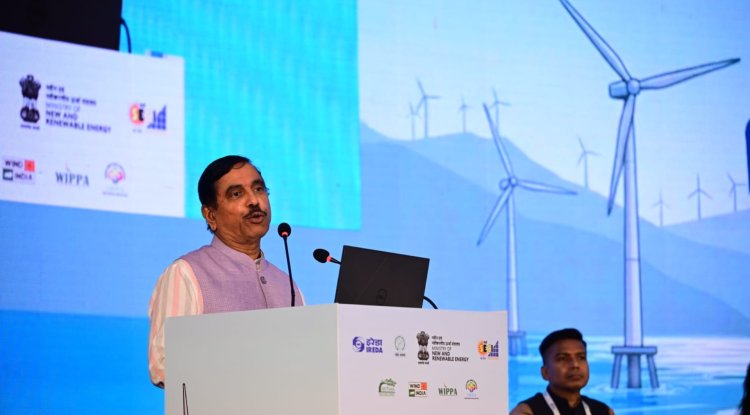
India's wind energy sector is increasingly focused on supply chain management and domestic manufacturing as capacity additions accelerate. At the Global Wind Day Conference in Goa, Union Minister for New and Renewable Energy Pralhad Joshi launched the Wind Turbine Supply Chain Management Portal (WT-MARUT), a digital platform developed under the Ministry of New and Renewable Energy with support from the Indian Wind Turbine Manufacturers Association.
The portal is designed to help track, qualify and manage suppliers and components used in the wind energy sector. According to the ministry, the platform aims to improve visibility across the supply chain, support compliance with domestic manufacturing requirements and facilitate coordination between manufacturers and suppliers.
The launch comes as India's wind sector records higher installation activity. During FY2024-25, the country added 6.1 GW of new wind power capacity, representing a 46% increase from the previous year. India's total installed wind capacity has now exceeded 56.1 GW, making it the world's fourth-largest wind power market.
Despite this growth, only a small portion of the country's estimated wind energy potential of 1,164 GW has been developed. Studies by organisations including the Central Electricity Authority, TERI and the National Institute of Wind Energy have identified a significant expansion of wind generation as part of India's long-term energy transition plans.
Government projections envisage wind capacity reaching 100 GW by 2030, with further growth expected over the following decade. Industry officials say achieving these targets will require greater manufacturing capacity, stronger supplier networks and improved project execution.
The WT-MARUT platform is intended to provide information on approved suppliers and components while supporting adherence to the Approved List of Models and Manufacturers framework. It also seeks to encourage the use of domestically produced components by helping manufacturers identify local suppliers.
The platform includes provisions for hosting industry data within India. Officials say this is intended to support data management and oversight of supply chain operations.
The launch also coincides with rising exports from India's wind manufacturing sector. According to a report by the Indian Wind Turbine Manufacturers Association and PwC, exports of wind turbines and components exceeded ₹12,000 crore in the last fiscal year, up 50% from the previous year.
India currently has an estimated wind turbine manufacturing capacity of about 24 GW annually and produces key components including nacelles, gearboxes, blades and towers. Industry participants expect domestic manufacturing and exports to play an increasing role as global demand for wind energy equipment grows.
What's Your Reaction?