


An expert committee has recommended that India separately track electricity consumed by electric vehicles to improve demand forecasting, grid planning, and clean energy policymaking.
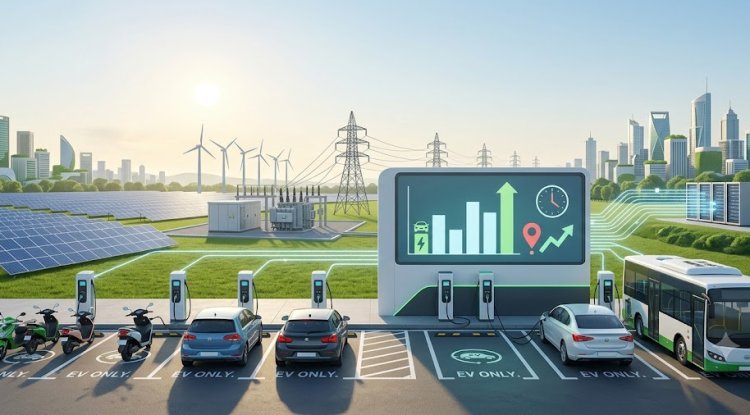
As electric vehicle (EV) adoption accelerates across the country, an expert committee has recommended that India begin separately tracking electricity consumed by EVs in its official energy statistics. The move aims to provide policymakers with a clearer picture of how transport electrification is reshaping the country's power demand and infrastructure needs.
The idea has been proposed by an independent panel of the government in its review of the Indian energy data system, which identified that there is inadequate recording of trends in energy use, especially electricity usage at EV charging stations.
According to the panel, having specific information regarding the power requirements of EVs will prove beneficial in better forecasting of electricity demand and planning of the electric grid. It is also advisable to have more details concerning industrial electricity consumption, import of coal, biofuels, and electricity generation from off-grid renewable sources of energy.
The Indian EV market has been growing quickly in recent times owing to government incentives, cheap batteries, and consumer interest in clean transportation. As more electric two-wheelers, passenger vehicles, buses, and trucks make their way into the market, there will be an increasing need for electricity to power the transport segment in the coming decade.
The industry professionals suggest that knowledge about the time and location at which EV charging takes place is going to be equally significant as knowing how much electricity these vehicles consume. The impact of charging behaviour on peak load is likely to be substantial, particularly in urban centres where the number of EVs is high.
This is a decision that fits well with the clean energy dreams of India. It is on record that India’s dream is to generate an amount of 500 GW of electricity using non-fossil fuel means by 2030. In addition to this, it also aims at achieving zero emissions by 2070. Data relating to energy will play a crucial role in meeting its ambitions.
In addition to this, the need for standardised reporting of energy-related data in various ministries and government departments was also emphasised to avoid discrepancies. According to the committee, creation of a common database will facilitate policy-making on the basis of facts.
Experts note that number of countries, including the US and EU member states, have included electric vehicle charging needs in their energy planning models. By taking a similar strategy, India would be better prepared for the rapid electrification of transport while ensuring grid reliability and efficient resource allocation.
In light of the fact that electricity is the new fuel of the future, the suggestions from the panel indicate that there should be a more up-to-date system of energy data.
What's Your Reaction?

















