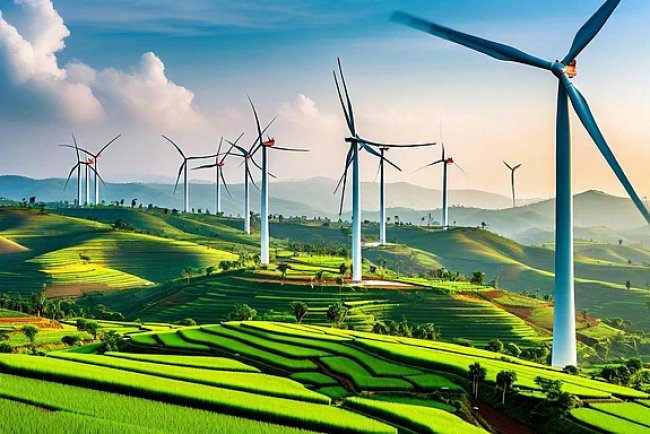
India's pipeline of clean energy and green industry projects has grown to $433 billion, boosting the country's ambitions in sustainable manufacturing and renewable energy.
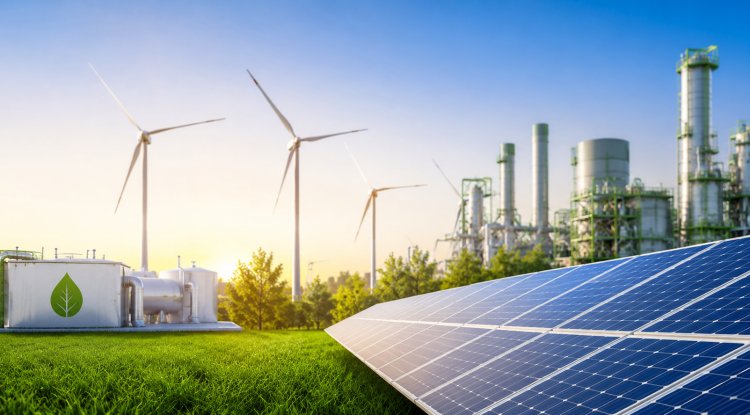
India's transition toward a low-carbon economy is accelerating, with the country's clean industrial project pipeline growing by 30% in just six months and reaching an estimated investment potential of $433 billion. According to the latest Global Project Tracker by Mission Possible Partnership (MPP), India now has the world's third-largest clean industrial project pipeline, trailing only China and the United States.
The growth demonstrates a marked change in the approach that India takes to its economic development policy. Instead of considering sustainability as an independent goal, India sees the role played by clean energy and lower-emission industrialization as the main pillars that underpin its economic progress. The pipeline consists of 65 major projects in 11 Indian states. These include projects involving green ammonia, green methanol, sustainable aviation fuel, and low-carbon aluminium.
One of the significant factors related to this report is the amount of money that is invested in renewable energy sources. Of the total $433 billion potential, $323.5 billion is attributed to renewables-based infrastructure development, and $109.6 billion is related to industrial investments. Here we can see how renewable energy becomes the base of future industry rather than just an electricity supplier.
The green ammonia category has risen to be the largest segment in the pipeline, making up 49 projects. The green ammonia refers to the production of ammonia via hydrogen generated through the use of renewable energy. In recent times, green ammonia has become known as an important fuel as well as an important source of materials in industries that aim at achieving decarbonization, such as fertiliser and shipping industries.
The growth of these projects is being supported by several factors, including India's abundant solar and wind resources, government policies promoting green hydrogen, and increasing global demand for low-carbon products. As multinational companies seek cleaner supply chains and countries look to reduce dependence on fossil fuels, India is emerging as an attractive destination for clean manufacturing and industrial exports.
Beyond environmental benefits, the expansion of clean industry could have far-reaching economic implications. Large-scale investments in green fuels, renewable energy infrastructure and low-carbon manufacturing can generate employment, attract foreign capital and strengthen India's position in future global supply chains. Experts believe the country has an opportunity to become a major exporter of green fuels and sustainable industrial products over the next decade.
Still, there is also mention made in the report about the fact that announcing projects is just a beginning. The much more difficult part comes when it comes to translating potential investments into active operations. Industry specialists have noted that fast approvals, improved financial mechanisms, favorable regulation, and sufficient demand on the market would prove crucial for making projects go through. Previous research has mentioned financing and regulation problems as critical barriers.
The increased activity in India’s green pipeline can be attributed to a larger change that is taking place in the world’s economy at large. In the competition to create economies around clean energy, India seems to have positioned itself in a way where it will no longer be just about clean energy production but sustainable manufacturing too. With many projects being developed, the future for the economy looks promising, especially in terms of environmental and economic sustainability.
What's Your Reaction?