India to Address Private Sector Concerns in Civil Nuclear Investments
India plans to address private sector concerns to attract $26 billion for nuclear expansion, targeting 100 GW by 2047 to support net-zero goals. India’s 2025 plan addresses private sector concerns to boost $26 billion in nuclear investments, aiming for 100 GW capacity by 2047.
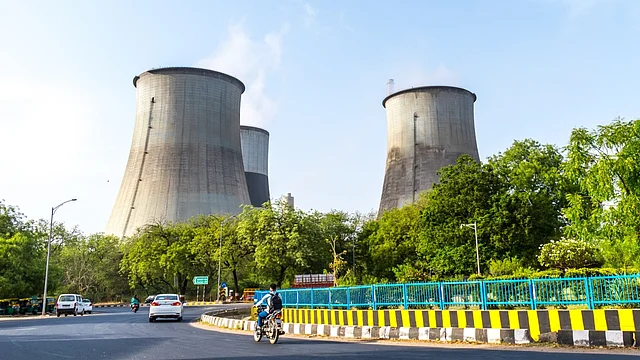
India’s government plans to address private sector concerns to boost investments in the civil nuclear segment, as announced by Union Minister Jitendra Singh on July 20, 2025. The initiative aims to expand nuclear capacity to 100 GW by 2047, supporting the 500 GW non-fossil fuel target by 2030.
India’s nuclear capacity stands at 7.48 GW, contributing 2% to electricity generation, with a target of 22.48 GW by 2032. The government is engaging private firms like Reliance Industries, Tata Power, Adani Power, and Vedanta to invest $26 billion, per Mint. Private companies will fund land acquisition, water resources, and construction outside reactor complexes, while the Nuclear Power Corporation of India Limited (NPCIL) retains control over reactor operations and fuel management. This model allows private firms to earn revenue from electricity sales, with NPCIL operating plants for a fee.
The plan includes converting 10 retired thermal plants, like Gujarat’s Wanakbori, into nuclear units, leveraging existing land and grid infrastructure, per Outlook Business. This reduces costs by 20%, but stringent site selection, including 1-km exclusion zones, and seismic and water availability checks, delays progress. The 2025 Budget allocates $1 billion for nuclear expansion, but 70% of private firms cite regulatory hurdles and safety concerns as barriers. Small Modular Reactors (SMRs), costing $500 million per unit, offer scalability, with NPCIL planning 16 units of 700 MW each.
Challenges include high capital costs, averaging $5 billion per GW, and 10% environmental risks from radioactive waste, requiring $200 million in mitigation. Gujarat’s Kakrapar plant, operational since 2023, generates 1,400 GWh annually, powering 300,000 homes. Global benchmarks, like Canada’s 15 GW nuclear capacity, use AI for efficiency, achieving 90% uptime. Posts on X reflect optimism for private investment, though some highlight safety concerns. Scaling requires 20,000 skilled workers and $500 million in training by 2030. The Green India Mission, offsetting 2.5 billion tonnes of CO2, supports nuclear’s low-carbon profile.
Conclusion
India’s push for private investment in nuclear energy aims to meet rising demand and net-zero goals. Addressing regulatory and safety concerns is critical to attract $26 billion in funds and achieve 100 GW by 2047.
Source: Outlook Business
What's Your Reaction?