India’s energy storage sector is rapidly expanding, driven by falling costs, policy support, and growing demand for reliable power.

India’s energy storage sector is set for significant expansion over the coming decade, with the Behind-the-Meter (BTM) stationary storage market projected to grow from 32 GWh of annual demand in 2025 to more than 39 GWh by 2033, according to a new report by the India Energy Storage Alliance and Customised Energy Solutions.
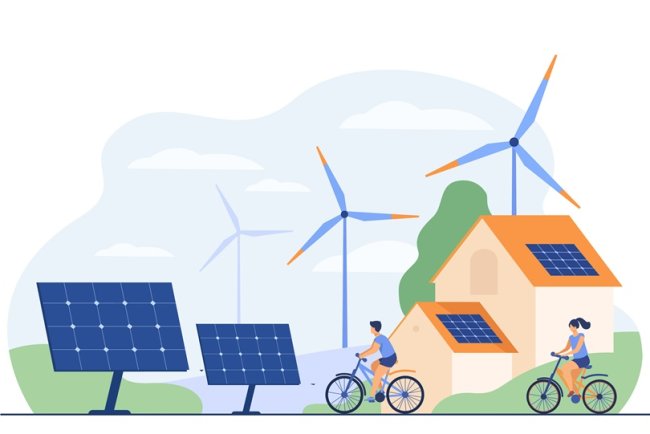
BTE systems involve energy production and storage units that have been deployed on the side of consumers, which include rooftop solar units, battery storage units, and backup power units. These have been incorporated with inverters, UPS systems, and telecom systems. They enable consumers to use the energy produced or stored without completely depending on the power grid.
As per the report, the decline in the cost of lithium-ion batteries and solar power plants with energy storage systems has contributed to the rising adoption of such systems by business entities and industries. The LCOE (Levelized Cost of Energy) of solar modules integrated with storage batteries is expected to come down to approximately ₹6-7 per kWh by 2024, which is nearly comparable to the price of electricity tariffs charged in the commercial and domestic sectors in states like Maharashtra, Tamil Nadu, and Karnataka.
Debmalya Sen, President, India Energy Storage Alliance, opined, “The Indian stationary battery energy storage market is now at a tipping point. With falling tech costs, favourable policies, and the urgency for reliable electricity, it’s clear that behind-the-meter storage will become a critical part of India’s energy landscape going forward. The forecasted capacity addition of 39 GWh till 2033 is driven by more than high demand. It represents a new era of energy storage, and one where innovation thrives within India.”
According to the report, it can be observed that lead acid batteries are dominating the BTM industry and will continue to do so since the market share of lead acid batteries is expected to be more than 85% in 2025. But lithium-ion batteries are also becoming popular, especially in the telecommunication industry, with 77% market share.
The manufacturing base within India is growing, as many firms such as Reliance Industries, Ola Electric, Tata Group, and Exide Industries are focusing on battery manufacturing. The government of India has launched various schemes to promote domestic manufacturing, including the Production Linked Incentive scheme.
Vinayak Walimbe, Managing Director of Customised Energy Solutions, emphasised, “Our research shows that the economics of solar plus storage are now compelling for commercial and industrial users. With blended tariffs for solar-plus-storage systems expected to drop below ₹ per kWh by 2033 and advanced battery pack prices continuing to fall, the business case for energy storage has never been stronger. India’s manufacturing ecosystem is rapidly scaling up to meet this opportunity.”
As per the report, policy actions like net metering and time-of-day pricing would enable the growth of the market. On the other hand, better grid stability in certain parts of the country could result in lower reliance on conventional back-up sources. However, the persistence of electricity outages in certain states, combined with the demand for cost-efficiency, will keep fuelling demand for cutting-edge storage solutions.
The report further highlights the increasing usage of energy storage devices in other areas and not just in rooftop solar systems and telecommunication towers. For example, in railways, rural micro-grids, and street lights. Overall, the findings suggests that India’s energy storage sector is changing rapidly and transforming into new uses.
What's Your Reaction?