India’s Economic Survey 2025–26 marks a quiet but significant shift in how the country officially thinks about climate change
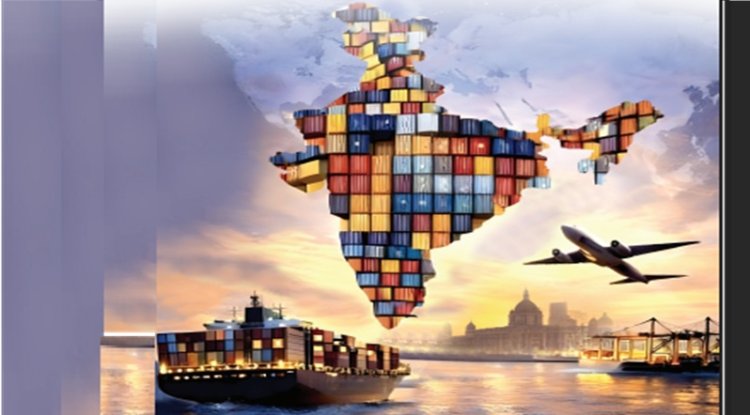
Chapter 10 of the Economic Survey, “Environment and Climate Change: Building a Resilient, Competitive and Development-Driven India” lays out an ambitious vision. Climate adaptation, mitigation, finance, and regulatory reform are woven into a single development narrative. Climate action, the Survey suggests, is no longer about moral obligation or international pressure; it is about survival and advantage in a changing global order. For perhaps the first time, environmental and climate concerns are not presented as external constraints on growth, but as integral to economic competitiveness, resilience, and national strategy. This reframing deserves attention. But it also deserves scrutiny.
The Survey’s approach reflects a broader global reality. Multilateral climate cooperation is weakening. Climate action is increasingly shaped by geopolitics, carbon border taxes, fragmented finance flows, and strategic competition. For countries like India, climate policy is no longer mainly about complying with global norms; it is about navigating unequal trade regimes, technology access, and capital markets. Seen in this light, the Survey’s emphasis on competitiveness and resilience makes strategic sense. It rejects the idea that climate policy is a luxury or a Western imposition. Instead, it positions climate action as essential to India’s economic future. Yet the key question is not whether this framing is pragmatic; it is. The question is, what kind of political economy does this climate agenda create, and who benefits from it?
The Return of the Developmental State
At its core, the Survey advances a version of what might be called green developmentalism. The state takes the lead in steering climate action, aligning environmental goals with growth, investment, and industrial strategy. This is not new. India’s environmental governance has long swung between court-driven environmentalism and market-friendly reform. What is new is the confidence with which the Survey argues that regulatory streamlining is necessary to sustain growth and competitiveness. This echoes a familiar developmental state logic: environmental protection is acceptable as long as it does not slow investment or infrastructure expansion. Climate action becomes a tool for structural transformation, but on terms set by the state and market actors. The risk, as critics of developmentalism have long warned, is that this framing asks too few questions about distribution, participation, and ecological limits.
The Survey places heavy emphasis on climate adaptation, particularly in agriculture, urban infrastructure, and disaster risk management. Given India’s exposure to heatwaves, floods, and water stress, this focus is understandable and necessary. However, adaptation is presented largely as a technical challenge, with better infrastructure, improved efficiency, insurance mechanisms, and digital monitoring. What is missing is a serious engagement with who is vulnerable, and why.
In India, climate risk is not evenly distributed. It is shaped by caste, land ownership, informality, gender, and regional inequality. Treating adaptation as a technical problem risks depoliticising vulnerability, adjusting people to risk rather than transforming the conditions that produce it. Resilience, without justice, can quickly become another word for endurance.
The Limits of Climate Finance
Climate finance occupies a central place in the Survey’s narrative. It reiterates India’s long-standing argument that global financial support has been inadequate and unfair. At the same time, it places growing faith in blended finance, private capital, and market instruments. There is no doubt that India needs capital at scale. But decades of development experience show that reliance on private finance often brings volatility, conditionality, and skewed priorities. Globally, climate finance continues to favour mitigation over adaptation, large projects over local needs, and middle-income countries over the most vulnerable communities. Financial innovation alone cannot resolve the unresolved political questions of burden-sharing and historical responsibility. Yet these questions increasingly disappear from the policy conversation, replaced by technocratic optimism.
Perhaps the most contentious element of the Survey is its call for streamlining environmental regulation to support growth. In theory, “smart regulation” sounds reasonable. In practice, India’s regulatory institutions have often been the last line of defence for communities facing land acquisition, pollution, and displacement. Environmental regulation in India has frequently substituted for weak local governance and limited democratic participation. Diluting it without strengthening participatory institutions risks centralising power while weakening safeguards for those already marginalised. The danger is not just environmental harm; it is democratic erosion.
A Pragmatic Agenda, With Unanswered Questions
To be clear, the Economic Survey 2025–26 presents a coherent and strategically aware climate–development agenda. It rightly rejects the idea that climate action is optional or external to economic policy. In a fragmented global order, this realism matters. But realism should not become resignation. The Survey’s vision remains constrained by developmentalist assumptions that prioritise growth, competitiveness, and state capacity over deeper socio-ecological transformation. Without stronger attention to distribution, participation, and ecological limits, green developmentalism risks reproducing old patterns of uneven development, greener in language, but familiar in substance.
For India, and for the Global South more broadly, this is the central dilemma of our time. Climate action is no longer a choice. But neither is inclusive development. Navigating this tension requires more than better policy design. It requires confronting power, inequality, and responsibility, both within nations and across the global political economy. The Survey opens the door to this conversation. Whether policymakers choose to walk through it remains an open question.
Views expressed are personal
What's Your Reaction?