An SBI report estimates that India's growing adoption of electric vehicles could save ₹1 lakh crore in crude oil imports by 2030, with 35 lakh additional EVs expected to replace petrol-powered vehicles.
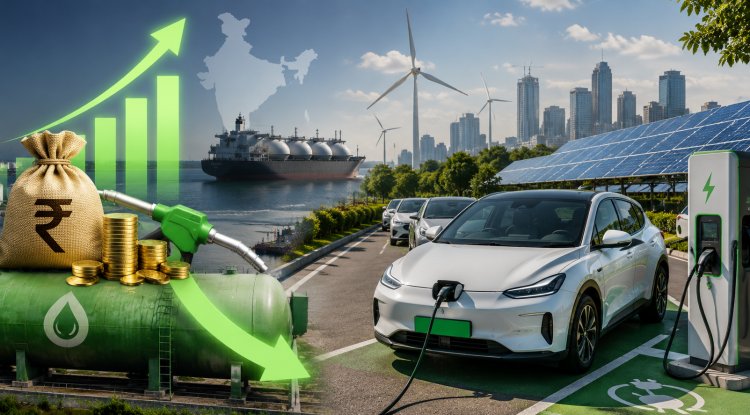
India's rapid transition towards electric vehicles (EVs) could help the country save nearly ₹1 lakh crore in crude oil imports by 2030, according to a report by the State Bank of India (SBI). The report estimates that rising EV adoption will significantly reduce petrol consumption, strengthen energy security and lower India's dependence on imported fossil fuels.
According to SBI, there can be around 35 lakh EVs instead of petrol-based cars during 2027-2030 years as opposed to the current business-as-usual approach. The number of registered vehicles in India is estimated to amount to 4 crores in 2030, out of which about 20%, that is, 80 lakh vehicles are likely to be EVs in India, considering that currently there are 15.7 lakh EVs in India.
It is noted that cutting down on the use of crude oil would not only save foreign exchange but also improve the energy security of the country because it will reduce its vulnerability to the fluctuating prices of crude oil in the international market. This is because India relies heavily on imported crude oil for its domestic consumption needs.
Government policies are expected to make use of its policies to accelerate this change. Programs like the PM e-Drive program, policies and incentives by the states in favour of the EVs have encouraged the use of electric vehicles. It is anticipated that investment in battery and charging systems will help grow the industry.
The SBI report also highlights the need for greater expansion of the charging infrastructure that will be required in the future. Access to charging points is one of the most critical determinants of consumer satisfaction, and efforts by the central and state governments are being made to establish a national network of charging points.
Apart from reducing fuel imports, greater EV adoption is expected to deliver environmental benefits by lowering greenhouse gas emissions and improving urban air quality. The transition also supports India's broader clean energy goals, including reducing carbon emissions and increasing the use of renewable energy in the transport sector.
According to experts, further government backing, cost-effective electric vehicles, better charging infrastructure and improved battery technology are all vital factors in attaining India’s goals for electric mobility. With the existing rate of growth, the Indian EV system can certainly contribute a lot towards economic efficiency, environmental friendliness and energy independence.
What's Your Reaction?