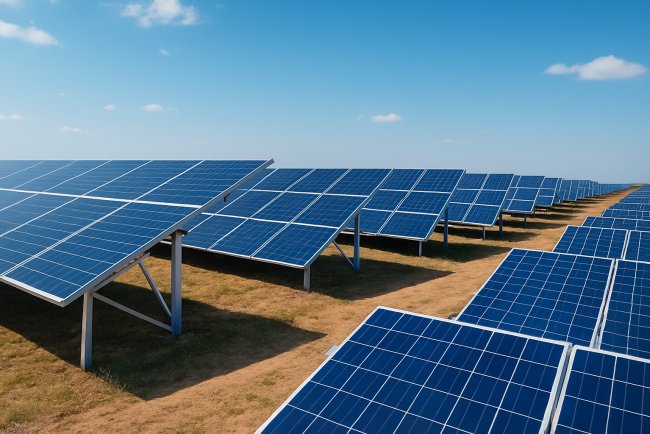
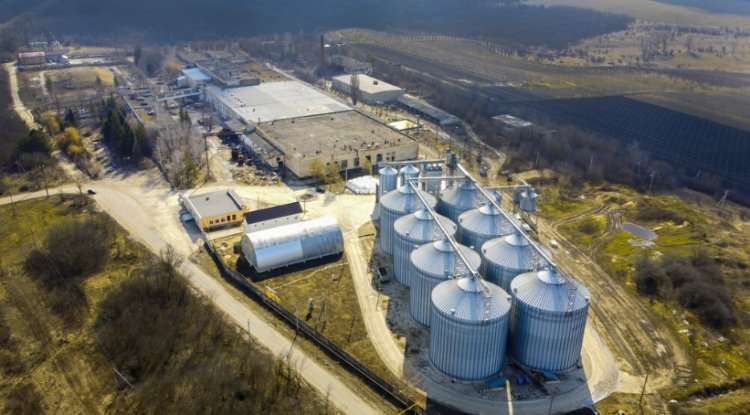
This is one of the biggest foreign investments made by an Indian renewable energy company and marks a game-changer in the international clean energy value chain

In a pivotal step for the Indian renewable energy market, the INOXGFL Group's green energy arm, Inox Clean Energy (ICE), has made an unprecedented mark in the US solar manufacturing segment by executing the landmark investment of its strategic capital in the acquisition of assets of Boviet Solar.
This is one of the biggest foreign investments made by an Indian renewable energy company and marks a game-changer in the international clean energy value chain. The agreement reflects the current drive of Indian companies for domestic companies to become part of the international market, especially the United States, where the political and economic climate concerning the manufacturing sector is increasingly favourable.
Through this $750 million investment, Inox Clean Energy has been able to enter the US market with a deep understanding of this new reality. The company's blend of agility and strategy from Indian corporations, policy incentives from the US and Tier 1 manufacturing technology is putting it at the head of the next generation of solar companies. This transfer will support Inox's balance sheet, as well as contribute to India's push for a decentralised, decarbonised, and locally secured energy future.
The pricing term worked in Inox's favour as it gives the company a direct and immediate impact on the American solar market. The centrepiece of the deal is an operational production line for 3 GW solar module production, which is situated in Greenville, North Carolina.
This plant is a result of the use of the advanced Tunnel Oxide Passivated Contact (TOPCon) technology, which is also popular in large-scale solar projects for its high efficiency and reliability. In addition to operating the module plant, the deal entails a definitive offer for a further 3 GW solar cell capacity, which will be scheduled for installation by December 2026. The strategy involves two steps, wherein Inox Clean Energy becomes a vertically integrated company, having the capacity to manufacture both fundamental cells as well as actual modules in the United States. The deal is really dependent on well-timed timing. Structural changes are happening in the U.S. energy landscape, with data centres as a primary driver, along with AI workloads and the increasing trend toward electrification across the nation.
This increase in the power demand has established a strong demand for solar energy, which is now more attentive to the origin and supply chain of these materials. Inox Clean Energy is not simply acquiring the capacity of Boviet Solar, which has always been ranked Tier 1 by BloombergNEF; it is taking over a well-established company with a proven track record of quality and established links with top multinational energy companies.
Moreover, Inox Clean Energy feels committed to the “Make in America, For America” principle, which is strongly boosted by the provision of the Inflation Reduction Act (IRA). The North Carolina plants will receive substantial tax credits in accordance with a four-time 45X of the IRA.
The main intent of such domestic manufacturing incentives is to accentuate domestic earnings of manufacturers and also to shield them from fluctuations in world market rates and policies concerning international trade.
The diverse problems of sourcing components are being minimised by localising this production, thus controlling the risk/problems associated with importing components and handling a more reliable and affordable supply for Inox's American customers. The Boviet Solar acquisition wasn't the only priority underpinning the company's aggressive expansion strategy. In the past year, Inox Clean Energy has achieved a number of signatory acquisitions, such as Vibrant Energy and Sky Power, as it strives to reach a vision of 11 GW of integrated solar manufacturing scale by 2028 and 10 GW of IPP capacity. This fast-paced scaling is aimed at developing a global renewable energy platform to reach across India, Africa and the USA.
The company has projected that the US market, with its attractive margins and a policy-driven environment, will continue to become a key growth contributor for the company, with important milestones of its EBITDA projected over the coming years. Controlling manufacturing assets in key consumer geographic areas is now a clear competitive advantage in the pace of global energy transition.
What's Your Reaction?