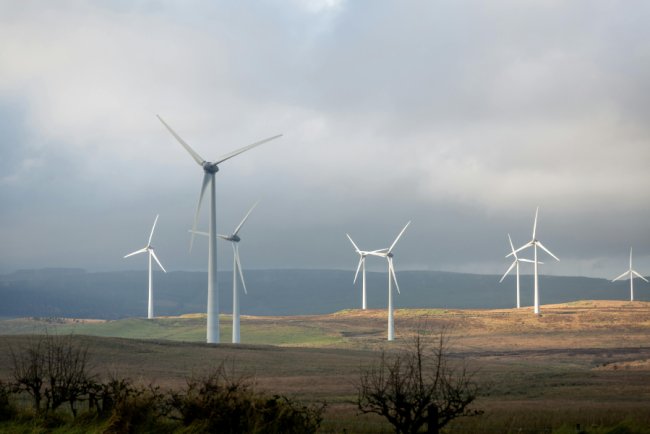
Japan is advancing floating offshore wind technology to harness deep-sea renewable energy, offering valuable lessons for India as it explores expanding clean power generation beyond shallow coastal waters.
Japan is accelerating its offshore renewable energy ambitions by investing in floating wind turbines that can operate in deep ocean waters, where conventional offshore wind structures cannot be installed. The move is expected to expand the country's renewable energy capacity while reducing its dependence on imported fossil fuels.
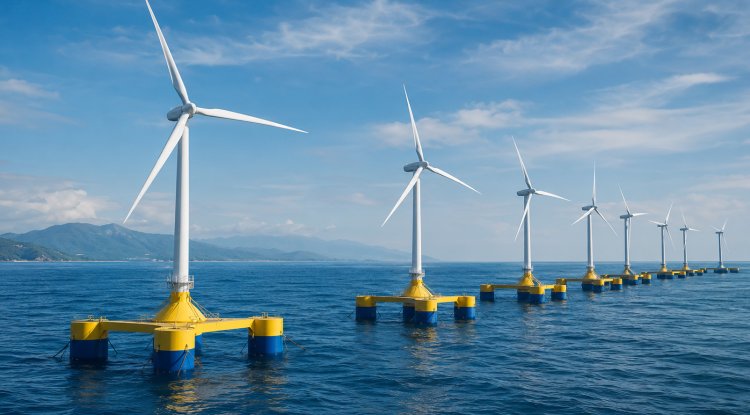
Floating wind turbines differ from conventional offshore wind farms where the turbines have to be firmly placed on the sea bottom at shallow depths. Instead, the floating wind turbines are erected on floating platforms which are held in place by mooring lines attached to the ocean bottom.
The geography of Japan have prevented the growth of traditional offshore wind energy for many years. Many coastal areas experience a rapid transition into very deep water only a few kilometres from land, which makes the development of such wind turbines extremely complicated and costly. The floating system offers a viable solution since it allows the deployment of wind farms in much deeper water.
The country has already launched its first commercial floating offshore wind project and is planning significantly larger developments that could eventually generate electricity comparable to the output of a nuclear power plant.
What makes floating wind different?
Floating wind turbines for offshore wind power applications use buoyant structures rather than concrete or steel fixed foundations attached to the ocean floor. The buoys maintain stability with anchor systems while still producing electricity at sea.
Due to their ability to be installed further from shorelines, floating turbines also minimise the visual pollution caused by such projects and allow better utilization of powerful offshore winds.
What this could mean for India
India has one of the world's fastest-growing renewable energy sectors, but offshore wind development is still in its early stages despite the country's coastline spanning more than 7,500 kilometres. The current offshore wind projects are primarily located in shallow coastal waters near Gujarat and Tamil Nadu states where fixed base turbines can be installed. But with floating turbines, India would be able to harness the winds in the deeper waters of Arabian Sea and Bay of Bengal where traditional offshore turbines are hard to establish.
As the technology matures and cost of deployment declines, floating offshore wind has the ability to increase India’s capacity for renewable energy production while not increasing demands on scarce land resources. Not only does this help to diversify their energy mix, but it improves energy security by decreasing dependence on foreign fossil fuels and domestic coal-fired electricity plants. The technology also has the potential to drive economic development through the need for ports and ships that will facilitate transportation of the devices, as well as through the use of steel manufacturing and marine engineering. The technology can also offer a means to support solar energy generation during off peak times.
Challenges India would need to address
Although floating offshore wind provides significant potential, the technology is still more costly than regular offshore wind due to specialised floating platforms, underwater cables, and installation needs.
For India, adopting such technology would require good investment and will have to improve port facilities, create a local supply chain for offshore equipment, strengthening the electricity transmission network, and formulate regulations before it can be commercialised. As the technology become more affordable, floating offshore wind could play an important role in India’s transition to clean energy.
Looking ahead
The investments made by Japan in the offshore wind farm point out the development of the next-generation energy source that would come about due to technological advancement and cost reduction in the field. The knowledge garnered by Japan from the process would be very useful for India as it finds ways of diversifying its renewable energy sources and harnessing its offshore wind potential.
What's Your Reaction?