A CMAI-GATS report released at Bharat Tex 2026 says India must focus on circularity, traceability, technology and product diversification to achieve $100 billion in textile and apparel exports by 2030.
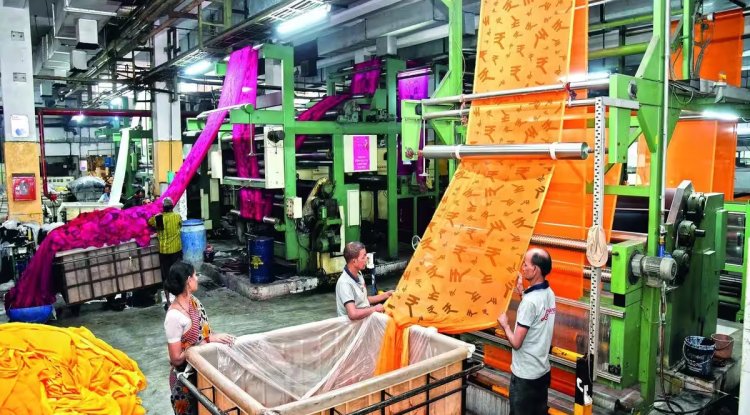
India's textile and apparel industry must improve sustainability, traceability, technology adoption and product diversification to achieve its target of USD 100 billion in exports by 2030, according to the India Textiles & Apparel CXO Blueprint 2030 released on Wednesday.
The report, produced by the Clothing Manufacturers Association of India (CMAI) and the Global Alliance for Textile Sustainability (GATS), was launched by Union Textiles Minister Giriraj Singh at Bharat Tex 2026 in New Delhi.
The report notes that India's textiles and apparel exports have been stagnant at around USD 40 billion for six consecutive years, having grown by merely 0.8% each year on average compared to an average growth of 3.5% in global textile trade during the same period. It adds that India presently holds a share of just 4.1% in global textile and apparel trade and provides employment to nearly 45 million people.
As per the report, growth in exports going ahead will be contingent on building capabilities along the entire value chain and not just through manufacturing capacity alone. It highlights five key focus areas for the industry, including circularity, end-to-end traceability, resource-efficient manufacturing, diversification of products, and Artificial Intelligence, Automation and Digitalization.
The report adds that India is benefiting from the shifts in the global sourcing landscape, as well as the new trade deals with Europe, the UK, the UAE, Australia, New Zealand, and Oman. But it adds that businesses will have to improve their documentation, tracking, and sustainability in order to leverage these developments to the fullest extent.
One of the report's findings estimates that developing an efficient circular textile ecosystem could generate nearly USD 9.4 billion by recovering textile waste. It also highlights that nearly half of India's textile and apparel exports are shipped to the United States and the European Union, making compliance with emerging environmental and sustainability regulations increasingly important.
Speaking at the release, Giriraj Singh said the report had been launched at an appropriate time during Bharat Tex 2026 and could serve as a useful reference for stakeholders across the textile value chain.
The report also points to India's strengths, including 83.2% domestic value addition in textile and clothing exports, one of the deepest integrated supply chains globally. India accounts for 12.3% of global cotton exports and 10.5% of global carpet exports. At the same time, it notes that more than 52% of textile exports come from only 134 product categories, indicating scope for greater product diversification.
CMAI and GATS said the blueprint is intended to guide manufacturers, policymakers, and industry stakeholders in strengthening the competitiveness of India's textile and apparel sector over the coming decade.
What's Your Reaction?