A CSIR-led meeting in Kargil brought scientists, policymakers, and local stakeholders together to identify science and technology solutions for sustainable agriculture, renewable energy, and rural development in Ladakh.
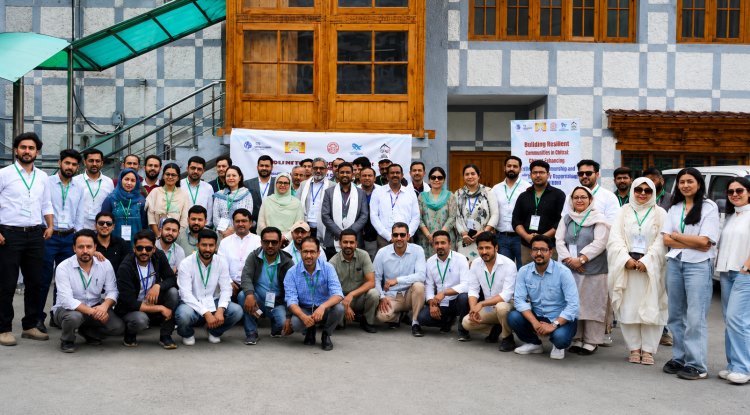
A one-day meet on "Science, Technology, and Innovation Need Identification for Sustainable Development of Kargil" was jointly organised by CSIR-National Institute of Science Communication and Policy Research (NIScPR), Unnat Bharat Abhiyan (IIT Delhi), IIT Jammu, and Government Degree College, Kargil, on July 15, 2026, at Kargil, Ladakh.
An over 100-member scientific community, policy experts, government representatives, farmers, self-help groups, entrepreneurs and community representatives participated in the event under the CSIR initiative of using CSIR technologies for rural development. While Kargil has tremendous potential in agricultural, horticultural, medicinal, aromatic plants, food processing, renewable energy, eco-tourism and rural entrepreneurship potential, it still faces developmental challenges from geographical isolation, difficult weather conditions and limited access to technologies.
Experts from scientific institutions presented their research during the technical sessions. Dr R.S. Praveen Raj of CSIR-NIIST introduced advanced agricultural technologies for mountain ecosystems, such as dehumidified drying technology for crops. Dr Aashitosh Inamdar, CSIR-CFTRI, talked about food processing and value-addition technologies for rural entrepreneurs. Dr Ashok Yadav, ICAR, underlined the potential of heeng (asafoetida) and the need for self-sufficiency in its production in India.
In the second session, funding avenues and identification of local needs were discussed through presentations by NABARD, the University of Ladakh, Krishi Vigyan Kendra Kargil, and IIT Jammu, where various funding mechanisms and strategies for technology adoption and cooperation for sustainable rural development were discussed.
The meeting ended with a consultative process involving scientists and stakeholders, which led to the identification of priority areas for science and technology interventions, including sustainable agriculture, protected cultivation, renewable energy, water resource management, climate-resilient agriculture, eco-tourism, and skill development.
The discussions will form the basis for a plan of action for future joint interventions by CSIR laboratories, academia, government organisations, and the local population, further strengthening the resolve of all organisations involved towards the sustainable and inclusive development of the Kargil region.
What's Your Reaction?