Meghalaya's centuries-old Living Root Bridges are moving closer to UNESCO World Heritage recognition, highlighting the region's unique tradition of sustainable engineering and community-led conservation.
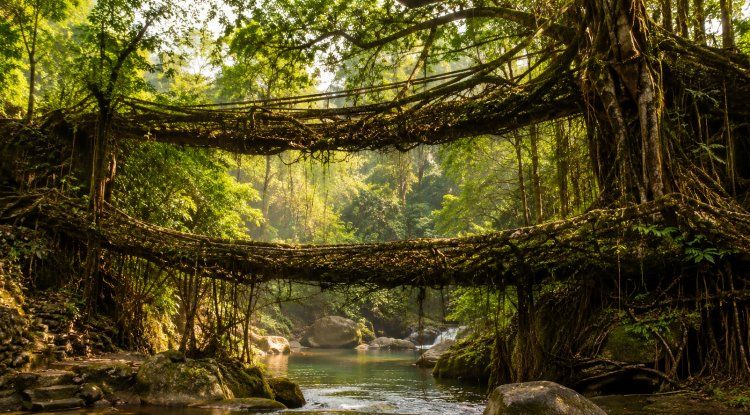
The iconic 'Living Root Bridges' of Meghalaya are all set to receive the UNESCO World Heritage tag, following Prime Minister Narendra Modi's Mann Ki Baat address highlighting these extraordinary structures.
The living root bridges of the southern Khasi and Jaiñtia Hills are far more than engineering feats or tourist attractions; they represent a radical shift in global conservation thinking. The Khasi and Jaiñtia communities have, for centuries, lived by a cultural philosophy in which they are not landowners but temporary stewards or caretakers. This philosophy is embodied in the creation of the "Jingkieng Jri", which involves the careful training of the aerial roots of Ficus elastica (rubber fig) trees across roaring rivers and streams. Unlike traditional concrete structures, these living bridges mature over decades, gradually becoming stronger, self-repairing and more resilient over hundreds of years.
"A living root bridge is not the work of a single person; it is the work of many hands and many generations. We have started it, our parents nurtured it, and we have to take care of it for our children. Protecting the forests and the bridges means protecting our way of life," Letbot Sohkia, a local community member, told leading media outlet.
The Syrwet U Barim Mariang Jingkieng Jri Cooperative Federation Ltd, a group of more than 74 villages organised into 46 primary cooperative societies, is the result of this ancient practice, which has now been formalised into an institutional process to manage the cultural landscape of Jingkieng Jri/Lyu Chrai.
The Meghalaya Basin Development Authority (MBDA) has been carefully selected as a supporting partner to strengthen local leadership and traditional governance, rather than replace it. Communities have nurtured the landscape over many generations and continue to protect it. MBDA General Manager Wankit K. Swer said they will continue to collaborate with the communities as equal partners and help ensure that the conservation of this landscape remains in the hands of the people who know and care for it best.
Federation member Pren Khongbri said while speaking to a leading media outlet: "The beautiful thing about the Ficus tree is that strength is not found in ownership but in embracing one another. Together, as its roots extend outwards to provide support, so too do our communities unite as guardians of Mother Earth."
The living root bridges of Meghalaya convey a gentle but profound message, especially as the world faces a growing climate crisis, that some of the most advanced solutions to today's environmental challenges are often found in ancestral traditions.
What's Your Reaction?