Study finds Antarctic sea ice stores climate-cooling compounds that support cloud formation and regulate temperatures.
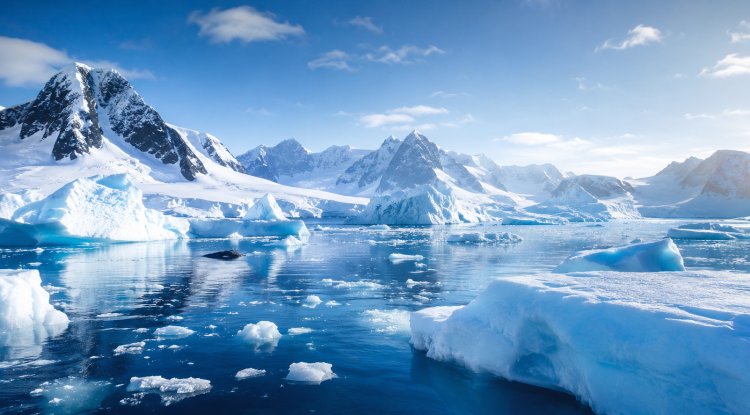
A groundbreaking study reveals that Antarctica's frozen oceans are a highly active and dynamic chemical factory that actively helps regulate global temperatures. Most climate models consider polar ice sheets only as reflectors or as sensitive to global warming, but new empirical studies show that they are also a huge reservoir of biological coolants in the atmosphere. But with the rapid melting and retreat of the ice edges of the Southern Ocean, this invisible natural barrier is becoming more volatile than ever before, with significant implications for global climate prediction.
The study, published in the journal Nature Communications, was led by an international group of scientists from the University of East Anglia (UEA) in the UK, University of Pretoria in South Africa and Stellenbosch University in South Africa. The research team concentrated on a naturally occurring Sulphur compound called dimethyl sulfoniopropionate (DMSP). DMSP is secreted by specialisedcommunities of algae and bacteria in the ocean and is a biological survival mechanism for these tiny organisms to cope with the harsh conditions of polar environments, such as cold and high salinity. The compound also has a huge secondary role in the Earth's climate system: as it breaks down, it releases certain volatile gases that initiate cloud formation and scatter sunlight away from the ocean surface, thereby regulating regional and global temperatures.
The results of a winter cruise to the Southern Ocean, which can be quantified, show that Antarctic sea ice has up to 38 times more DMSP than the surrounding open ocean waters. The baseline concentrations of the standard seawater samples were consistently between a modest 3 and 11 nanomoles, whereas the core samples taken from sea ice showed very high concentrations, from 24 to 115 nanomoles. This extreme difference proves that the polar ice sheet is not a cold, lifeless block of ice, but a dense, concentrated repository of climate-critical chemicals.
The researchers used cutting-edge genetic sequencing to determine that the main drivers of this huge production of sulfur are polar algae, which have genes that are specifically adapted to speed up the production of DMSP in response to high environmental stress. At the same time, the data revealed an unexpectedly intricate network of localised bacteria that work together to produce and break down the compound. Professor Jonathan Todd, from the School of Biological Sciences at UEA, pointed out that this very dynamic and active microbial community has a direct impact on the chemistry of the planet. The main worry of global climate modellers is that as greenhouse gas emissions cause a general decline in seasonal ice formation, this vast chemical buffer zone will contract, potentially setting up a vicious cycle of ocean warming.
The results highlight the interconnectedness of global ecosystems that is often overlooked by environmental policymakers, corporate sustainability teams, and ESG risk assessors seeking to accurately measure long-term ecological risks. Institutional risk assessments have traditionally focused on sea-level rise and on losses of local habitability due to melting ice. The fact that melting polar ice poses a direct threat to one of the main biological mechanisms that reflects solar radiation on the planet changes the whole picture, and the preservation of the poles is an essential part of the planetary thermal regulation system. Funded by the EU's Horizon 2020 programme and the Natural Environment Research Council (NERC), this pioneering research provides the world with essential, measurable information to help predict environmental uncertainty and develop more effective, science-based mitigation measures for the future.
What's Your Reaction?