Nitrate Pollution From Fertiliser Runoff Prompts Drinking Water Restrictions Across U.S. States
High nitrate levels from fertiliser runoff are causing drinking water restrictions across U.S. states like Iowa, with experts warning the issue will worsen due to climate change and lack of agricultural regulation. Local governments and citizens are responding with monitoring and conservation efforts.
Communities throughout the United States are confronted with growing threats to water safety for drinking purposes from over-nitrate pollution, a product of fertiliser leaching and animal waste. The crisis has been brought into focus by recent events in Iowa, where over half a million residents in and around Des Moines were confronted with unprecedented water use curbs—not due to drought, but due to appallingly high concentrations of nitrates in local water supplies.
Lawn watering has been prohibited for all but a small portion of Iowa for nearly a month. Car washing and topping off a swimming pool have also been shortened, and even city-run splash pads during the peak summer months shut down. The reason all of this has happened is agricultural runoff, spurred by relentless rain, that has pushed nitrate levels in local rivers to above federal safety levels.
Federal regulation limits nitrate in drinking water because it has been found to cause "blue baby syndrome," a fatal infant disease, and recent research has also linked it to higher cancer risks. Des Moines' water treatment system runs one of the largest nitrate treatment plants in the world at a cost of up to $16,000 a day. The authorities insist the water is still safe to drink, but they are warning that the cost of treating it is escalating sharply.
Experts say it is not unique to Iowa. Areas from California's Central Valley to the Chesapeake Bay are all facing the same types of challenges. Climate change is making it worse as intense storms followed by droughts wash more nutrients out of fields and into streams. The water solubility of nitrogen makes it difficult to retain during those extreme weather conditions.
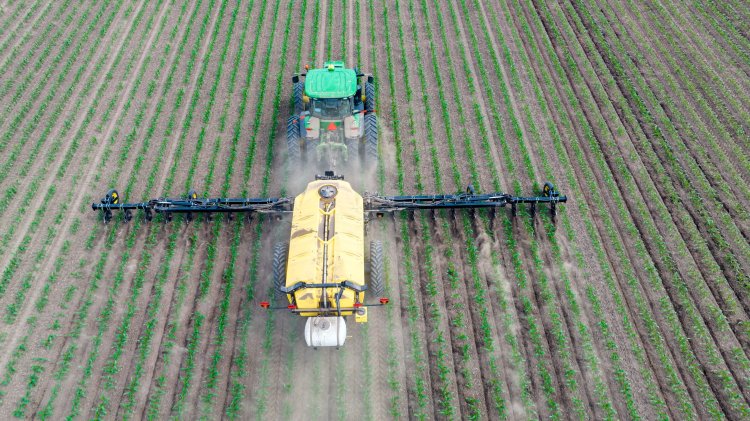
Iowa's farming design—featuring big fertilized row crops and animal farming—is largely to blame. Drainage tiles beneath fields scurry nitrates into neighboring rivers in haste. A study by Polk County, where Des Moines lies, concluded that the Raccoon and Des Moines rivers consistently surpassed federal limits on nitrates, with nearly all of the contamination from farm sources.
Scientists in the research noted that Iowa sends hundreds of millions of pounds of nitrogen downstream every year to bigger water bodies, ultimately to the Mississippi River and to the Gulf of Mexico dead zone. This is a national and even global issue, considering the collective downstream impact.
Experts contend that farmers are not always to blame as an individual lot, because a lot of them operate along industry norms framed by federal policies. Yet there is a clamor for more aggressive conservation programs and funding on technologies like bioreactors, vegetative buffers, and constructed wetlands that capture the nitrate runoff prior to reaching water bodies.
The political environment is making it difficult to move forward. In 2023, the Iowa legislature reduced appropriations for a statewide water quality monitoring system. While a temporary grant permitted the Iowa Nutrient Research Center to remain open, it will shut down 75 monitoring sensors next year. Critics argue that this reduction in monitoring hinders effective monitoring of pollution.
The Iowa Agriculture Department recently said it will fund a $1.9 million project to cut back on nutrient runoff upstream of Des Moines, such as the installation of landscape buffers and bioreactors. However, a very tiny fraction of the money will come from the state.
Local governments also get involved. Polk County has bought buffer strips and cover crops to slow down field runoff. The officials acknowledge that no one wants to demonize farming—a state heritage—and that the controversy grew too big to ignore, particularly as public interest mounts against restrictions and media scrutiny.
The outcry has also spurred citizen science campaigns. Initiatives such as the Izaak Walton League's Nitrate Watch are recording spikes in public involvement. Over 300 Iowans phoned the group last month alone, wanting their local sources of water tested for nitrates. Volunteers are recording higher levels throughout the state, sparking concern and calls to action.
Retired educator Birgitta Meade, who has been monitoring water quality close to her northeast Iowa home, termed the nitrate readings as the highest she has ever recorded. Her own personal well remains below the federal threshold, yet she's already looking into a reverse osmosis system installation because of long-term health issues brought on by nitrate exposure.
Outside of Iowa, the same patterns are occurring. Almost one-third of wells in California's Central Valley exceed federal nitrate limits. Specialists such as Professor Thomas Harter at the University of California, Davis, indicate that greater agricultural production has also led to increased use of fertiliser—and associated runoff. Small towns on tight budgets are particularly exposed since it is expensive to construct and operate treatment plants.
One of these is Pratt, Kansas, where increasing nitrates in the water have prompted city officials to search for a new $45 million water treatment plant—larger than the total city budget. Approximately 25% of the city's groundwater supply is presently worthless due to high concentrations of nitrates. Though polluted wells are not operational, public disclosure regulations oblige the city to notify individuals, causing fear and confusion.
In the end, all the experts agree on the solution: systemic changes — better farming methods, stronger controls on nitrogen use, better monitoring technology, and huge spending on conservation and water treatment. If not, limitations like Iowa's could become the new national standard.
Source: Phys.org, originally reported by Kevin Hardy | Edited by Sadie Harley, Reviewed by Andrew Zinin
What's Your Reaction?