Researchers from Northwestern University and partner institutions are scaling up a groundbreaking method to produce a protein-rich food source from carbon dioxide, offering a potential solution to global food security and environmental challenges.
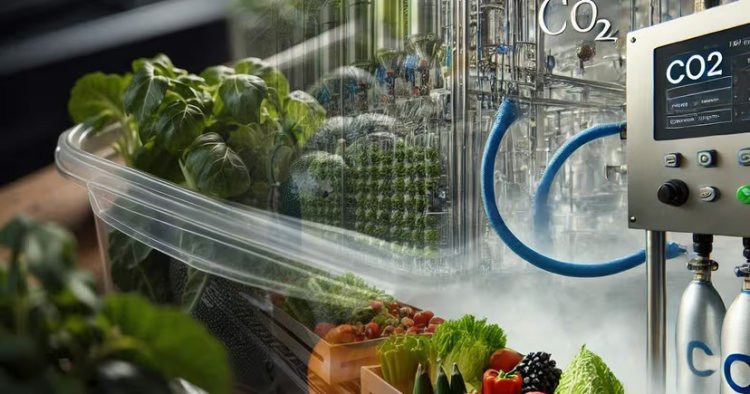
A new research project led by Northwestern University with several partners, is significantly advancing work on a novel technology that converts carbon dioxide into a healthy protein food source. The technology, based on a new way of implementing microbial fermentation, is moving from the laboratory into early commercial development. The technology offers the capability to create a sustainable food source to help address world hunger while converting one of the main greenhouse gases (carbon dioxide) into the primary ingredient.
The food technology leverages renewable electricity to directly provide inputs to a conversion process similar to fermentation. Specifically, microorganisms are provided controlled inputs of carbon dioxide, water, and other nutrients. The microorganisms eat the carbon dioxide and multiply rapidly in converting carbon dioxide into biomass that is protein-rich and contains other nutrients. The bulk product can also be further processed into a non-flavored flour-like product for use in many food formats, including ingredients for meat alternatives, drinkable protein shakes, and baked products.
The main ecological advantage of this approach is its notably smaller resource footprint compared to conventional agricultural processes. It demands a small fraction of the land and water needed for meat production or even for doing traditional agricultural practices with crops. Additionally, it results in little to no waste. Moreover, since the process utilises harvested CO2 as a feedstock, it also helps with carbon use and creates food from a pollutant that leads to climate change. Thus, it can be a game changing way to increase food security in a world that is seeing disruptions to conventional agriculture due to climate impact.
The research team including some academic collaborators as well as private sector partners are now working on optimising the efficiency of the production process and soon scaling up production. The main challenge is getting the costs down and the speed and volumes of production to a commercially viable value. If the team meets their goal, it could allow for computed integrated block production facilities to be built in local areas with increased food security outcomes, reduced risk management against extreme weather events, droughts or defunct supply chains due to climate issues again, especially in areas of low water or hospitality.
To sum up, the research being conducted by Northwestern University and its collaborators represents a major advancement in how we will think about food production. Rather than a detriment to global food security, climate change, fundamentally excess carbon dioxide, is at the center of the solution. A transition to a more resilient and sustainable food system is both compelling and possible. While there are still many barriers before 'food from air' could be sitting next to other food products in a supermarket, it has moved from being an idea into a scientific viable process that could be scaled. This is a significant step forward in the search for new solutions to the environmental and humanitarian crisis that we are facing.
What's Your Reaction?