The National Wealth Fund has invested £28.6 million in the Peak Cluster CCS project to reduce emissions from the UK's cement and lime industries. The project will transport CO₂ via a pipeline from Derbyshire and Staffordshire to a storage site in the East Irish Sea, supporting the UK's net zero strategy and creating up to 13,000 jobs.
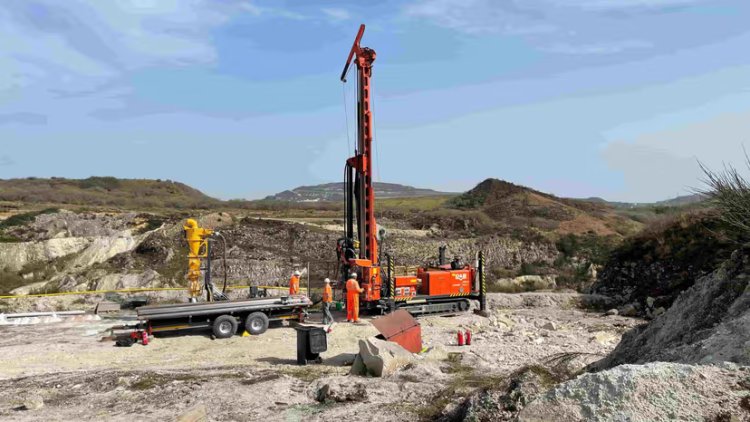
The National Wealth Fund (NWF) has put £28.6 million into a significant carbon capture and storage (CCS) project to lower the UK cement and lime industries' emissions. The investment is the NWF's first direct support of a CCS initiative and is part of an overall £59.6 million fund-raising effort for the Peak Cluster project. The project will be capturing carbon dioxide (CO₂) from factory processes and transporting it for storage, serving a central role in the UK's net zero strategy.
Peak Cluster Ltd will proceed with the CCS project development that is focused in Derbyshire and Staffordshire—two of the UK's most major cement- and lime-producing counties that contribute around 40% of the nation's cement and lime production. The project involves the construction of a CO₂ pipeline transport connecting industrial hubs to the Morecambe Net Zero (MNZ) project where Spirit Energy is converting former gas fields in the East Irish Sea into behemoth carbon storage facilities.
The cement and lime sectors are among the abatement-challenged sectors because of the characteristics of the production processes in which the emissions not only occur as a result of fossil fuel combustion but also in processing raw materials. The CCS technologies used for such sectors are a good means to capture and sequester CO₂ for permanent containment to avoid release into the atmosphere.
The round of investment includes other investors like Summit Energy Evolution Ltd and Progressive Energy Peak Ltd, cement and lime manufacturers like Tarmac, Breedon, Holcim, and SigmaRoc. Collective investment will be to take the Peak Cluster project to the initial development stage, with a focus on Front-End Engineering and Design (FEED), planning, and permit approval necessary. The final investment decision (FID) will be in 2028, where the aim is to de-risk the project and mobilize additional private money in later stages of development and completion construction.
The CO₂ will be delivered by a fresh pipeline to be constructed and fed into the geologic storage system of the MNZ site. The technology is in accordance with the UK government climate plan, which mentions CCS as one of the technologies essential to decarbonise heavy industries and achieve long-term emission reductions. By making early-stage investment easier, the NWF seeks to enable large-scale deployment of CCS and inspire market confidence for comparable projects in the country.
The investment is also of economic importance, with the development worth as much as 13,000 construction-related, operations, and support services jobs of the process of decarbonisation. The project also enhances the sustainability and future proofing of the UK cement and lime supply chain, guaranteeing ongoing access to simple building materials with less environmental footprint.
NWF engagement is a sign of its activity catalyzing strategic investment in the climate-related industries, particularly those with technological or capital hurdles. With investments like Peak Cluster, the fund catalyzes the construction of a low-carbon economy and facilitates the transition through early-risk financing that spurs subsequent private sector investment.
Beyond carbon capture, the project also carries implications for wider innovation in emissions control and industrial decarbonisation. It shows an achievable model for addressing emissions at source and breaking industrial reliance on carbon-heavy processes. With the UK targeting the 2050 net zero, projects such as this contribute to informing policy delivery and private sector alignment.
Activities by Spirit Energy to develop the use of existing gas fields as part of storage are another example of twin-infrastructure use in energy transition. The recycling of such fields reduces deployment timelines for CCS and also takes advantage of previous investment in exploration and production infrastructure.
The Peak Cluster program is a template for government-backed collaborative decarbonisation with the energy industry and industrial manufacturers. Focusing on cement and lime manufacture—traditionally neglected in initial emissions strategies—it emphasizes the requirement for industry-specific answers according to emission intensity and type of operation.
The Peak Cluster project will transition from planning proposal to technical delivery with the help of NWF support. The project is anticipated to contribute to the UK's overall aspirations in carbon management, tying industrial policy to climate objectives and providing a template for comparable deals in other high-emitting regions.
With finance, regulation, and infrastructure coming together, investments such as Peak Cluster do much to emphasize the need to invest early in technically viable, scalable carbon capture projects. Gradual development of carbon transport and storage networks will be crucial to enabling emissions from a multitude of point sources throughout the UK as a basis of national CCS infrastructure in a future Britain.
Source:
Jithin Joshey Kulatharayil, NWF invests £28.6M to decarbonise the UK cement and lime industry, Published on July 8, 2025, through KnowESG
What's Your Reaction?