Quaise Energy raises $134M to develop the world’s first commercial superhot geothermal power plant by 2030.
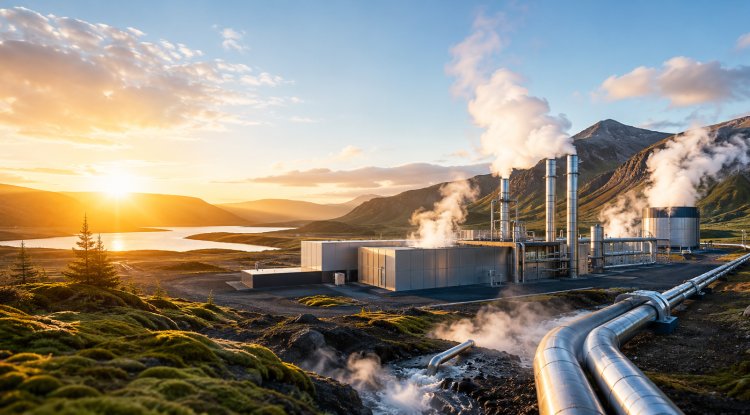
Quaise Energy, a geothermal energy producer, has closed the first tranche of its Series B funding round for $134 million to speed up the development of the company's "World's first commercial superhot geothermal power plant. The new financing is a big step for the Massachusetts Institute of Technology (MIT) spin off in developing its breakthrough drilling technology for power generation commercial applications. The investment will fund the first new geothermal project in Oregon that will provide clean power to the grid by 2030, known as Project Obsidian. The announcement underscores the growing investor confidence in the superhot geothermal energy, geothermal power, clean energy, renewable energy, and sustainable electricity generation as a solution to the energy transition.
Quaise Energy, Cambridge-based startup formed in 2018, is working on next generation geothermal technology that can tap into the massive amounts of heat stored below the Earth's surface. Instead of being constrained by temperature and drilling depth, as traditional geothermal technology is, the company's innovative millimeter-wave drilling technology can target formations a maximum of 500°C and no more than 10,000 metres. The breakthrough could lead to superhot geothermal energy and geothermal power becoming available at many sites across the globe, providing a viable alternative to carbon dioxide and nuclear power generation facilities.
Incentives to encourage commercial use
The first close of Series B fundraise was led by Prelude Ventures and the two strategic investors are two of the largest energy companies in Japan, JERA and Idemitsu. The transaction was led by a core group of Quaise Energy's existing investors, who were also strong believers in the company's technological advancements and ambitious commercial vision.
The company says the $134 million raised is just the first tranche of an equity fundraise that will be part of a larger capital program. Since its founding, Quaise has raised about $230 million in equity and debt capital across projects and anticipates to raise more, of both types, at project level in the coming months to fund construction and expansion of its geothermal projects.
Project Obsidian plans to have commercial operations by 2030.
The funds will mainly be used for Project Obsidian, the first commercial superhot geothermal power plant in the world, said Quaise. This project will be created on federal geothermal leases in the Deschutes National Forest in Oregon, one of the most geologically studied regions in the United States.
The company is confident that the site can produce gigawatt scale electricity and that it will make a major contribution to future clean power supplies. The facility is expected to be delivering electricity to the grid by 2030, providing a boost to the reliability of the grid network as electricity demand increases with electrification, AI infrastructure and industrial growth in the Pacific Northwest.
The project could also help to decrease reliance on fossil fuel power generation, as it is providing a source of power that is available even when the weather is unfavorable, while also supporting intermittent renewables like solar and wind.
The technologies are designed to unlock Earth's deep heat.
Quaise Energy's technology is fundamentally different from the geothermal drilling industry standard, as it is a millimeter-wave drilling system. The traditional drilling technologies can't handle the extreme temperatures and depth underground without technical and economical problems.
The company's system is engineered to eliminate these obstacles: vaporizing rock rather than mechanically breaking through it. This method may allow for access to much more geothermal resources that have not been tapped with current technology.
Quaise said if the temperature of the wells could be increased to between 300°C and 500°C, geothermal wells would generate far more energy and produce minimal-to-absolutely-no carbon emissions, while being an economically competitive source of baseload power, in comparison to conventional power sources.
If the technology can be successfully commercialized, it can enable geothermal energy to be deployed outside the areas traditionally associated with geothermal resources, thus bringing a reliable, clean source of electricity to the world's population.
The Leadership Highlights are transitioning to the Commercial Growth phase.Leadership Highlights are moving into the Commercial Growth phase.
In a statement on the funding announcement, Quaise Energy's Chief Executive Officer and President, Carlos Araque stated that the funding marks a milestone for Quaise as they transition from technology validation to commercial deployment.
The company's long-term objective is to deliver a comprehensive geothermal energy solution to power civilization and the new financing will help to bring its proven technology to its first commercial projects where the company will generate revenue, he said.
The investment shows increased investor confidence in the potential of advanced geothermal technologies to contribute to the decarbonization of global electricity generation on a reliable, disruptive-free basis, as well as to serve a need for round-the-clock power generation.
Superhot geothermal has great investor upside.
Prelude Ventures, who have been supporting Quaise since the early days, feels that the company is proving the commercial potential of a technology that could change the world of energy.
The firm has backed Quaise because it felt there was a potential to release superhot rock as a source of geothermal energy on a scale never before seen. The development of Quaise's technology and its continued progress towards reaching the project's milestones is proof of that early faith and means the company will be able to provide clean, reliable electricity virtually anywhere on the planet, he added.
As the construction process gets underway and further funding is anticipated in the near future, Quaise Energy is stepping up to the forefront of next-generation geothermal development. Project Obsidian's future commercial goals would show a scalable route to providing abundant, low-carbon, baseload energy, helping to usher in a more resilient and sustainable global energy system.
What's Your Reaction?