Rosatom Begins Manufacturing Reactor Vessel for Paks II Nuclear Power Plant Unit 6
Rosatom has started manufacturing the reactor vessel for Unit 6 of Hungary’s Paks II Nuclear Power Plant using its advanced VVER-1200 technology. The project is progressing as planned and forms a key part of the EU’s largest nuclear investment.
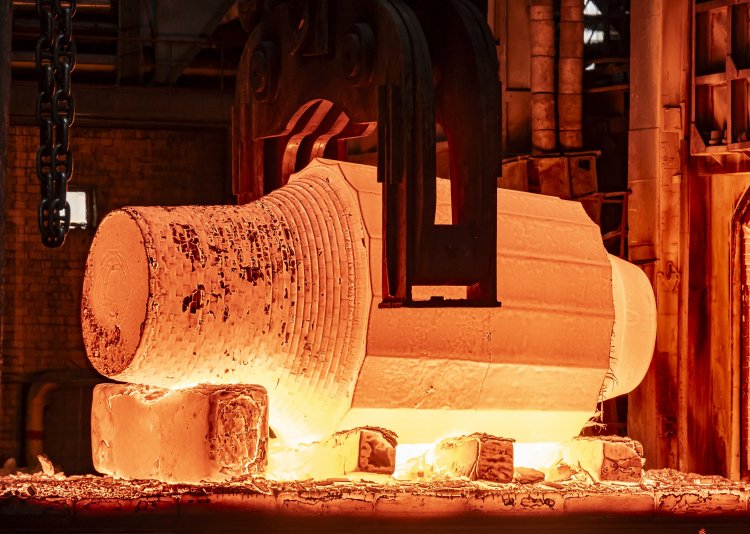
Russia's state nuclear corporation, Rosatom, has initiated production of the reactor vessel of Hungary's Paks II Nuclear Power Plant Unit 6. This is a major step in ongoing nuclear energy cooperation between Russia and Hungary. Production was initiated at St. Petersburg-based AEM-Spetsstal factory owned by Rosatom's Machine Building Division. The project is among the largest nuclear investments in the European Union and is proceeding as planned
At St. Petersburg's metallurgical plant, forging of reactor vessel blanks began on a total weight of metal of approximately 600 tons. These forged components will eventually be part of the Unit 6 reactor vessel. Forging is a fundamental phase in nuclear equipment production and is currently being performed at one of Europe's largest automated forging complexes. The shaped blanks will subsequently be machined in a specially equipped workshop to create the two shells of the Generation III+ VVER-1200 reactor vessel.
Paks II Nuclear Power Plant in Hungary is being built on the basis of Russia's new nuclear technology. It is based on the VVER-1200 reactor, a new Generation III+ reactor that is distinguished by its enhanced safety parameters. Two new units (Units 5 and 6) are included in the project, and the project will provide a stable source of electricity for Hungary throughout the century.
The production activity is regularly overseen by Hungarian and Russian professionals. Production of Unit 6 is a follow-up of corresponding activities for Unit 5, whose vessel reactor is on the final acceptance level. Such unified progress testifies to proper management of the long-cycle equipment production.
Paks II construction is a product of an intergovernmental agreement entered into between Hungary and Russia in 2014. It encompasses three foundation contracts for the plant's construction. Hungary's nuclear regulator granted the principal construction permit to Paks II in 2022, which assured that the project is aligned with both EU and Hungarian safety standards.
Four VVER-1200 reactor units are already in commercial operation in Russia, and two additional units are in operation at the Belarusian Nuclear Power Plant. These units are internationally recognized to have high safety levels and stable operation. The deployment of these units to increase the Paks site will significantly enhance Hungary's energy security and complement its long-term low-carbon energy policy.
As the forging goes on, Rosatom's Machine Building Division is preparing to manufacture additional parts for Unit 6. They include steam generators, pressurizers, tanks for the safety system, and other large equipment needed for both the primary circuit and the turbine hall. Various Russian plants, including those based in Moscow, Podolsk, Petrozavodsk, and Volgodonsk, are busy ensuring production stays on schedule.
AEM-Spetsstal, the metallurgical plant of St. Petersburg, is a strategic plant as the beginning of the equipment supply chain that Rosatom has. It will produce the metal for almost all Russian-designed nuclear reactors all over the world. Once the vessel shells of the reactor are finished, they will be welded into assembly and fitted into the reactor core assembly.
Rosatom's Machine Building and Engineering Divisions are spearheading the entire supply chain and construction. These divisions have top-notch nuclear industry organizations such as JSC Atomstroyexport and JSC Atomenergoproekt. They perform all tasks from project management to design and then down to earth-level construction operations on foreign nuclear power plants.
globally, Rosatom's nuclear construction portfolio is the largest in the world. Some 80% of its earnings come from export projects. In addition, it implements innovative EPC and EPC(M) contracting solutions and develops actively digital management technologies for complex energy infrastructure projects.
The long-term strategy of the company is based on the pillars of sustainability and low-carbon energy. Rosatom is Russia's largest producer of low-carbon electricity, accounting for nearly 20% of Russia's energy output. The company has also joined global projects such as the UN Global Compact to further commit itself to sustainable development.
Construction of Paks II is a key step ahead of Hungary's nuclear future planning and a shining example of continued worldwide cooperation on nuclear power. The project reestablishes the ability of nuclear electricity to provide economical, long-term, low-emission electricity for meeting growing requirements for energy with international safety standards.
Production of the reactor vessel for Unit 6 of Hungary's Paks II Nuclear Power Plant is going ahead successfully, but another milestone in nuclear cooperation between Hungary and Russia. With the start of forging operations and equipment production increasing, the project remains on course. With the use of Russia's high-tech VVER-1200 reactor design, Paks II will enhance the energy autonomy of Hungary and strongly contribute to the low-carbon energy needs of the EU. Rosatom's Machine Building Division and its partner workshops are the guarantors of delivering this critical infrastructure on time and to specification.
Source/Credits: Rosatom Digital Press Office, AEM-Spetsstal, Paks II Ltd.
Website: https://rosatommd.ru
What's Your Reaction?