A new study found that the 2022 Tonga volcanic eruption triggered chemical reactions in the atmosphere that rapidly broke down methane, a major greenhouse gas.
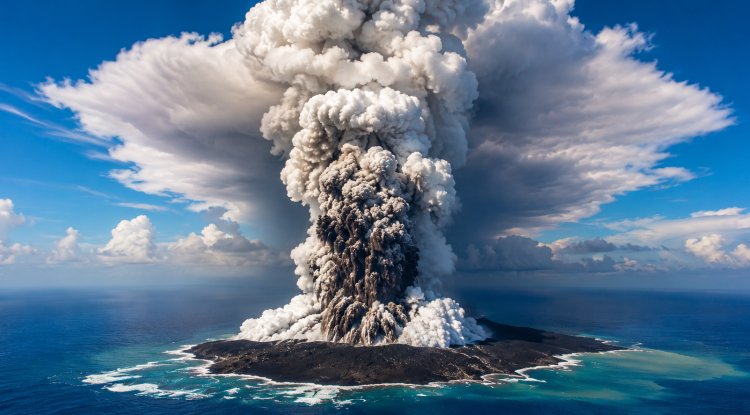
A huge volcanic eruption could have a natural way of clearing the Earth of methane, a powerful greenhouse gas, according to a recent study. In the wake of the cataclysmic eruption of Hunga Tonga Hunga Ha'apai, an underwater volcano in 2022, chemists have discovered a distinctive chemical reaction in the volcanic plume that actively breaks down methane, providing a novel avenue for natural climate mitigation.
In May 2026, the research was published in the journal Nature Communications, and it used cutting-edge satellite data to track the composition of the stratospheric cloud produced by the eruption. The high levels of formaldehyde were the highest ever recorded, and scientists were initially confused by the spread of formaldehyde over the South Pacific. Formaldehyde is a key product formed from the breakdown of methane, so its detection was a “smoking gun” that methane was being broken down within the plume. The cloud kept on doing this methane stripping for over a week as it made its way toward South America, said Dr Maarten van Herpen, the lead author of the study. The process of this atmospheric detoxification is quite complicated and involves volcanic ash, seawater, and sunlight. The undersea volcano, when it blew, sent up tons of salty seawater and ash laced with minerals to the upper atmosphere. In this highly compressed mix, sunlight releases highly reactive chlorine atoms from the sea salt. These chlorine particles are also highly reactive “scavengers” that break down methane molecules much quicker than reactions in the atmosphere.
This is especially important because methane is a potent greenhouse gas that can retain 80 times as much heat as CO2 over 20 years. Carbon dioxide is very long-lived in the atmosphere (decades to centuries), whereas methane has a relatively short lifetime of about 10 years. Consequently, scientists often refer to methane reduction as a "climate emergency brake." So, by reducing methane emissions rapidly, the acceleration of global warming may be slowed down, which could stave off critical climate change "tipping points. Study results indicate a large contribution to the global "methane budget." The researchers estimated the release of about 300 gigagrams of methane from the Tonga eruption, the equivalent of the annual emissions of more than two million cattle. But the reactive plume proved to be very efficient: it removed some 900 megagrams of methane a day.
The finding suggests that mineral dust and volcanic aerosols contribute to methane removal in the atmosphere much more than had been thought, possibly necessitating a complete restatement of scientists' estimates of the amount of methane in the atmosphere. The study also has implications for geology and is sparking debate over future climate engineering. The chemistry was natural, but the same chemistry could be reproduced industrially, the researchers pointed out. It is suggested that a similar "chlorine-wash" effect could be achieved by dispersing certain kinds of mineral dust or sea-salt aerosols for the purpose of eventually being able to manage methane pollution in the atmosphere. But the scientific community is skeptical, pointing out that any attempts to recreate this phenomenon need to be demonstrated as being safe, to prevent harming the ozone layer or altering weather patterns.
The Tonga eruption is a unique natural laboratory for the time being. It has offered the first clear evidence that self-correcting chemical cycles in the atmosphere can be caused by the geological upheavals that occur on Earth. The "accidental" discovery underlines the need to keep track of these natural events and discover hidden mechanisms that could one day bring protection to the climate stability of the planet as global efforts to combat climate change are stepped up. The study demonstrates that methane can be broken down directly, as demonstrated by satellite, and offers a new model for evaluating the effectiveness of future technologies for removing methane.
What's Your Reaction?