Arctic sea ice reached a record low for its peak winter growth, shrinking to 5.53 million square miles. Scientists link the decline to climate change, warning of impacts on weather patterns and wildlife.
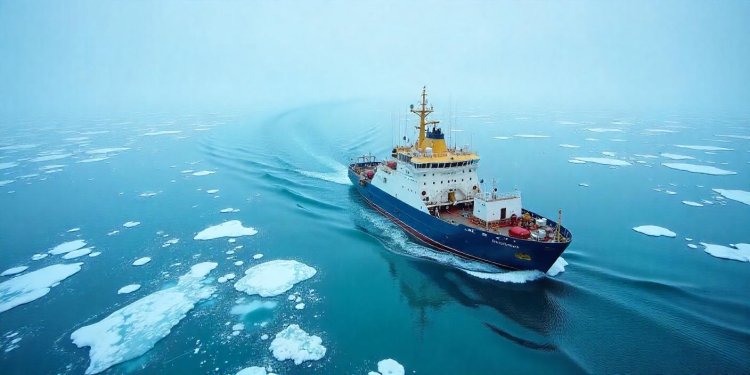
The records of the lowest winter ever Arctic sea ice cover since the satellite observation started 47 years ago, a sharp reversal due to global warming. The records of the maximum coverage of the Arctic sea ice, in March, stood at a mere 5.53 million square miles (14.33 million square kilometers). That is some 30,000 square miles (80,000 square kilometers) less than the record low in 2017. Thawing of the Arctic sea ice has been predicted to have major effects on the climate and ecosystems globally.
Arctic sea ice has its greatest extent each March before it begins to melt for half a year. The National Snow and Ice Data Center (NSIDC) has verified that the most recent measurement was a record low, and that Arctic warming is occurring at a terrible pace. The Arctic sea ice winter maximum has declined significantly since 1979, when satellites began tracking it, losing an area roughly equivalent to Pakistan.
The sea ice melts because the temperature of the Arctic gets warmer. The region is warming four times more than the rest of the world, and this results in gigantic fluctuations in atmospheric pressure and temperature. They tend to destabilize the jet stream that controls the weather conditions throughout the globe. The storms thereby strengthen the storms, cold snaps endure for prolonged periods, and the atmosphere becomes unstable.
Arctic ice melting not only has climate trend implications but also fisheries and wildlife. Polar bears, a sea ice predator, are seeing reduced populations and food scarcity. Other marine mammals such as seals rely on stable winter ice to breed and survive. As ice cover diminishes, most species are in danger of losing their habitat.
Melting of the Arctic ice is not a winter season issue alone. Ice conditions during summer are more important as they indicate the long-run well-being of the region. Fragile ice that has been created during winter will be melting progressively more and more with each passing year. It is self-propagating in nature where ice-free oceans because of global warming hasten the melting of ice in subsequent seasons.
The past decade also witnessed record-low ice cover with the five lowest winter maxes since 2015. Antarctic ice is also following the same trend. While Arctic ice reaches its peak in March, Antarctic ice would be at its low for the same months. Antarctica had its second-lowest sea ice coverage recently, adding up into world sea ice to a record low.
Conclusion:-
The continuous reduction in Arctic sea ice indicates the constant influence of climate change. The melting of winter ice is transforming world weather, influencing wildlife, and heightening the risks of rising temperatures. Scientists are constantly observing these patterns, trying to decrease greenhouse gases in order to curb further melting of ice. Owing to constant climate change, the destiny of Arctic ice cannot be known for sure, and long-term implications for the remainder of the world.
Source and Credits:
Made available by The Associated Press (AP).
What's Your Reaction?