Scientists Tread Lightly At World’s Northernmost Lab
Scientists in Ny-Ålesund balance vital Arctic research with efforts to minimize their impact on the fragile environment.
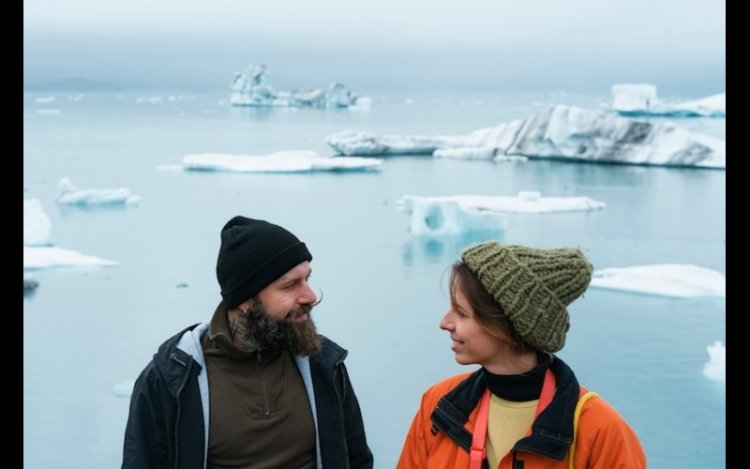
In the remote Arctic town of Ny-Ålesund, 1,200km from the North Pole, researchers are in a race against time to research the rapidly evolving climate with minimal footprint. Bounded by glaciers, polar bears, and Arctic foxes, researchers from about a dozen countries reside and work within this harsh landscape, carrying out crucial experiments on microplastics, sea ice, atmospheric conditions, and more. With just some 30 inhabitants permitted to occupy it on a permanent basis, Ny-Ålesund is the globe's northernmost research lab and focal point for worldwide scientific cooperation.
The singular community, operating more than 50 years, is being increasingly beset by increased challenges as the permafrost melts and foundations start to move. Structures that were originally built on stable frozen earth now slant as the permafrost beneath them dissolves. To solve this, engineers have created a way to jack up the buildings with car jacks and move them onto steel-girded foundations, drilling as deep as 50 meters into the bedrock. This is done in order to maintain the buildings and the research they conduct, even with restrictions on how much historic buildings can be changed because of cultural heritage protection.
In spite of the unforgiving environment—months of complete darkness during the polar night and logistical difficulties in bringing heavy machinery—researchers are determined to reduce their footprint. From data sharing and snowmobile-sharing to avoiding repeated research, the community works with sustainability at its heart. Their activities are regulated by the Svalbard Environmental Protection Act, one of the world's first international environmental pacts. Efforts are made to change lighting to LEDs, employ motion detectors to save energy, and separate waste into 10 to 15 types to recycle on the Norwegian mainland.
Power consumption is strictly monitored, and electric equipment is restricted to save electricity. The station remains diesel-run, but heat exchangers have been put in place to ensure maximum energy consumption. Food is also closely controlled, with all meals cooked in a single kitchen and leftovers recycled to reduce waste. Any excess food waste is exported for composting. Fresh produce comes in from the mainland since there isn't any local farming, and the aim is to coordinate food cooking closely to the amount of residents.
The scientific activity doesn't stop at individual laboratories. Marion Maturilli, who has spent decades studying Arctic climate dynamics, leads a team launching daily weather balloons to gather long-term temperature and radiation data, contributing to global climate monitoring systems. Her team, like others at the station, must be cautious—any carbon-emitting vehicle near the atmospheric lab can compromise their measurements. The importance of accurate, undisturbed data is so great that even the presence of a snowmachine can render data obtained unusable.
Scientists from nations such as the UK, South Korea, and Italy work in close partnership, exchanging tools and results. The Korean Polar Institute, for instance, capitalizes on information gathered by German and Nordic groups to examine Arctic ecosystems in the dark. South Korean researcher Yoo Kyung Lee freeze-dries plant samples to save on energy consumption prior to shipping them back home for genome sequencing. The techniques enable her to track multi-generational developments in plant existence as a result of climate change.
Meanwhile, the Ice Memory project, involving Norwegian and Italian researchers, gathers and archives glacier cores—one for active research and one to preserve. This seeks to preserve past climate records for future use, with the expectation of eventual disappearance of Arctic glaciers.
Despite these efforts, the Arctic is warming faster than any other place on Earth, with sea ice now so unreliable that some research projects are no longer feasible. Iain Rudkin, Arctic Operations Manager for the British Antarctic Survey, reflects on the changes he’s witnessed over 15 years. “It’s incredibly sad,” he says. “I have two small kids and the thought of what world I’m leaving behind for them is always on my mind.”
Ny-Ålesund's research has influenced vital climate policy, such as IPCC reports anticipating nearly ice-free Arctic summers by 2050. But the work is becoming more seasonally reliant as climate change interferes with longstanding research schedules. The researchers hope their diligence in looking after the Arctic and their records will inform policy shifts that could still save the vulnerable polar world. "I wish people could see how much it's changed," Rudkin adds. We always hope our science feeds into policy so we could still alter the future.
What's Your Reaction?