Singapore is drafting a carbon offsetting law for airlines aligned with Corsica standards. The upcoming legislation may include penalties for carriers exceeding emissions limits without purchasing offsets, aiming to strengthen compliance ahead of 2027's mandatory offsetting deadline.
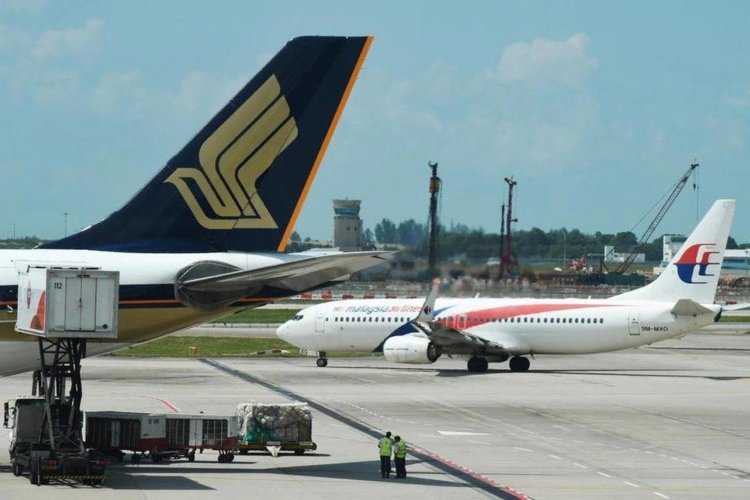
Singapore is poised to introduce new law requiring airlines to offset carbon, according to international aviation climate norms. The new law would be a step up from the current regulations of emissions reporting and possibly having penalties imposed for non-adherence, according to comments by Ng Shao Hua, senior global partnerships manager at Singapore's National Climate Change Secretariat.
Speaking at a panel discussion on the Asia Climate Summit organized by the International Emissions Trading Association, Ng said the new bill would most probably be patterned after Singapore's 2023 emissions disclosure act. It requires airlines to report their carbon emissions and threatens monetary penalties in event of non-compliance by carriers.
Although there has been no timeline set for tabling the draft Bill or in Parliament, the move is Singapore's commitment to bring its aviation policy in line with the Carbon Offsetting and Reduction Scheme for International Aviation (Corsia) overseen by the International Civil Aviation Organization (ICAO).
Corsia, introduced in 2016, will balance net CO₂ emissions of international aviation. Airlines under the scheme are compelled to report annually on emissions since 2019. From 2021, they must also buy offsets if their emissions are more than 85% of their 2019 level. That requirement to offset is still voluntary until 2026 and mandatory from 2027.
One consequence of the international travel restrictions induced by the COVID-19 pandemic, most airlines did not exceed the emissions threshold in recent years. However, with the return of air travel, some airlines are expected to exceed the 85% threshold with their 2024 emissions, so offsets will have to be bought.
Singapore's action to push forward with carbon offsetting legislation is predated by this trend. As explained by Ng, the MRV requirements are comparatively low-cost and easy to apply, even though less probable is the voluntary carbon offsetting to take place if the regulations are not enforced.
He explained that Singapore is taking a phased approach to aviation climate policy. The initial phase was putting in place MRV compliance. The second phase, according to him, will be the introduction of carbon offsetting legislation to create the legal requirement for the airlines and create demand certainty for the market.
The proposed bill would most probably have similar enforcement provisions and penalties as exist for failure to report on emissions. Such regulatory requirement, Ng opined, would be able to incentivize more airlines and governments to seriously take the offsetting schemes even if only in anticipation of the scheme becoming mandatory from 2027.
Other countries such as the United Kingdom and Canada have already implemented regimes of sanctions-based legislation to impose Corsia compliance. Singapore's willingness to do the same is part of an overall trend for governments to enhance authority over aviation emissions as concern over the environment continues to grow.
Corsia is intended to be supplemented with other decarbonisation action in the aviation sector, such as development of sustainable aviation fuel (SAF) and operating efficiency. Carbon offsetting is also seen as a bridging measure until emissions can be cut by technology or fuel transition.
Singapore's strategy mirrors the difficulty of bringing international climate standards to an industry where compliance remains voluntary. While Corsia is not an international standard, more government support and jurisprudence in favor of its mechanisms can speed up its influence.
Ng highlighted the importance of international coordination, going on to add that success for the scheme and supporting legislation will be contingent upon the mass uptake. While the aviation sector is recovering from the pandemic and emissions are growing, policy intervention in the form of this bill could be crucial to achieving long-term climate goals.
Carbon offsetting law is only a specific element of the overall Singapore climate policy and regulation. As a leading aviation hub for Asia, Singapore's choices have a bearing on regional transport policy and emissions regulation.
Source: Asia Climate Summit 2025, reporting by Janice Lim
Credit: Published by The Business Times, July 10, 2025
What's Your Reaction?