The Soviet Union’s 1970s project to reverse Siberian rivers using nuclear explosions failed amid environmental risks and political controversy, leaving a lasting impact near the Ural Mountains.
During the 1970s, the Soviet Union embarked on a revolutionary scheme involving nuclear blasts to change the natural course of Siberia's rivers. Its aim was to redirect water that naturally flowed into the Arctic Ocean northwards and divert it southwards for irrigation and development in the dry regions of Central Asia and southern Russia. Although with enormous resources and extravagant planning, the project collapsed and is today a cautionary tale of political and environmental pitfalls of grand engineering.
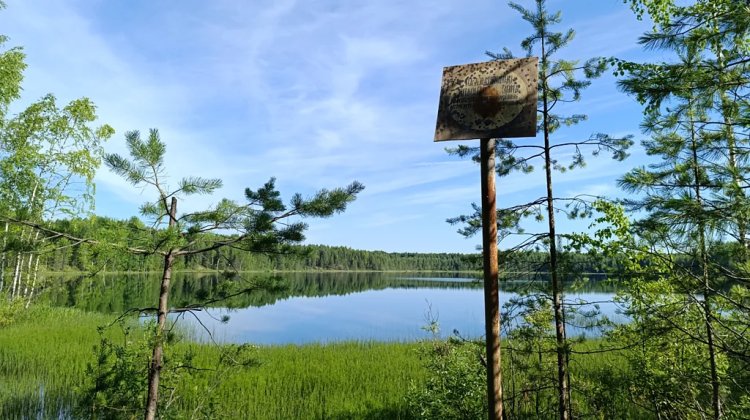
The Soviet experiment was conducted within the bounds of the Ural Mountains where a lake known today as Nuclear Lake was formed in 1971 after three underground nuclear tests. Each of the blasts yielded around 15 kilotonnes of energy, roughly the same order as the atomic bomb that was dropped over Japan. The blasts were intended to blow up a canal connecting the Pechora River basin to the Kama River, a tributary of the Volga, to facilitate water diversion southwards. It was one part of an even larger plan to reverse the course of many of Siberia's large rivers, like the Ob and Irtysh, and redirect water resources to the parched areas.
The project was considered by the Soviet government to be a strategic method of combating water shortages and irrigating heavily populated southern areas as well as keeping the Aral Sea, which was hard hit by ecological depletion due to excessive exploitation, in check. Hundreds of nuclear explosions were to be used under the project to cut gargantuan canals thousands of kilometres long. It was supported by close to 200 scientific organizations and engaged tens of thousands of workers, which shows the magnitude and scale of the undertaking.
But the nuclear explosions triggered an international outcry, with the blasts felt in countries as far away as the United States and Sweden. The nations were indignant at Moscow's violation of the Limited Test Ban Treaty, which prohibited nuclear explosions above and below water. Despite Soviet efforts to minimize radioactive fallout through the use of low-fission devices, the political and environmental costs were high.
The project faced significant resistance in the nation as well. Environmentalists, scientists, and intellectuals cautioned about the potentially disastrous environmental impact, huge cost, and disturbing local people and cultural zones. There were public anti-project movements in the early 1980s, a rare occurrence in the repressive Soviet political environment. The project's flawed science in support of the plan and the dangers of intervening in immense ecosystems were criticized.
Issues voiced were destruction of irreplaceable ecosystems, possible climatic shift, and indirect species transfer between regions. Second, the proponents of the project underestimated the magnitude of environmental effects and river diversion's complexity. The dreadful 1986 Chernobyl nuclear disaster also distracted political focus, energizing environmental consciousness and use of state resources. Subsequently in the wake of the tragedy, the Soviet government shelved the river reversal project, though financial hardship brought about by declining oil prices also figured.
In 1991 when the Soviet Union collapsed, river reversal as an idea largely disappeared but never got completely eliminated. Periodically, some Russian experts and officials revived it, contending that new technologies, changes in geopolitics, like improving ties with China, would make the project possible. Its proponents proposed that diverting Siberian rivers could be the solution to increasing water demands in southern Russia and Central Asia and even reverse Arctic warming.
But recent scientific research warns against such massive intervention. Modelling by physical oceanographers indicated that alterations in the river flows might destabilise the fragile balance of the Arctic Ocean and contribute to accelerating the melting of sea ice and exaggerating climate change. The environmental hazards are still high, and most scientists caution against embarking on similar ventures without balancing implications carefully first.
Nuclear Lake is now a concrete legacy to the Soviet Union's huge but ultimately failed effort to tame nature on an unprecedented scale. Radiation remains elevated in some parts close to the lake almost half a century after the nuclear explosions, indicating the long-term environmental cost of the project. The site has otherwise been largely reclaimed by natural forest, although caution still persists over the presence of residual radiation.
History of Soviet river reversals mirrors a wider record of the limitations on human will in nature, and particularly where motivated by political and ideological agendas. As important as sustainable water management continues to be worldwide, this hapless megaproject serves to highlight the necessity of balancing development objectives against environmental conservation and public welfare.
Source: BBC News, 2025.
What's Your Reaction?