A new study finds the climate benefits of reforestation depend more on where trees are planted than the number of trees, with tropical forests offering the greatest cooling potential.
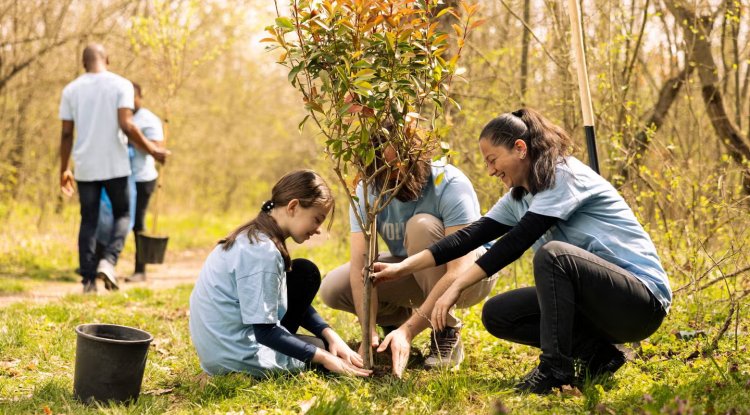
Simply planting more trees may not produce the maximum benefits for the climate. A new study conducted by researchers from ETH Zurich has demonstrated that the choice of the locations where reforestation projects take place is much more influential on global cooling effects than the total quantity of trees. It means that carefully selecting places where forests should be restored in tropical areas can yield equal climate impacts while needing up to 45% less land than other approaches.
The study was published in Communications Earth & Environment and involved comparing three different scenarios of global reforestation through an Earth system model. What makes this study different from earlier research on the topic is that scientists considered both the capacity of trees for carbon dioxide absorption and their biophysical effects, such as sun radiation reflection and evaporation processes.
According to simulations, two reforestation approaches with only 450 million hectares of the difference in the size of forests achieved quite similar results in terms of cooling the planet during the course of the current century.
It was discovered that tropical areas - including the Amazon basin, West Africa, and Southeast Asia - were among the most efficient sites for carrying out reforestation projects. In tropical forests, trees sequester high volumes of carbon dioxide as well as cool their surroundings due to high levels of evapotranspiration. Both these factors increase the climate change impact positively.
Reforestation in high-latitude areas, including Siberia, Canada, and Alaska, will not always lead to cooling of the Earth. The snow-covered surfaces have a reflective property, but the dark surface of the forest increases the absorption of sunlight. In certain circumstances, it is possible that this warming effect will compensate for the cooling effect obtained by sequestering the carbon dioxide.
Moreover, forests affect not only local but also global weather conditions because changes in vegetation impact atmospheric and oceanic circulation and cause temperature and precipitation changes even thousands of kilometers away from these areas. The authors suggest that international cooperation will be necessary in future reforestation projects.
Despite highlighting the value of targeted reforestation, the researchers stress that tree planting is not a substitute for cutting greenhouse gas emissions. Even under large-scale restoration scenarios, reforestation would lower global temperatures by a maximum of about 0.25°C by 2100. They conclude that restoring forests can support climate goals, but rapid reductions in fossil fuel emissions remain essential for limiting global warming.
What's Your Reaction?