India’s new waste management rules emphasise segregation, accountability, and reduced landfill use, signalling a shift toward more structured and sustainable systems.
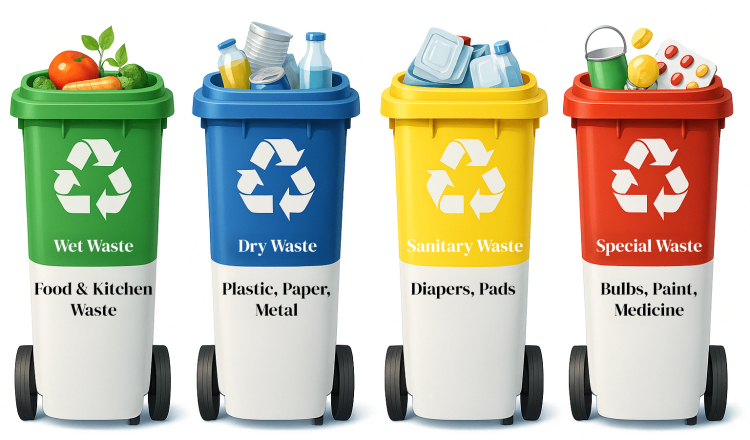
Envac is aligned with the targets outlined under the Solid Waste Management Rules 2026, which came into force on April 1, 2026. These rules introduce stricter requirements such as four-stream waste segregation at source, greater accountability for bulk waste generators, digital tracking mechanisms, and reduced dependence on landfills.
Envac has been operating in India for more than 16 years and has partnered with urban local authorities, township projects, hospitals, airports, and multi-purpose buildings to implement waste management systems. The new guidelines follow the practices that emphasize waste segregation, tracking, and processing.
On a global scale, Envac has engineered an automatic waste collection system using vacuum technology to move waste in a segregated form along closed channels to the central point of collection.
These systems are designed in such a way that they segregate the waste at source through the use of different inlets for various forms of waste like wet waste, dry waste, and sanitary waste among others. Segregation will make it easier to recycle, compost, and convert waste into energy.
Another significant feature of these regulations is the provision for clear responsibilities of Bulk Waste Generators such as high-rise housing complexes, commercial and industrial areas. They will be expected to process and generate waste in an organized manner. Automation has been employed in some densely populated regions to facilitate continuous collection of waste.
A further consideration within the policy approach is the principle of “Polluter Pays,” where there is an emphasis on reducing both the environmental costs and economic costs involved in the process of waste management. Consideration is being given to methods that reduce dependence on landfills, reduce transportation costs, and increase the rate of material recovery.
The development of digital monitoring systems is another important component of the policy. Waste management systems with real-time capacity can monitor volumes, frequency of collection, and system efficiency. This information can be merged into city-wide or centralised monitoring systems, including those that cover the obligations of bulk waste generators.
India produces significant amounts of solid waste, a considerable amount of which had been disposed of either in landfills or at dumpsites traditionally. The 2026 regulations will attempt to alter this trend by promoting segregation, decentralised treatment, recycling, and landfilling only of non-recyclable waste.
Technical systems, which include automated collection facilities, have been considered for adoption as part of this process. The technical systems will help ensure proper segregation, minimise waste contamination, and maximise the utilisation of urban space. Technical systems may further help address visible accumulation of waste, smell, and reliance on vehicles for movement.
Overall, adoption of the new regulations indicates that the country is embracing a shift from a waste collection and disposal system to one of resource management and efficiency.
What's Your Reaction?