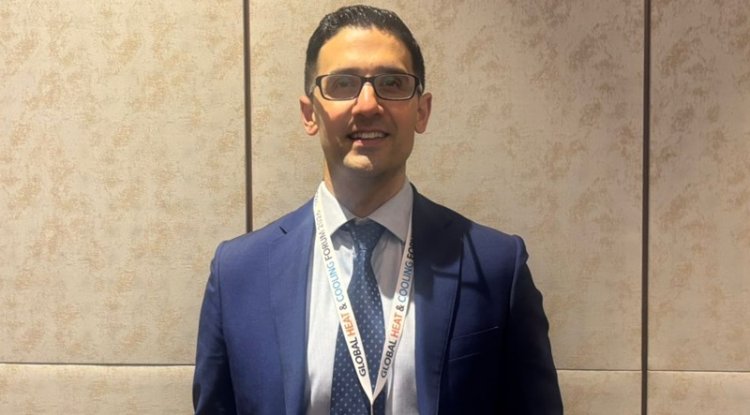
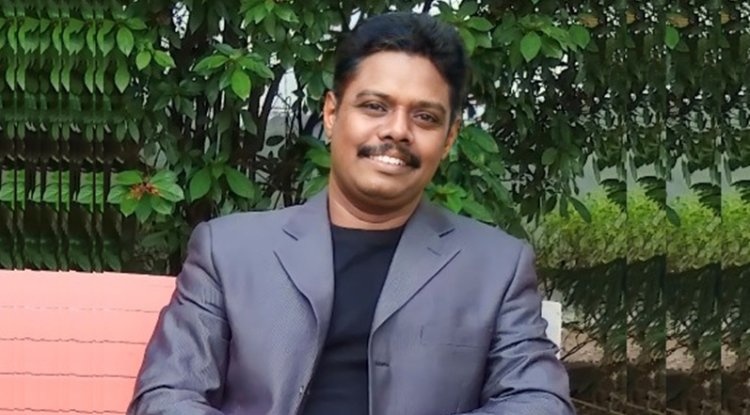
Dr. N.S. Senthil Kumar, President, The Association of People with Disability (APD, India), has spent decades working with people the system has never quite seen
The story of the Association of People with Disability begins not in a boardroom or a government office, but with a teenage girl named Hema. In the years after Independence, polio moved through India the way COVID would decades later — quietly at first, then everywhere. Vaccinations were scarce. The awareness was thin. Hundreds of children were affected every day. Hema was one of them. Born without disability, she developed a fever and contracted polio. By the time it passed, both her lower limbs and one upper arm were paralysed. She could no longer attend school. She depended on others to move through the world.
When she was 17, her parents took her to Maharashtra. There, she found a rehabilitation centre — and her first wheelchair. She received assistive devices. Vocational training. But more than any of that, she found something harder to quantify: the realisation that a different life was possible. That people with disabilities could be independent, productive, fully present in the world — if the world met them halfway. She came back to Bengaluru and said she wanted to build something like that here.
In September 1958, her family placed an advertisement in local newspapers — a simple invitation for like-minded people to come together. A group gathered at Woodlands Hotel in Bengaluru. Most of them had physical disabilities themselves. Together, they founded what they called the Association of People with Physically Handicapped. The word "handicapped" was standard then. The organisation would eventually outgrow both the name and the scope.
Today, that organisation is in its 67th year. It is called the Association of People with Disability — APD — and it works across South India and into Maharashtra, with an annual budget of around ₹50 crore, supporting close to five lakh people through direct programmes and wider awareness initiatives. It has expanded into health, education, livelihoods, assistive technology, advocacy, and research. Dr. N.S. Senthil Kumar, PhD in Rehabilitation, has been at the heart of much of this work — and when he talks about disability in India, he speaks with the particular kind of clarity that comes from watching the same gap persist for a very long time.
The Children No One Can Certify
More and more children are being diagnosed with autism. Not in a hospital ward or a clinic — just in ordinary life, among people they knew. Many parents increasingly share the perception that autism is becoming more common. Experts, however, caution that improved awareness, screening and diagnosis may also be contributing to the rise in reported cases. Some recent Indian health reports and autism organisations cite estimates of roughly 1 in 68 to 1 in 100 children, though these are not based on a national registry. And, globally, the latest estimate from the US CDC is about 1 in 31 children, reflecting improved screening and diagnosis.
In some cases, the child was mildly autistic. Academically capable. Performing well in school and looking, by all surface measures, completely fine. And yet he couldn't travel alone for two or three hours to school. He had quietly steered away from mathematics and science, not because he couldn't grasp them, but because of everything else that came with navigating those environments. His parents knew something was different. They knew he needed support. But the agencies responsible for certification said his condition was too mild. No disability certificate. No formal recognition. "That challenge is very common," Dr Senthil Kumar says. "Not only in autism, but in all invisible disabilities."
The UDID — the Unique Disability ID — is, on paper, a good initiative. Its purpose is to identify people with disabilities, give them an official identity, and help the government understand the scale and nature of disability across the country. It links to benefits and services. It's meant to bridge a gap.
In practice, the gap it creates is sometimes just a different shape. Not every centre is authorised to issue a UDID card. In North Karnataka, for instance, there may not be an ENT specialist or an appropriately equipped hospital for hundreds of kilometres. Anyone who needs a certificate has to travel — often with a caregiver, often more than once, because appointments are full or additional assessments are required. Travel costs money. Caregivers lose wages. And then, even after all of that, a doctor may look at someone whose condition is managed through medication, or whose disability doesn't manifest visibly, and question whether a certificate is necessary at all. "Many people remain uncounted," he says simply.
The 40% Problem
Behind the certification challenge lies a deeper structural issue: the way India defines and measures disability is still largely rooted in a medical model. It focuses on what is physically, mentally, or functionally impaired, assigns a percentage score, and uses 40% as the threshold for eligibility. Those assessed below 40% generally do not qualify for a disability certificate or the benefits linked to it.
But what does a 40% disability rating actually mean in a person's daily life? A disability of 40% or more, commonly referred to as a "benchmark disability," is the minimum threshold required under many government schemes and welfare programmes for an individual to be officially recognised as a person with a disability. The rating determines eligibility for various benefits, including reservations in education and employment, financial assistance, and other support services.
Dr Kumar gives two examples that sit at opposite ends of the spectrum. A visually impaired person might receive a 90% disability certificate — and yet, if they have adapted well, have support systems, and live in an environment with accessible infrastructure, their lived experience of limitation may be relatively low. On the other hand, someone with no visible physical difference, someone who looks and moves through the world appearing completely normal, might have significant mental health challenges that shape every aspect of their daily life. If that disability isn't recognised, they're left with no formal support and no official identity. "The current system largely assesses disability based on structural and functional limitations," he says. "It does not always take a holistic view of a person's lived experience."
This is the gap the ICF — the International Classification of Functioning framework developed by the World Health Organisation — is designed to address. It doesn't look only at the body. It looks at the body, the environment, and the interaction between the two. The same impairment can mean very different things in an urban area with accessible infrastructure, signage, and support systems, versus a rural area where none of that exists. Society and environment are not neutral backdrops — they are active participants in how disability is experienced.
Under the Rights of Persons with Disabilities Act, which came into effect in 2016, the number of recognised disability categories expanded from seven to twenty-one. That's a meaningful shift in how the law thinks about disability. But the methodology for identifying, assessing, and certifying those twenty-one categories has not kept pace. A system built for seven categories, with a percentage-based medical model at its core, is now being asked to account for autism spectrum conditions, mental illness, learning disabilities, and multiple disabilities — and it's straining under the weight.
What Good Data Could Change
Here is what he finds genuinely needs an eye: India has already demonstrated, multiple times, that it can build systems to track and respond to health conditions at scale. The question is whether it's willing to do the same for disability. Take HIV as an example. Voluntary self-declaration would have massively undercounted it — stigma alone would have ensured that. So the government built a registry. Anyone diagnosed was recorded. That registry allowed authorities to understand where their cases were concentrated, where interventions were most needed, and how to direct resources effectively.
Another example is COVID. Millions of people were reluctant to disclose their infection. Some avoided testing entirely. And yet the government built a tracking system comprehensive enough that, sitting at home, a person could see the number of cases in their state, their district, their city — in real time.
The same infrastructure logic applies to disability. Instead of depending on self-declaration during a census — a process vulnerable to stigma, awareness gaps, and simple administrative inconsistency — there needs to be a system that identifies and records disability through multiple touchpoints. Healthcare institutions. Schools. Community programmes. Local government. A central registry, with proper privacy protections, that gives policymakers a realistic picture of how many people have disabilities, what kinds, and where.
Right now, India reports disability prevalence at around 2.8% of the population. Most experts believe the real figure is significantly higher — closer to 10% or more, particularly if older people with age-related disabilities are counted. Developed countries typically report figures of 8% to 10% or above. "Without good data, planning remains incomplete," Dr. Senthil Kumar says. "With good data, we can build better policies and better support systems."
There's another dimension to this that tends to get overlooked. If the number of children with autism appears to be higher in certain areas, that pattern is worth understanding. It could point to healthcare access issues. Maternal health. Anaemia rates. Water quality. Environmental factors. But you can only see a pattern if you're counting carefully enough to see it. Generalised solutions won't work. What's needed is targeted action based on evidence — and evidence starts with data.
Yes To Access And Infrastructure Of Inclusion
APD's response to the accessibility gap has been, in some ways, characteristically practical: build a tool that lets anyone do an accessibility audit, anywhere. The Accessible India Campaign launched in 2016 alongside the RPWD Act, with an ambitious goal of making India genuinely accessible within five years. Nearly a decade later, the progress is real but limited. More than 3,500 places have been audited, over 2,500 locations retrofitted, and around ₹500 crore spent. But a shortage of qualified accessibility auditors — and the cost of their services — has slowed the pace considerably.
APD built Yes to Access to change the equation. The app uses artificial intelligence to walk any user through the auditing process, step by step, generating an accessibility rating for each location. No specialist training required. Since it's open source, anyone can download and use it.
In Karnataka, APD has signed an MoU with the state government. Through frontline workers — Village Rehabilitation Workers and other community-level staff — they've used the app to audit nearly two lakh locations across the state. The app is also integrated with the Accessible India Campaign's grievance platform, meaning issues flagged through Yes to Access can feed directly into official redressal channels.
The ratings serve two purposes. They give people with disabilities practical, advanced information about whether a space is accessible before they visit. And they create a quiet but persistent accountability pressure on organisations and businesses — because when your accessibility rating is visible, it becomes something you're measured on.
What Corporates Get Wrong About Inclusion
The conversation about disability in workplaces has been gaining ground, but Dr. Senthil Kumar is clear-eyed about what's actually happening versus what's being claimed.
An article, International Day of Persons with Disabilities, noted that roughly 100 companies have now included persons with disabilities in their workforce. That's progress. But the nature of that inclusion matters as much as the numbers. Most of the roles offered to persons with disabilities are blue-collar jobs. Many are not permanent positions. And representation at leadership levels remains almost nonexistent. Companies may want to report disability inclusion as part of their ESG and DEI efforts — but reporting it and doing it meaningfully are not the same thing.
Accessibility, Dr Senthil Kumar emphasises, is not just about ramps and railings. It has at least three distinct dimensions. Physical accessibility covers the built environment — ramps, accessible toilets, appropriate workstations, and infrastructure for wheelchair users. Communication accessibility covers digital and informational environments — websites, documents, and internal platforms that are usable by people with different communication needs. And mobility accessibility covers how people get to work, travel for business, and move through public systems.
He gives the example of air travel: airports may be accessible, but aircraft often aren't. Toilets on most planes are too small for a wheelchair user to operate independently. Seat pitch in economy class may be insufficient for someone using callipers or prosthetics. Physical access to a transport system doesn't automatically mean the system is accessible end-to-end.
Even when all physical and mobility barriers are addressed, organisations need inclusive policies — opportunities across all functions and levels, not just entry-level roles, not just visible-disability categories. "Unless all these changes happen together, meaningful inclusion will remain difficult," he says.
There is also the broader point, one that tends to shift the conversation when it lands: accessibility is not only for persons with disabilities. Universal design — spaces and systems designed to work for everyone — benefits all of us. Vision deteriorates with age. Hearing declines. Mobility changes. Most people will experience some form of disability, temporary or permanent, at some point in their lives. Designing only for the able-bodied is, eventually, designing against yourself.
The Early Years, and What Gets Missed
APD runs an Early Intervention Programme that focuses on children from birth to eight years — what they call a cradle-to-school approach. One of its distinctive features is training mothers to become therapists. The reasoning is practical and grounded in developmental science: there are around fourteen areas of development in a young child's growth. If even one is disrupted, it can affect the trajectory of multiple others. Having a trained caregiver present consistently — not just during clinic hours — makes a material difference.
Autism sits within this framework as a neurodivergent condition affecting social interaction and communication. But the programme's scope is broader. Developmental delays, learning disabilities, conditions that don't yet have a name or a certificate — these fall under the same umbrella of early need, and the same early response.
The child who can't travel to college. The mother who left her job to become her daughter's full-time support system. The families are navigating this alone, unaware that support exists, or aware of it but unable to reach it. This is the daily reality that numbers like "2.8% prevalence" obscure. APD works with partner organisations in states where it doesn't have a direct presence — smaller NGOs doing implementation work, strengthened by APD's technical support and due diligence processes. The reach is real. But Dr Senthil Kumar is honest about the limits of what any organisation can do without systemic change. "This is not a problem that can be solved only at the local level," he says. "It requires policy-level interventions at the national level."
The Message
India is, by most measures, on a strong growth trajectory. Its digital infrastructure is formidable. Its capacity for large-scale implementation — proven during COVID vaccination drives and community outreach — is genuinely impressive. The tools, the will, and the track record exist. What's missing is the decision to apply them to disability in the same way.
A disability registry. A more holistic assessment framework. An honest reckoning with the gap between the 2.8% that's officially counted and the 10% or more that probably exists. Inclusion in workplaces that goes beyond a single line in a CSR report. Accessibility means something in a rural district, not just a city mall. "At some point in life, most of us will experience some form of disability, whether temporary or permanent," Kumar says. "If we don't design for that, many people will find themselves excluded from public life — confined to their homes — not because of their disability, but because the world wasn't built to include them."
Hema knew this in 1958, sitting in a rehabilitation centre in Maharashtra with her first wheelchair, understanding for the first time that a different life was possible. The question she came home asking — why doesn't something like this exist here? — is still being answered. APD has spent 67 years on that answer. The country is still catching up.
Dr. N.S. Senthil Kumar, PhD (Rehab), is a leading voice in disability rights, rehabilitation, and inclusive policy in India. APD — the Association of People with Disability — was founded in 1959 and today supports close to five lakh people across South India and Maharashtra.
What's Your Reaction?