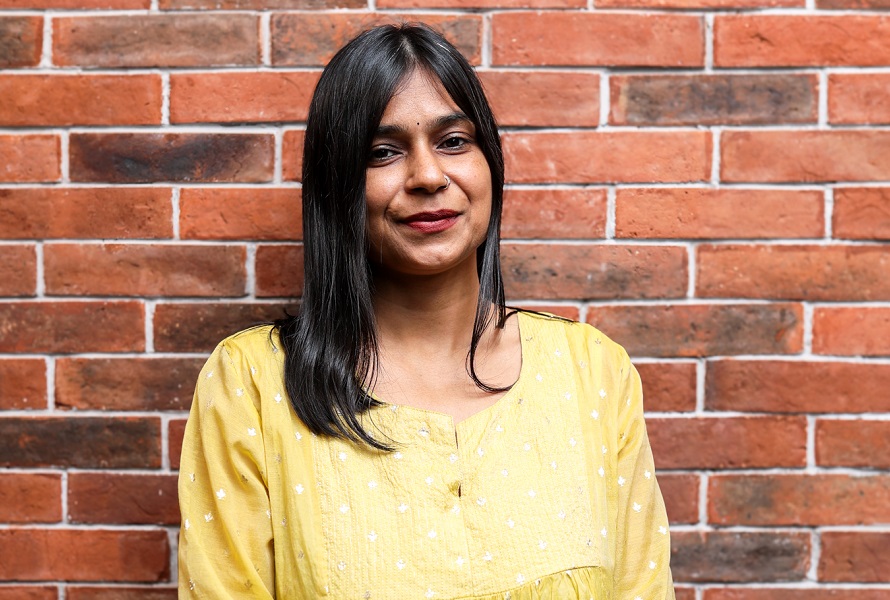
Shagun Kalra, Development Manager, RMR Group, believes sustainable development is about much more than green buildings. In this conversation, she explains why India needs to think in terms of connected districts, reuse existing buildings, and create more opportunities beyond its biggest cities
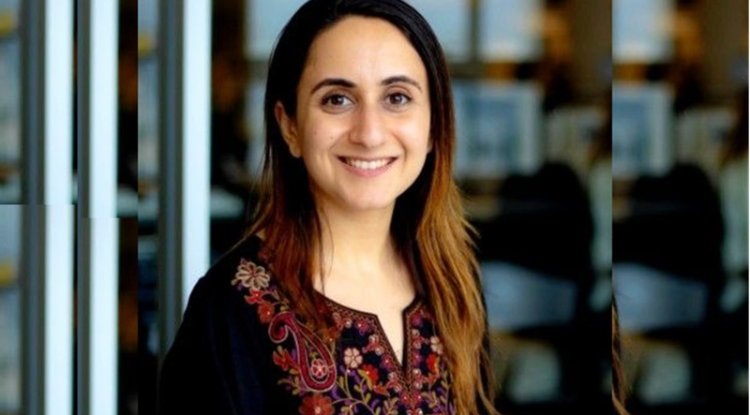
India's cities often grow one neighbourhood at a time, but not always as part of a larger plan. Architect-turned-real estate developer Shagun Kalra, Development Manager, RMR Group, believes sustainable development is about much more than green buildings. In this conversation, she explains why India needs to think in terms of connected districts, reuse existing buildings, and create more opportunities beyond its biggest cities.
You have had quite an interesting career trajectory, from architecture to real estate development. Share your journey.
I started as an architect and spent about five years working on large-scale developments. Helix Park and TMC in Houston, Potomac Yards in Washington DC, Brooklyn Gardens in Florida. Working alongside developers and public officials got me increasingly curious about how these projects are actually financed. Because at the end of the day, the person writing the cheque is the one making the real decisions. Design matters enormously, but if you want to create impact, you need to be on that side of the table.
So I went back to school. While studying, I worked with the Automore Group, which I'll be joining full-time next month, on a large mixed-use project in Nashville. Sustainability was central to every conversation there, but not in the way people usually think about it. Not just certifications or building orientation. It was about reducing how far people need to travel and creating places where they can live and work in the same neighbourhood. I also got to work with the Massachusetts government on historic preservation during that period, which was a different but equally interesting experience.
You are based in the US. Are you working on anything in India?
Yes, actually. I'm helping Cambridge Innovation Centre explore expansion opportunities in India. CIC is one of the largest innovation hubs in the world. No project has officially kicked off yet, but the groundwork is being laid. Earlier this year, the CEO Tim Rowe and I visited India and met with government officials in Hyderabad and a few state governments. There's real interest on both sides. It'll be interesting to see how it all comes together.
What are the biggest differences you've noticed between working in the US and navigating development in India?
The thing that stands out most is how few true metropolitan regions India has, given its size and population. Development tends to happen in clusters with no real cohesion between them. You'll have one dense, active district with strong economic activity and then a few kilometres out, there's nothing. Then another cluster somewhere else, completely cut off from the first. The airport ends up in a different city altogether.
Places like Mumbai, Gurugram and Hyderabad are doing better, but the fragmentation is still very visible. And the frustrating part is that the problem isn't intent or even money. Public officials want to do the right thing. Developers are ready. There's significant international investment interest coming into India. The public is open to it. What's consistently missing is coordination between the three parties that need to work together for any of this to succeed, which is the public sector, finance and development. When those three aren't talking regularly, you get messy, unplanned growth. And cities that genuinely need to develop, many of them in Tier II, get left behind.
People often talk about green buildings when the conversation turns to sustainable cities. What can a sustainable district achieve that a single green building simply can't?
The difference in scale is enormous. Kendall Square in Cambridge is a good example. It's widely known as the most innovative square mile on Earth, but it's also a pretty compelling picture of what district-level sustainability actually looks like on the ground.
The environmental benefits there don't come from any one building. They come from having jobs, housing, transit, research institutions and everyday services concentrated within a walkable, connected environment. When people can live, work and access what they need within the same district, you reduce how much they need to travel, infrastructure becomes more efficient and land is used more thoughtfully. That's very hard to achieve through individual buildings, no matter how well designed they are.
Stockholm and parts of New York show the same thing. The real sustainability gains happen when transportation, utilities, public space and economic activity are planned together rather than separately. Sustainability is ultimately a systems challenge. Buildings are important, very important, but districts are where you address how people actually live.
A few cement companies launched green cement and green bricks, but there's still a lot of scepticism around structural performance. How do you change that?
It's a fair concern, but green cement genuinely does have a much lower carbon footprint than conventional cement and produces fewer emissions during manufacturing. The potential is real. The awareness challenge, I think, is best addressed by going directly to the people who actually specify materials, which are architects and contractors. When I was practising, the way I learned about new materials was through manufacturers coming to us, walking through the product and explaining what it could do. More of that needs to happen. Technical sessions, direct engagement with the people writing the specifications.
Cost is the other big factor. A slight premium is workable. But if green cement is double the price of conventional cement, adoption becomes very difficult because construction is already expensive. Bring the price closer to parity and the rest will follow naturally.
Helix Park is being developed in Houston, which is historically an oil and gas city. How central was sustainability to that project's thinking?
Very central, but in a broader sense than you'd expect. Houston is quite different from Boston, where zoning is extremely strict. I know of projects where developers have spent years and hundreds of millions of dollars without receiving a single permit. Houston is far more flexible, which creates its own kind of opportunity.
What stood out about Helix Park was that sustainability wasn't framed as just environmental performance. Energy efficiency mattered, of course, but the bigger question was whether the district could stay economically relevant over time. The Texas Medical Centre has already become one of the largest concentrations of healthcare and research in the world. Helix Park was designed to build on that by creating an environment where research institutions, startups, healthcare organisations and talent could operate in close proximity and genuinely feed off each other.
From a development standpoint, that is sustainability. You're building conditions for a knowledge economy to grow and generate value over decades rather than chasing one economic cycle. The master plan brought together walkability, water recycling, research facilities and spaces for collaboration. When those things work as a system, the outcomes tend to be far more durable, both environmentally and economically.
Could a CIC-style innovation campus work for India's cleantech and sustainability startups?
They are really struggling to attract funding right now. It absolutely could. When we were having conversations with public officials and startup founders in India, they were ready to begin immediately. They understood the value of connecting Indian innovators with global infrastructure. The question was never really whether it would work. It's always been about how.
On the funding challenge, I understand the hesitation from investors. Returns in cleantech aren't always visible in two or three years. But the long-term case is genuinely strong. A sustainable building uses less energy, costs less to run, holds its value better and carries lower insurance risk as climate events become more frequent. Developers like Brookfield are already making that bet, and it won't pay off next year. It'll pay off over the next twenty-five. The conversation needs to shift from this costs more upfront to this performs better over time. Innovation campuses help drive exactly that kind of thinking by bringing startups, researchers, investors and institutions into regular contact with each other. That proximity is worth a lot.
Is India's population a boon or a bane for its development ambitions?
Definitely a boon. The talent is extraordinary. I was telling my husband the other day that I'd be more nervous competing for opportunities in India than in the US. The minds are that sharp. But that talent needs to be channelled properly. Too many people are being pulled toward a handful of cities, Mumbai, Hyderabad, Bengaluru, and that creates enormous pressure. Had similar opportunities existed closer to home, many of those people would never have moved. That, in itself, would have been a more sustainable outcome. We need to invest seriously in Tier II and Tier III cities and give people real reasons to stay.
India seems quite resistant to adaptive reuse of existing buildings. How do you shift that mindset?
The resistance is understandable. When people hear redevelopment, they hear displacement. They don't know where they'll end up and they don't trust the process. But here's what I have noticed. The families living in these buildings may be reluctant, but their children often aren't. The younger generation wants to come home to spaces that are safe, well-maintained and functional. They're asking for change. We need to reframe the conversation entirely. Right now, redevelopment is presented as erasing history. It should be presented as building for the future, and that conversation needs to happen with the people who are actually going to live that future. The Dharavi project is a complex case, but even there, if you speak to younger residents, many of them want better homes and better conditions. Once that generation starts driving the demand, the narrative will shift.
Projects like The Mill in Mumbai show what's possible. Historic buildings have been transformed into something vibrant and mixed-use that feels completely at home in the city today. We have so much existing fabric to work with. We don't always need to start from scratch.
Any final thoughts?
Just that sustainability can't keep being treated as an afterthought. The upfront costs make it easy to defer, but the returns over ten, fifteen, twenty-five years are very real. India has the talent and the urgency. What it needs now is better coordination, smarter policy and more honest conversations between the people who are actually building things. I'm hopeful about where it's headed.
What's Your Reaction?