Top Scientists Warn Climate Indicators at Critical Red Alert Level
More than 60 top scientists have warned that key climate indicators have reached critical levels. Emissions, global temperatures, and sea level rise are accelerating, threatening to exceed the Paris Agreement's targets. Urgent action is needed to prevent further climate instability.
Over 60 experienced climate scientists issued a sobering statement yesterday in the global climate system, announcing that crucial indicators like the greenhouse gas concentration, global warming, and increased sea level have crossed record-high and perilous thresholds. These observations were unveiled yesterday, 19 June 2025, prior to the November COP30 Climate Change Conference in Belem, Brazil.
The research, released by Earth System Science Data, finds that carbon dioxide from fossil fuel burning and tree cutting hit a new high in 2024. Ten-year averages were 53.6 billion tonnes, or roughly 100,000 tonnes of CO₂ per minute. It is devouring the world's last carbon budget – the level of emissions needed to limit the warming of the planet to under 1.5°C over pre-industrial levels.
The 1.5°C limit was breached on the Earth's surface for the very first time in 2024, states the report. By looking at the emission pathway that is followed now, scientists estimate that the 1.5°C carbon budget could be only a matter of years, which would put the internationally agreed target under the 2015 Paris Agreement in great danger. Although the Paris Agreement permitted warming to be "well below 2°C", policymakers have all taken this to mean 1.7°C to 1.8°C, and this level also appears set to be crossed.
Despite such encouraging signals as investment in clean energy surpassing that in fossil fuels by a ratio of two to one in 2024, the world energy mix remains dominated by oil, gas, and coal. Fossil fuel remains the primary source of the world's energy consumption at over 80 per cent, and the current growth in renewable energy remains too limited to keep pace with rising global demand.
Scientists, including University of Leeds and Imperial College London academics, emphasized that human-induced global warming speeded up over the last decade at a pace faster than during any previous period in the records. The results are an interim, but unofficial, addition to the science on climate that underpins the Intergovernmental Panel on Climate Change (IPCC) reports.
One of the most alarming is increasing global sea level increase. Between 1901 and 2018, sea levels increased at an average rate of less than 2 millimeters per year. From 2019 onwards, the rate has basically doubled, and the current sea level increase is 4.3 millimeters per year. The 23 centimeters of increase already experienced during the last 125 years has already been sufficient to expose small island states and enhance the impact of storm surges on coastal cities across the globe immensely.
20 centimeters of sea level increase by 2050 would produce an estimated US $1 trillion loss each year in the world's 136 largest urban coastal cities through flooding, based on projections. Such hazards make immediate adaptation interventions necessary, particularly for high-risk, high-population areas and low-resilience infrastructure.
The report also refers to Earth's increasing "energy imbalance"—the discrepancy between the amount of solar energy the planet takes in and how rapidly it is emitted back into space. Nowadays, the oceans are trapping about 91 percent of this excess heat, cooling even more disastrous effects on land ecosystems and human societies. Scientists remain uncertain just how long the oceans can serve as this buffer, even causing additional concern regarding future climate stability.
These changes are coming faster at a moment when global cooperation in climate action has become more divided. The United States' withdrawal from the Paris Agreement during the presidency of former President Donald Trump and cancellation of domestic climate policies have undermined other countries' progress. Although the ensuing re-entry of the US into the agreement, confidence in its long-term commitment has been lacking and some commentators think that this change will deter other nations from stepping up their own commitments.
The scientists in the update maintained that most of the near-term effects of climate change are now unavoidable and irreversible during the next ten or twenty years. However, they also laid emphasis on the fact that the trajectory after 2040 is still open and will depend on decisions today in policy, investment, and behavior. The quick trajectory to the tipping points of the climate renders the issue at the next climate negotiations in Brazil particularly urgent.
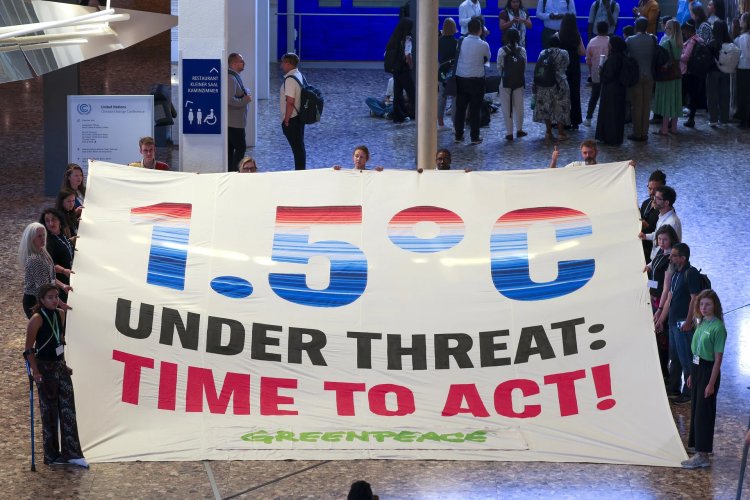
During the SB62 Climate Change Conference held recently in Bonn, Germany, climate action activists from environmental groups like Greenpeace marched the streets to protest and call for action immediately. The activists converged at the Bonn summit, an interim meeting towards COP30, where governments have the mandate to agree on their contributions and revise their nationally determined contributions (NDCs) in accordance with the objectives of the Paris Agreement.
As the world grapples with mounting climate troubles such as heatwaves, floods, and loss of biodiversity, the report is a sincere call to policymakers to base their decisions on science realities. The rate at which climate is transforming necessitates not only ambition but immediate and unrelenting adoption of steps to lower emissions, shift to clean energy, and catch up with emerging standards of the environment.
Source
AFP and Earth System Science Data; Warning lights flashing red on climate: leading scientists, published 19 June 2025
What's Your Reaction?