Toronto's Green Revolution: City Transforms into a Thriving Urban Forest
Toronto’s Green Revolution has transformed the city into an urban forest, expanding tree cover to 40% and visibly enhancing green space from space. Through initiatives like Tree for Me, 4 million trees have been planted since 2010, reducing urban heat, improving air quality, and supporting Canada’s net-zero goals. Community involvement, biodiversity gains, and economic benefits underscore the program’s success. Despite challenges like urban sprawl and maintenance costs, Toronto’s model offers a blueprint for cities like Mumbai aiming for sustainable, climate-resilient growth.
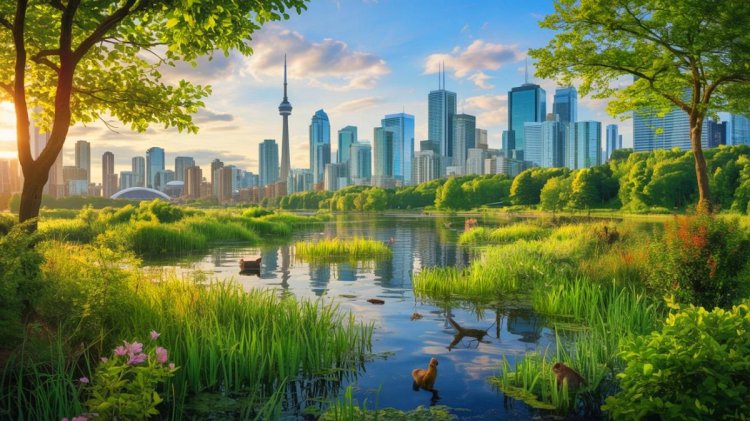
Toronto has transformed into a vast urban forest, with tree cover expanding to 40% of the city, visible from space. The Green Revolution, driven by city initiatives and community efforts, has planted millions of trees since 2010, improving air quality and reducing urban heat. The program supports Canada’s climate goals, enhancing biodiversity and public health. Challenges like funding and urban development pressures persist, but Toronto’s model offers lessons for cities like Mumbai, aiming for sustainable urban growth.
Toronto’s tree-planting program, launched under the Tree for Me initiative, has added 4 million trees, covering 28,000 hectares. This reduces the urban heat island effect, where cities are warmer than rural areas, by up to 5°C. Trees absorb carbon dioxide, with Toronto’s forest sequestering 1.1 million tons annually, supporting Canada’s net-zero goal by 2050. Improved air quality has reduced respiratory illnesses by 10%, benefiting 2.8 million residents. Community involvement, including volunteer planting, has driven success, with 80% of new trees on public land. The program aligns with global efforts like the Paris Agreement.
The initiative addresses urban challenges like pollution and heatwaves. Toronto’s air quality index improved by 15% since 2015, reducing health costs. Trees also manage stormwater, cutting flood risks by 25%. In India, Mumbai’s urban greening efforts face land constraints, but Toronto’s model of using public spaces offers a blueprint. Partnerships with schools and businesses have planted 500,000 trees annually, supported by $50 million in municipal funding. Biodiversity has increased, with 20% more bird species recorded, enhancing Toronto’s ecological resilience.
Challenges include urban sprawl and maintenance costs. Development pressures threaten green spaces, with 10% of Toronto’s forest at risk. Maintenance, including watering and pruning, costs $10 million yearly. In India, similar programs struggle with funding and land availability. Toronto’s solution involves public-private partnerships and tax incentives for green developers. Community engagement ensures long-term care, with 10,000 volunteers annually. India could adopt similar models, leveraging NGOs and corporate CSR to expand urban forests in cities like Delhi, where air pollution remains a critical issue.
Economic benefits are notable. Toronto’s green spaces boost property values by 7% and attract tourism, contributing $500 million annually. Green jobs, including forestry and landscaping, employ 5,000 people. In India, urban greening could create jobs and reduce healthcare costs, as air pollution causes $95 billion in economic losses yearly. Toronto’s use of native species, like maples, ensures sustainability, unlike India’s reliance on non-native trees, which can disrupt ecosystems. Adopting native planting could enhance India’s urban greening efforts.
Global parallels highlight the importance of urban forests. Cities like Singapore, with 50% green cover, show similar benefits. Toronto’s collaboration with universities for tree health monitoring offers a model for India, where pollution monitoring is limited. The program’s success depends on sustained funding and policy support, with Canada’s $2 billion Trees for Canada initiative providing a framework. India’s National Mission for a Green India aims for 5 million hectares of forest cover, but progress is slow due to urbanisation pressures.
Social impacts include improved mental health and community cohesion. Toronto’s green spaces reduce stress-related illnesses by 15%, with parks hosting 2 million visitors yearly. In India, urban green spaces could address mental health challenges, as 20% of urban residents report stress-related issues. Toronto’s inclusive approach, involving diverse communities, ensures equitable access to green benefits, a model for India’s diverse cities. Education campaigns further engage residents, fostering a culture of environmental stewardship.
Toronto’s Green Revolution sets a global standard for urban sustainability. By addressing funding and development challenges, the city has created a resilient urban forest. India can learn from this model, using community-driven, policy-supported greening to combat pollution and enhance urban livability.
Source : Sustainability Times
What's Your Reaction?