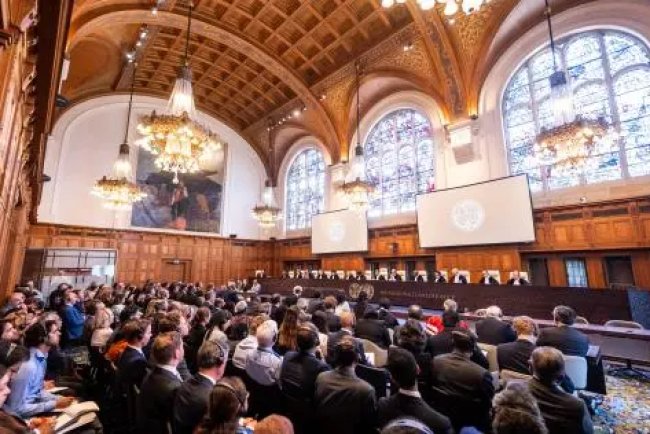
UN Secretary-General António Guterres has called for climate risk and resilience to be integrated into economic policy, financial systems and investment decisions worldwide.
Climate Risk as a Core Economic Policy: Why Rewriting the Rules of Finance Is Necessary
Climate change conjures up images of melting ice shelves, flooded coastal roads, or fields becoming increasingly dry due to prolonged droughts. It is unusual to imagine a gathering of finance ministers studying spreadsheets, central bankers tinkering with interest rates, or public investment authorities creating the budget for the coming year. But, as the United Nations Secretary-General António Guterres has said, those policy and financial discussions are where the future of the planet will be shaped. At London Climate Action Week, Guterres gave a stark reminder that the climate debate is about more than saving the environment – it is increasingly being viewed as an economic priority.
Adapting to climate change — a massive undertaking involving power system upgrades, drought-tolerant agriculture and flood-defence infrastructure — has been an afterthought for decades. It was often treated as a secondary concern, long overlooked and locked away in environmental ministries with weak budgets. Guterres said this “outdated thinking” is no longer sustainable for the global economy. Extreme weather events are becoming more common and more severe—and they are causing a hidden financial crisis. After a disaster, the short-term costs fall directly on national treasuries, affecting supply chains, destroying infrastructure and straining public finances. Climate disasters are becoming fiscal disasters.
The data highlights the scale of the challenge and reflects a growing systemic problem. The United Nations Environment Programme (UNEP) estimates that the developing world will require between $310 billion and $365 billion each year by 2035 to defend its populations against the effects of climate change. But the reality for public financing to these hard-hit areas was approximately $26 billion. The significant funding gap puts the least carbon-dioxide-polluting communities at the highest risk of economic shocks. Guterres is urging the global financial system to reassess how it values climate risk and resilience. The financial system should no longer charge developing countries high interest rates for borrowing when they experience a climate crisis, but should incentivise actions taken to prevent it.
This transformation will require innovative financial approaches to the use of economic instruments. Guterres called for a novel set of bold measures, among them windfall taxes on fossil fuel companies that have reported strong profits in recent years. Investing these funds in adaptation and loss and damage related to climate change would provide a significant amount of capital where it is needed the most. Meanwhile, the shareholders of the world's key multilateral development banks need to do more to equip these institutions with greater lending capacity. By increasing their capital, these banks can scale lending for resilience-building projects to a substantially larger scale and can use blended finance structures to de-risk capital investments to attract the vast amounts of private capital now on the sidelines.
What's particularly interesting is that this modern economic re-evaluation is moving to emerging technologies, namely AI. AI has tremendous potential to improve the use of energy to power the grid and predict weather, but it has an undeniable physical impact. Some large-scale AI infrastructure networks consume significant amounts of electricity, and their energy demands are only increasing as the technology advances, Guterres said. Climate policy may also include requirements for tech giants to disclose 100% of their carbon, water and land footprints and to operate these digital engines on 100% renewable energy.
The costs of investing in early warning systems, strengthening infrastructure, and ensuring affordable disaster insurance before disasters occur should not be seen solely as expenses. They can also be viewed as defensive investments that help safeguard the long-term stability and sovereign credit rating of a nation. The era of viewing the environment and the economy as competing interests is increasingly being challenged. The finance ministry has the special power to make climate change a more structured transition to climate security by integrating it into fiscal policies and national budgets. The financial system must adapt to a climate-constrained world; the economic landscape is changing.
What's Your Reaction?