Amazon Can Survive Drought, But Climate Pays the Price
A 22-year drought experiment in the Amazon reveals that while the rainforest can adapt to prolonged dry conditions, it comes at the cost of massive biomass loss and reduced carbon storage. This has global climate implications as the Amazon's role as a carbon sink diminishes under climate change.
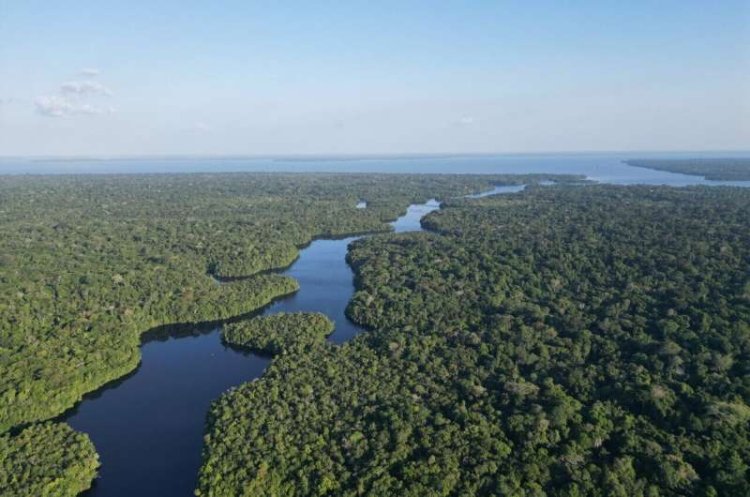
A new long-term survey has found that the Amazon rainforest can potentially weather the intense droughts induced by climate change—but at an ecological cost.
Based on observations documented in reports presented by Nature Ecology & Evolution, the rainforest's capacity to adapt to a warmer and drier climate would kill the majority of the large trees, significantly impairing the forest's ability to act as a carbon sink in the short term. This shift would lead to the release of vast quantities of carbon dioxide into the atmosphere, which would complicate the world's attempts at controlling greenhouse gas emissions.
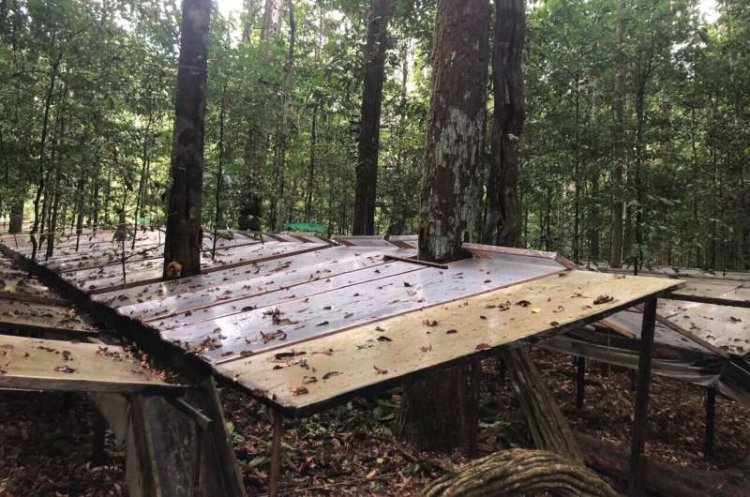
The research is the culmination of a 22-year artificial drought experiment in the Caxiuanã National Forest of north-eastern Brazil, which is part of the Amazon Basin. Since 2002, scientists have induced an artificial drought on one hectare of land—roughly the size of Trafalgar Square—by diverting around 50% of the rain from the ground using transparent panels.
Directed by researchers in the University of Edinburgh and Federal University of Pará, the experiment is the longest drought experiment on tropical rainforest globally. The research was set up to simulate the type of drying that parts of the Amazon will experience from climate change.
The scientists noted that the majority of the biggest trees on the site died during the initial 15 years of observation. The trees are important since they hold most of the rainforest system's carbon. They died and resulted in the loss of over one-third of the site's biomass and releasing a significant amount of stored carbon into the atmosphere.
Following this initial loss, the forest recovered. Trees that survived enjoyed better water availability and were no more stressed than trees in surrounding rainforest areas not suffering from drought stress. Even a small constrained carbon accumulation was evident, demonstrating some level of long-term recovery.
But as the forest adapted to lower rainfall, adaptation came at a cost. Smaller trees and biomass imply that even if the forest is conserved, it can no longer sequester or store carbon as widely as before. This diminishes the Amazon's function as a significant carbon sink, which is needed in moderating global climate change.
The research provides insight into what may happen to Amazon ecosystems in the future under worsening climate stress. Although the rain forest did not fully collapse into savanna—at least, not yet—as was once feared by some scientists, it did change dramatically ecologically, transforming itself into a more open forest form characteristic of dry forests.
The study also adds that its results are possibly underestimating the complete extent of long-term climatic change on the Amazon. This one test simulated only soil dryness, but not such other aggravating factors as rising temperature, altered air moisture, forest fire, or extreme weather, all of which are forecast to worsen as climate change continues.
The authors stressed that continued research is essential that is ongoing and long-term to understand more fully the sophisticated ecological responses to climatic stress. The conclusions are particularly well-timed with ongoing deforestation and climatic stress that are impacting huge sections of the Amazon Basin, a region covering more than 2 million square miles.
While the research provides some reassurance that the rainforest has adaptations, it also provides a warning: survival at pressure does not necessarily equal survival with no loss. The possible reduction of the Amazon's carbon-sequestration capacity could be accelerating global warming, allowing it to create a feedback loop that puts additional pressure on the world and the forest.
This research's estimates are of international concern. The Amazon is crucial for the regulation of the Earth's climate by pulling in enormous levels of carbon dioxide. Any loss of its capability would make it more difficult to achieve international climate targets like the ones agreed to in the Paris Agreement.
On balance, Amazonian drought resistance is an intricate photo of resilience. As much as collapse of entire ecosystems may never be unavoidable, its changed nature of the ecosystem can significantly degrade the ecological services offered by the same, more importantly in regard to climate management.
The research was conducted by scientists from the University of Edinburgh, Universidade Federal do Pará, Museu Paraense Emílio Goeldi, and also included collaborations with the Universities of Exeter and Cardiff, and CREAF in Spain.
Source and Credits:
University of Edinburgh, Nature Ecology & Evolution, Phys.org
What's Your Reaction?