Burning Plastic for Cooking Common in Developing Countries, Global Study Finds
Burning plastic for cooking and heating is widespread in India and other developing countries due to poverty, lack of clean fuel, and inadequate waste management.
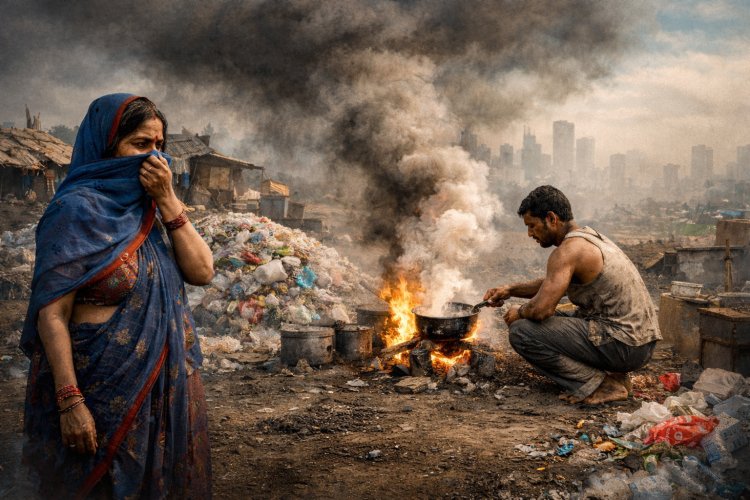
Burning plastic in households for cooking and heating is much more widespread in developing countries than had been known, a recent study published in Nature Communications has found. This is raising serious health and environmental hazards.
The research was conducted more than 1,000 people in 26 countries, mainly from Asia, Africa, and Latin America. The majority, one in three people, said that they knew households that burn plastic, with 16% admitted that they have burned plastic themselves. The research participants included experts who work closely with low-income urban communities, providing them all the knowledge of everyday practices.
According to the authors, the burning of plastic is normally practiced by families that do not afford cleaner fuels such as gas and electricity, and the waste collection systems are not properly in place in the community.
Dr Bishal Bharadwaj, lead author of the study and a research associate at the University of Calgary, said the findings provide rare global evidence of a practice that has been difficult to measure.
“When families can’t afford cleaner fuels and have no reliable waste collection, plastic becomes both a nuisance and a last-resort energy source. We found evidence of people burning everything from plastic bags and wrappers to bottles and packaging, just to meet basic household needs,” Bharadwaj said.
He added that the practice is much more widespread than previously realised but has received little global attention because it often occurs in marginalised communities and out of public view.
The study found that plastic burning is not driven only by energy poverty. Researchers said it also reflects the lack of proper plastic waste management, forcing people to find informal ways to deal with growing amounts of waste.
Health experts say that burning plastic is dangerous because it releases toxic chemicals like dioxins, furans, and heavy metals. When such plastic is burned inside homes or other closed space, such pollutants may be inhaled, increasing the risk of serious health problems. The smoke can also lead to the contamination of food. Earlier research has shown toxic substances found in eggs laid by nearby chickens, showing that these chemicals can affect both human and animal health.
The authors of the publication deemed the conducted research to be only a first step to understanding the extent of the problem, adding that further data is required to identify the scope of where burning of plastic takes place.
Prof Peta Ashworth, a co-author of the study and director of the Curtin Institute for Energy Transition in Australia, said the issue is caused by multiple factors. She said, “Part of the reason is because these people are more vulnerable and they just don’t have the funds to be able to purchase any form of clean cooking fuel,” she said, adding that plastic pollution and poor waste disposal systems also play a major role.
As the global plastic waste is likely to double by 2060, with a projection of reaching almost three times the current level, the scientific community emphasizes that immediate measures are required. It is advocated that waste management needs improvement, subsidies on cleaner cooking fuel, and awareness about the risks associated with burning plastics are necessary.
"If the rate of growth of the population in cities remains high compared with the growth of essential services, the issue of burning plastic will continue to deteriorate," the study warns, urging governments to act now to deal with the energy and waste crises.
What Happens in India?
In India, many households burn plastic due to poverty, live in slums and don’t have proper waste collection services. Even though government has initiatives like Pradhan Mantri Ujjwala Yojana, many people still don’t use gas regularly, they are highly dependent on solid fuel because LPG refills are expensive, supplies are not always available and facilities to store gas cylinder. As a result, people continue to use solid fuels such as wood, coal and even plastic.
Plastic waste in cities like Delhi, Mumbai, and Kolkata is often burnt in open spaces or used as an auxiliary fuel source for cooking and heating purposes, mostly in winter. The burning of plastic waste is common in places that do not have regular waste collection services and generate plastic waste quickly through use in all kinds of packaging.
Environmental scientists in India have repeatedly warned about the fact that burning plastic leads to severe air pollution. According to them, plastic emissions give rise to toxic gas, which further increases respiratory ailments, especially among women and children, who are mostly found indoors. An Indian study conducted by various research centres has proved that this emission paves the path for asthma and respiratory infection among people.
India is one of the largest plastic waste producers in the globe over 3.5 million tonnes of plastic waste being generated every year, as approximated by the Indian government. The major problem is that due to lack of proper segregation. Instead of being sorted and and recycled, a considerable portion of plastic waste in India are burned or dumped illegally. Programs such as Swachh Bharat Abhiyan can prove to be helpful for the transformation of city by spreading the message of cleanliness, managing waste, and changing people’s behaviour. A healthy, clean, and plastic-free environment can be achieved by the government and citizens working hand in hand.
What's Your Reaction?