Deutsche Bank invests in SAF with Lufthansa to lower business travel emissions and support cleaner aviation.
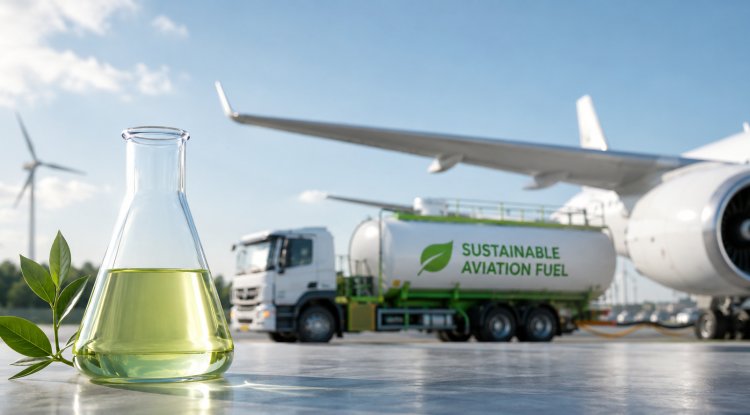
Deutsche Bank has entered into a new agreement with Lufthansa Group to invest in Sustainable Aviation Fuel (SAF) for the reduction of the climate impact of business travel. The project helps the bank to advance its climate strategy and adds to the growth of low-emission aviation fuels. Furthermore, the agreement underlines the increasing importance of Sustainable Aviation Fuel, the Deutsche Bank, Lufthansa Group, business travel emissions, and aviation decarbonisation for corporations in their sustainability strategies.
As part of the deal, Deutsche Bank will fund the purchase of around 1,600 metric tonnes, or some two million litres, of Sustainable Aviation Fuel. The companies claim that the fuel will decrease life cycle carbon emissions by about 5,500 metric tonnes per tonne compared to conventional jet fuel. This reduction is estimated to be equivalent to the carbon dioxide emissions generated by around 520 flights between Frankfurt and London.
SAF is seen as a crucial decarbonisation method.
SAF is considered one of the best near- and medium-term options to lower greenhouse gas emissions from aviation. SAF can be manufactured using renewable and sustainable feedstocks like waste oils and agricultural residues, which can greatly reduce the lifecycle emissions compared to conventional fossil-based aviation fuel.
Based on industry estimates, the lifecycle GHG emissions reduction potential for Sustainable Aviation Fuel (SAF) is up to 80%, depending on the production pathway and feedstock. But for all its green credentials, there are some market hurdles to its adoption.
Limited global production capacity for Sustainable Aviation Fuel (SAF) is one of the main challenges, which led to limited availability. Moreover, SAF is still significantly more costly than traditional jet fuel, making it difficult for many airlines and corporate customers to widely adopt it.
The Climate Strategy is part of the climate strategy of Deutsche Bank.
The investment is part of the broader corporate sustainability goals, including the goal of almost reducing its greenhouse gas emissions by 50% in its supply chain by 2030 from 2019 levels. Business travel continues to be a high impact source of emissions for companies, and the airline industry is therefore an important part of the bank's emissions reduction plan in seeking lower-carbon solutions.
Sustainable Aviation Fuel is an important instrument to support Deutsche Bank in meeting its climate targets," said Jörg Eigendorf, Chief Sustainability Officer of Deutsche Bank. He also cited the need of establishing solid market demand for further investment in SAF production.
If customers continue to demand this fuel, the producers would gain more confidence to increase production, eventually making it more competitive with time, Eigendorf said.
Lufthansa Expands Sustainable Travel Options
The agreement is in line with Lufthansa Group's other initiatives to provide customers with help to mitigate the environmental effects of air travel, the company said. The Sustainable Aviation Fuel-based products are an offering by the airline to corporate and individual travellers under its Sustainability programme.
Lufthansa says consumers' appetite for greener travel has not waned. Over a fifth of passengers used a more sustainable mode of transport in 2025, including via the airline's Green Fares, which feature the use of Sustainable Aviation Fuel and carbon reduction measures.
The airline also said that the use of Sustainable Aviation Fuel (SAF) in its product portfolio had more than doubled since the previous year as the demand of both commercial and tourist aircraft increased.
In the corporate travel sector, more sustainable flying is taking on greater significance and Deutsche Bank's decision to support Sustainable Aviation Fuel deployment is a sign of that, said Frank Naeve, Senior Vice President Global Sales and Distribution at Lufthansa Group.
The SAF market is expected to be bolstered by corporate demand.
The agreement marks a trend of businesses' use of Sustainable Aviation Fuel to offset emissions from business travel, especially those considered indirect or Scope 3 emissions. Also, the more and more organisations are deepening their climate statements and investments in SAF are gaining more and more relevance in order to reduce hard-to-abate emissions.
Industry players have emphasized that long-term purchase contracts and corporate investments can drive up demand for Sustainable Aviation Fuel, leading to higher levels of production and cost reduction in the long run.
While not all of SAF can replace fossil fuels, it is thought to be one of the more practical methods available today while new aircraft propulsion methods, such as hydrogen and electric, begin to comes to fruition.
The Deutsche Bank–Lufthansa deal is an example of the growing partnership between financial institutions and airlines to help decarbonise flight. It is expected that such partnerships will be important in the deployment of Sustainable Aviation Fuel and support companies to progress their climate goals by making their business travel more sustainable.
What's Your Reaction?