Direct Air Capture by Dac Labs Targets Carbon Removal at Scale
Dac Labs, a University of Sydney spinout, develops direct air capture tech to remove CO₂ and support Australia’s carbon reduction goals by 2030 and beyond.
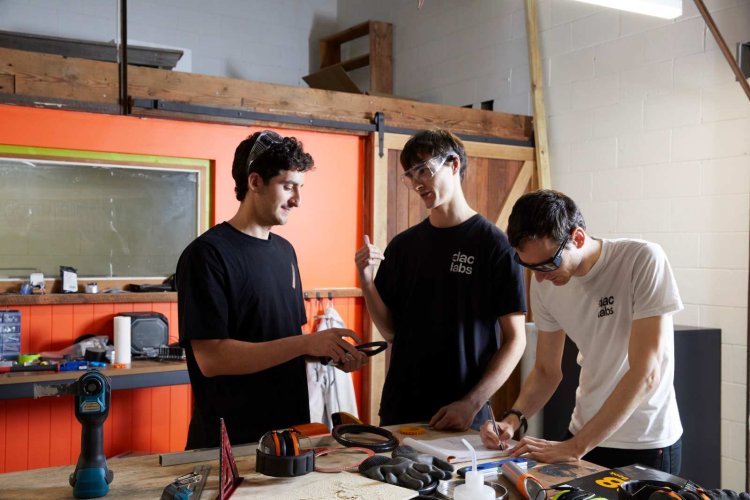
An Australian company, Dac Labs, is building direct air capture (DAC) technology to lower carbon dioxide (CO₂) from the air. It is a spinout of the University of Sydney and working on producing low-cost, energy-efficient solutions for removing carbon to enable Australia's 43% below 2005 levels by 2030 and net zero by 2050 greenhouse gas emissions targets.
Dac Labs' method is to remove CO₂ from the air itself, as opposed to capturing emissions at the point of production, i.e., factories or power generation plants. This opens up more categories of carbon removals, including from vehicles, airplanes, and other diffuse sources.
The DAC process draws in atmospheric air and runs it through a chemical solution that interacts with CO₂, extracts it, and accumulates as a clean gas. Trapped CO₂ can either be sequestered underground or used for industrial product manufacturing, clean fuel production, building materials like concrete and plastics, and uses like beverage carbonation and biofuels based on algae.
The technology being developed would be more energy-efficient than current carbon capture technologies, and thus more suitable for long-term operations and mass application. The company is hopeful of addressing one of the issues with the current technologies, high operating energy requirements that equate to high expenses and poor scalability.
Dac Labs is currently in the process of testing and prototyping miniaturized versions of its technology. The near-term goal is to sequester 10 tonnes of CO₂ over the course of a year, with the long-term goal of scaling up to buildings capable of sequestering megatonnes per year. The goal is to construct DAC installations, which it refers to as "megaforests," that are continuous, rather than land, weather, or biological process-dependent like normal forests.
The university is supporting the start-up with the help it received from the University of Sydney through mentoring, funding, and commercialisation advice. The presence of the University ensures that the science breakthroughs are being guided towards industry requirements and have a defined route to market.
Direct air capture technology has the potential to build an industry that is the reverse of the fossil fuel industry by capturing instead of emitting carbon. The recyclable CO₂, when cycled back into industrial use, also provides circular economic opportunities in green fuel and material production.
Australia and other countries are coming under growing pressure to implement effective measures for meeting climate targets and shifting to low-carbon economies. Technologies such as DAC are becoming more integral to more integrated approaches that are marrying emission reductions with carbon removal from the atmosphere.
Dac Labs is merely one of numerous research institutions and private companies rapidly emerging with clean technology enterprises worldwide. Progress in carbon capture, energy storage, and integration of renewables is regarded as central to climate resilience and economic transformation.
The increasing significance of carbon removal is reinforced by recent evidence that CO₂ concentrations in the atmosphere have reached an all-time high, driving global warming. Direct air capture is a technology that can scale to eliminate legacy emissions and industrialize net-zero pathways.
Such funding by educational institutions plays a crucial role in supporting early-stage companies in overcoming the challenges of commercialisation. Such funding, for instance, with Dac Labs, has enabled a research idea to be turned into a deployable solution poised to enter the market with stipulated deployment targets.
The DAC industry is at its infancy with technical and regulatory issues that need to be resolved. Still, with ongoing development of low-energy capture technologies, better materials, and possible synergy with storage systems, it is a promising component in the carbon management arsenal.
Capture technologies that not only strip away CO₂ but also have commercial applications for the gas captured are also desirable for governments and industries seeking sustainability without stopping economic progress.
The Dac Labs' product is among the clean tech products of Australia and is turning the nation into a global carbon capture technology leader. With expansion, the company aims to create manufacturing capacity to suffice the demand for DAC systems worldwide.
The. backing of the University of Sydney is a testament to the increased collaboration between startup companies and academia in producing solutions for high-stakes environmental issues. Direct air capture technology is an effective tool-driven solution to carbon reduction and climate change's long-term mitigation.
As companies continue to expand into this sector and policy incentivizes the use of carbon removal credits and green industrial production, business uses of DAC will increase. Dac Labs is committed to leadership in this sector, making contributions that not only minimize emissions but make sustainable product development possible.
Source & Credits:
Source: University of Sydney
Photo credits: Alan Richardson, Guy Bailey
What's Your Reaction?

















