EEW and GEA Partner to Scale Up CO₂ Capture Technologies
German companies EEW and GEA are advancing industrial carbon capture by launching a real-world pilot plant in the Netherlands, aiming to integrate emission reduction technologies into thermal waste systems and advocate for necessary policy support.

EEW Energy from Waste (EEW), with its head office in Helmstedt, Germany, has entered into a partnership with GEA Group, an industrial technology group with its headquarters in Düsseldorf, to lead the carbon capture technology at an industrial level. This is an important milestone in speeding up the decarbonisation operations in the waste-to-energy industry and in the overall goal of lowering emissions for the heavy industry sector.
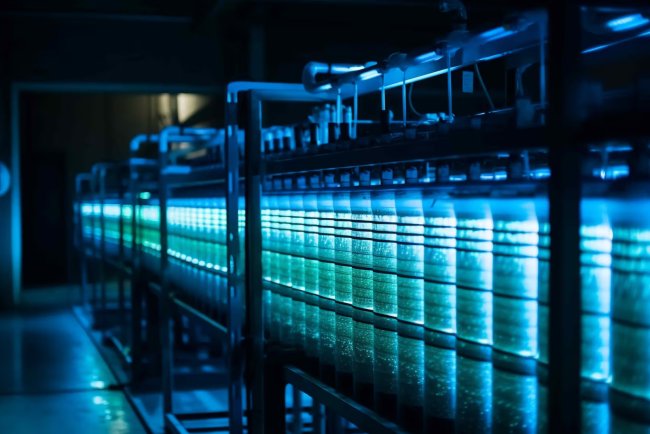
Central to the collaboration is the takeover by EEW of a mobile CO₂ capture pilot plant from GEA, which will be operational in summer 2025. The plant will be installed on EEW's site in Delfzijl, the Netherlands, and the carbon capture will be shown in actual operating conditions. The pilot will also assist in determining the feasibility of how CO₂ capture technology can be successfully integrated into EEW's current thermal waste recycling facilities so that the two firms can assess the practical usefulness and scale of such technology.
GEA Group contributes technical know-how to the collaboration in the form of a portfolio of carbon capture solutions from gas cleaning to heat recovery, CO₂ separation, and liquefaction. They have been planned to minimize carbon emissions from industrial processes, and their deployment in an operational waste-to-energy setup will yield vital information for future implementation plans.
The project is one aspect of EEW's broader decarbonisation strategy, whereby existing infrastructure is to be adapted and retrofitted in order to meet climate objectives. Through the trial of the mobile plant in a variety of facilities and environments, lessons can be learned which can be used to scale carbon capture technology. This type of deployment might be crucial in making waste-to-energy plants from carbon-emitters into net-zero or even carbon-negative plants.
The accord also mirrors more general challenges for the deployment of German carbon capture technology. While the technology is prepared for deployment, regulatory hitches continue to bind it. The lack of legislation on the transport, storage, and investment tax credits for the utilization of carbon has made it difficult for industries to take long-term commitments to mass deployment. Both GEA and EEW have emphasized the need for government assistance and clear policy direction in a bid to render large-scale capture of carbon economically competitive. The firms claim that without good legislative and infrastructural backing, the technology will be inefficiently utilized while its maximum potential will be wasted.
Another key consideration is the biogenic component of emissions from EEW’s waste treatment facilities. More than half of the carbon released during waste incineration is biogenic in nature, meaning it originates from biological sources rather than fossil fuels. If this biogenic CO₂ is captured and securely stored, the net effect can result in negative emissions. This potential makes EEW’s plants uniquely positioned to contribute positively to Germany’s emissions reduction targets.
The Dutch pilot project is thus not merely a technical test but also an example of what industrial decarbonisation would in practice entail. In showing that CO₂ capture can be integrated effectively with existing operations, the project has the potential to lead the way towards an industrial revolution at industrial scale. This project's lessons will also influence future investment, research, and policymaking in Germany and actually the entire European Union.
To complement technological readiness, the firms have also emphasized financial and investment in infrastructure as central to the mainstreaming of carbon capture. The development of a CO₂ pipe network and investment in early mover incentives are viewed as measures required for en masse deployment of carbon capture. Without such measures, deployment of CO₂ capture at scale may be stuck, denying its potential to be fully exploited in addressing national and global climate objectives.
The collaboration between GEA and EEW sends an extremely strong message that the industrial community is willing to take carbon capture on board, if there are enabling conditions. By blending practical field testing with strategic policy reform advocacy, the initiative hopes to transcend small pilots and move toward substantive climate action.
As demand for decarbonisation increases exponentially, particularly across industries such as waste and energy, initiatives like this will become more pivotal. EEW and GEA are leading the charge with this initiative, not only developing technical solutions, but also an industrial carbon capture approach under practical conditions.
Source/Credits:
Chemical Engineering, 20 May 2025.
What's Your Reaction?