A severe heatwave sweeping across Europe has triggered emergency measures, disrupted daily life and raised concerns about the growing economic and social impacts of climate change.
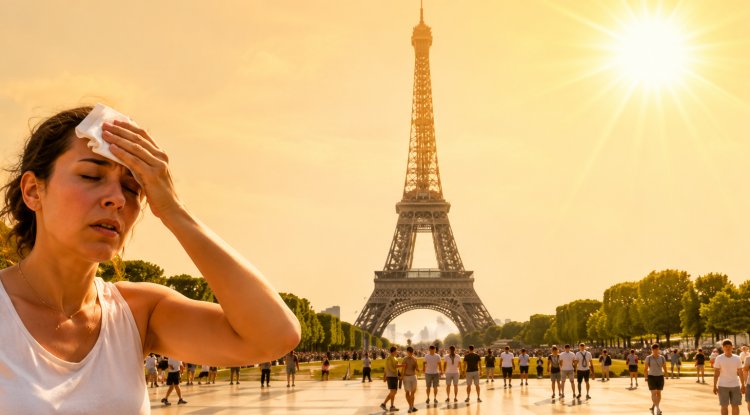
Governments around Europe are struggling to cope with a summer heatwave reminiscent of 2019. Europe is experiencing a sweltering summer, with governments struggling to keep up. Just a couple of months into the season, much of Europe is in the grip of a massive and intense heatwave that has exceeded seasonal averages and is testing public infrastructure to its limits. Daily life has become increasingly challenging for residents, whether in the historic plazas of southern Europe or the industrial centres of Germany.
The crisis has already led to high-level emergency discussions in France, the deployment of nationwide weather alerts in Germany, and millions of residents and tourists facing dangerously high temperatures, as reported by Reuters. The severity of this weather event is a stark reminder that climate change is accelerating what was once considered a seasonal challenge into a growing public health crisis.
The pressure has increased significantly in France, prompting Prime Minister Sébastien Lecornu to convene top officials for an urgent crisis meeting to address the fallout. The national weather service, Météo-France, has forecast that extreme heat conditions will persist into next week, drawing comparisons with the severe heatwaves of 2003 and 2019. Forecasters predict that 35 of the country's 96 administrative divisions will be placed under maximum red alert, with temperatures reaching a blistering 39–41 degrees Celsius across a broad area stretching from the southwest through the Paris Basin and into Burgundy.
The occurrence of such severe weather at this time is adding to the worries of French officials as the incident falls at the time when the nation is enjoying their special day of Fête de la Musique, which is held each year and usually turns villages, parks, and streets into musical sites. In order to avoid the dangers of heatstroke and relieve the emergency services, the government has gone so far as to ban the use of alcohol in public places within the red heat warning.
At the same time, to provide some relief for Parisians coping with high temperatures in their homes, the city administration has decided to keep municipal parks and gardens open around the clock.
Conditions elsewhere in Europe are similar. Germany's national weather service (DWD) has issued near nationwide heat warnings as temperatures approach 38 degrees Celsius. German weather experts are particularly concerned about a "highly explosive mix" of extreme heat and rising humidity that could trigger intense localised thunderstorms capable of causing flash floods. Further south in Spain, the heat has disrupted large-scale celebrations, with football authorities ordering the closure of a major fan zone at Madrid's Plaza de Colón, forcing thousands of people to seek indoor air-conditioned spaces to watch international matches.
Italy is also experiencing severe heatwave conditions this summer. Major tourist attractions, which typically inspire awe among visitors, have become challenging to visit because of extreme temperatures. In Rome, tourists have been waiting in long queues to enter the Colosseum in temperatures of up to 37°C, with many seeking refuge in cooler areas within the ancient structure. In Bologna, in the Emilia-Romagna region, residents and visitors have been using the city's historic arcades and 16th-century stone fountains as informal cooling areas to combat heat exhaustion.
In general, what is currently happening in Europe is the sign of a much more serious structural issue that worries both economists and policymakers alike. The governor of Bank of France, Emmanuel Moulin, has issued a warning stating that there may be substantial consequences for economic growth due to extreme heat conditions. Although rising temperatures will cause higher consumption of energy because of increased need for air-conditioning in the short run, there is something more worrying about the long-run consequences.
As these extreme climate events become a recurring feature rather than an exception, Europe is discovering that adapting to global warming is not only about meeting future emissions targets but also about strengthening public safety systems, municipal governance and economic resilience in response to a changing climate.
What's Your Reaction?